




What Makes a Cracker 'Green'?
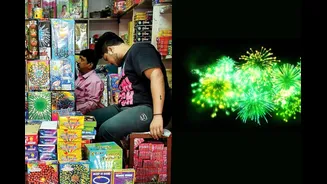
A 'green cracker' isn't necessarily green in colour. The term refers to formulations developed by India's Council of Scientific and Industrial Research (CSIR) and the National Environmental Engineering Research Institute (NEERI). The primary goal is to reduce
the environmental impact of fireworks. According to NEERI, a certified green cracker must cause at least a 30% reduction in particulate matter (PM) emissions compared to its traditional counterpart. They are not pollution-free, but they are significantly less polluting. This is achieved by changing the chemical mix to reduce harmful emissions and suppress the dust generated upon bursting.
The Banned List: What's Out?
The Supreme Court of India has explicitly banned several hazardous chemicals from use in any firecrackers. The list of prohibited substances includes compounds of antimony, lithium, mercury, arsenic, and lead. A particularly important banned chemical is barium nitrate. Traditionally, barium salts were used to produce vibrant green colours in fireworks, but they are highly toxic and a major contributor to air pollution, leading to respiratory and other health issues. The court's orders make it illegal for any manufacturer to use these heavy metals, and the Petroleum and Explosive Safety Organisation (PESO) is responsible for ensuring compliance.
Approved Formulations: What's In?
So, if the most harmful chemicals are out, what is in? Green crackers use a redesigned chemical composition. While some formulations may still use potassium nitrate as an oxidant and aluminium for white light, the quantities are often reduced. The key innovation lies in the additives. Many green crackers include additives that act as dust suppressants, such as zeolites, which help to control the release of particulate matter. Some formulations also feature water-releasing mechanisms to douse the dust as it is created. The focus is on cleaner combustion that produces fewer toxic by-products like sulphur dioxide and nitrogen oxides. This results in a firework that delivers a similar visual and sound experience with a lower environmental footprint.
SWAS, SAFAL, and STAR: The Official Trio
CSIR-NEERI has developed three main categories of green crackers, each with a unique feature. SWAS stands for 'Safe Water Releaser'. When a SWAS cracker bursts, it releases water vapour which helps to suppress the dust. It notably does not contain potassium nitrate or sulphur, reducing particulate matter by about 30%. SAFAL is 'Safe Minimal Aluminium', which, as the name suggests, uses a minimal amount of aluminium, reducing the metallic content in emissions. STAR, or 'Safe Thermite Cracker', does not use sulphur and is designed to produce less particulate matter and a reduced sound intensity. These three types represent the core technologies approved for green firework manufacturing.
How to Identify Certified Green Crackers
For consumers, identifying a genuine green cracker is crucial. Legitimate products must feature specific branding. The most important things to look for on the box are the official CSIR-NEERI green logo and a scannable QR code. When you scan this QR code with your phone, it should provide details about the manufacturer and confirm its certification. Be wary of loose crackers or boxes with a simple 'green' sticker pasted over old printing. Authentic packaging will clearly state the manufacturer's name, address, and license details. This system was created to prevent conventional, more polluting firecrackers from being sold under a fake 'green' label.