




The Sun: A Constant Threat
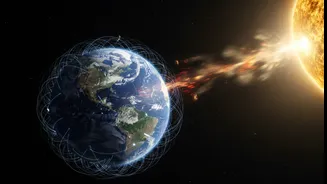
The Sun, our life-giving star, has a volatile side. It periodically releases massive bursts of energy and particles known as solar flares and coronal mass ejections (CMEs). When directed at Earth, this 'space weather' can be devastating for our technology.
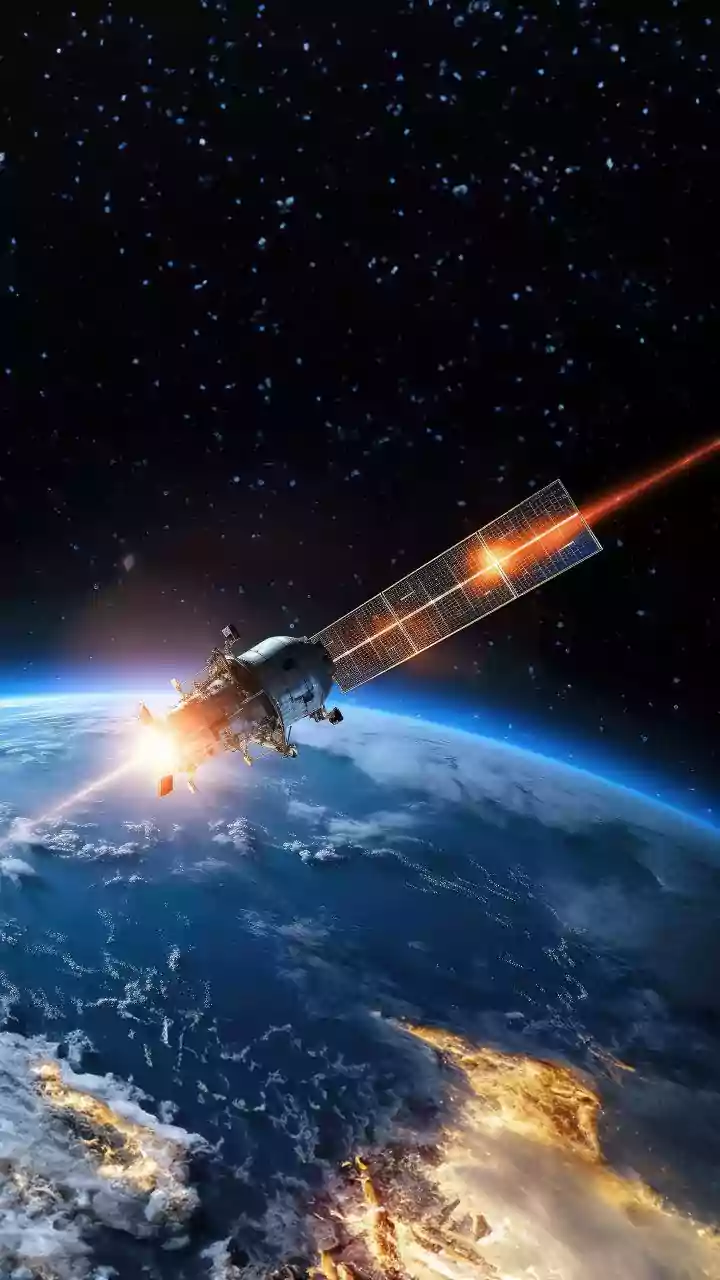
The high-energy particles can fry sensitive electronics, degrade solar panels, and cause electrostatic discharges that permanently damage or even destroy satellites. Furthermore, these events heat and expand Earth's outer atmosphere, increasing drag on low-orbit satellites and shortening their operational lives. For a global economy reliant on seamless data flow, the risk is immense.
Our Eyes in the Sky
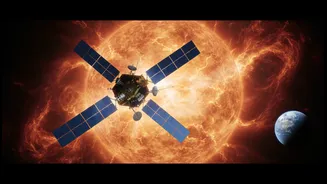
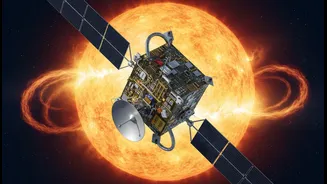
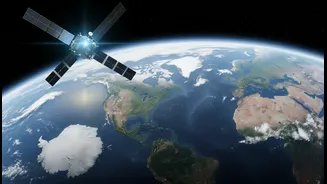
To counter this threat, humanity has deployed a fleet of dedicated sentinels. Space observatories like NASA’s Solar Dynamics Observatory (SDO), the joint NASA/ESA Solar and Heliospheric Observatory (SOHO), and NOAA's Deep Space Climate Observatory (DSCOVR) constantly monitor the Sun. India has also joined this crucial effort with its Aditya-L1 mission, strategically placed at the L1 Lagrange point—a stable location 1.5 million kilometers from Earth that offers an uninterrupted view of the Sun. These observatories are our first line of defense, providing the essential data needed to forecast potentially disruptive solar events.
Decoding Solar Metrics
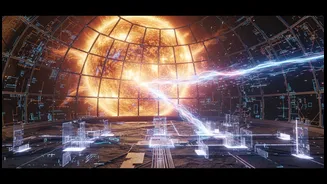
These observatories don't just take pictures; they gather a stream of complex data points or metrics. Forecasters at agencies like NOAA's Space Weather Prediction Center (SWPC) analyze these to build their forecasts. Key metrics include the Sun's X-ray flux, which classifies flare intensity into categories like C, M, and X—the most powerful. They also measure the speed, density, and magnetic field direction of the solar wind, the constant stream of particles flowing from the Sun. A southward-oriented magnetic field in a CME, for instance, is a major red flag as it can more easily connect with Earth's magnetosphere and transfer energy, triggering a geomagnetic storm.
From Warning to Action
When the metrics indicate a high probability of an impactful event, forecasters issue watches, warnings, and alerts. A satellite like DSCOVR, positioned at L1, can detect the properties of an incoming CME and provide a crucial 15 to 60-minute warning before it strikes Earth's magnetic field. This lead time, though short, is invaluable. It allows satellite operators, power grid managers, and airlines to move from monitoring to active defense. These alerts are the critical link between astronomical observation and real-world risk mitigation, enabling industries to brace for impact.
Shields Up: Protecting the Network
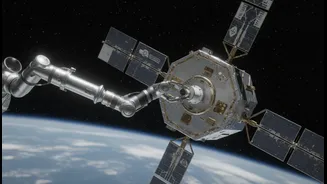
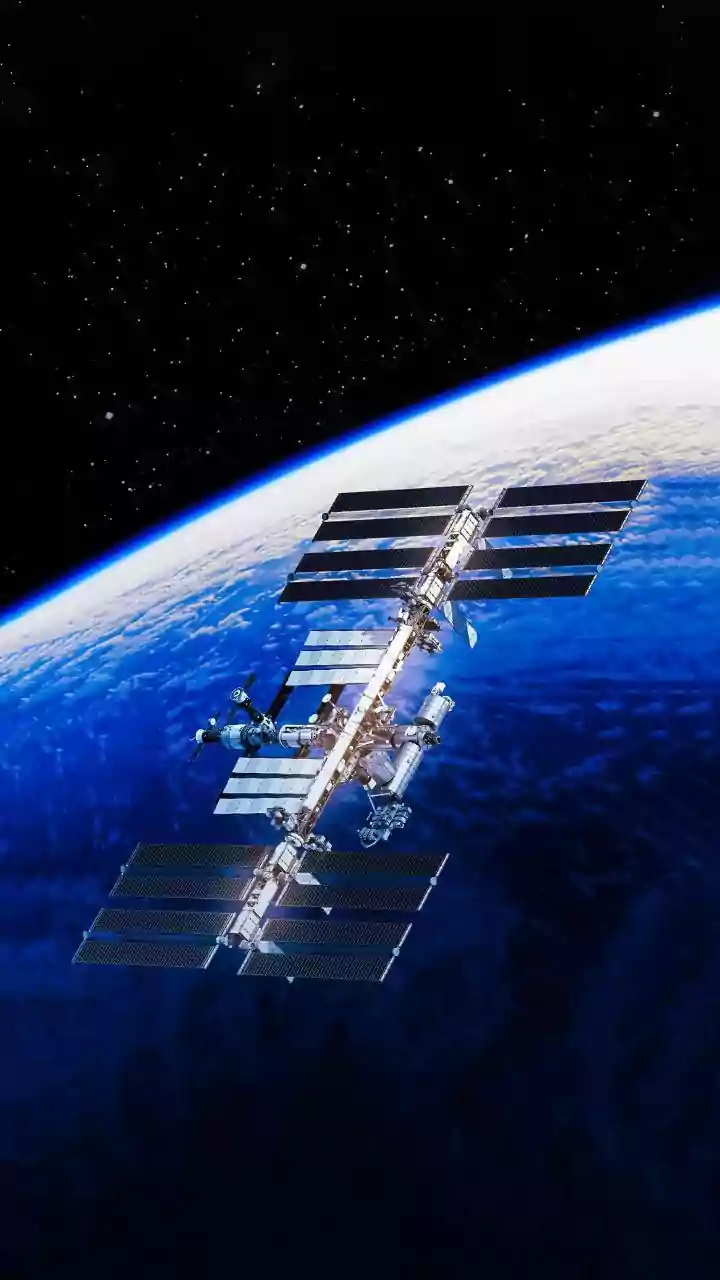
Armed with these warnings, satellite operators can take specific actions to protect their multi-million-dollar assets. A common procedure is to place a satellite into a protective 'safe mode', where non-essential systems are shut down and the most vital components are shielded. Operators may also reorient the spacecraft to angle its solar panels and other sensitive surfaces away from the brunt of the incoming particle storm, minimizing radiation damage. For satellites in low Earth orbit, operators might prepare to make orbital corrections to counteract the increased atmospheric drag. These quick responses, all triggered by observatory metrics, are what keep our global satellite networks operational through the Sun's most violent outbursts.