


The Monsoon's Fungal Bounty
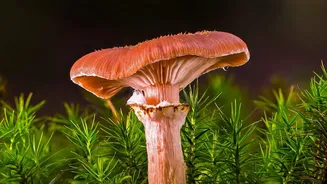
The rainy season provides the perfect conditions of high humidity and moisture for fungi to flourish. Across India, from the forests of Jharkhand to the Western Ghats, this period sees an explosion of wild mushrooms. Indigenous communities have foraged
these for centuries, passing down knowledge of edible species. Varieties like 'Rugda' in Jharkhand, often called 'vegetarian mutton', and the prized 'Olmi' or 'Alami' in Goa, which grow on termite mounds, are celebrated seasonal delicacies. This natural abundance offers a fascinating glimpse into regional culinary traditions, but it's a world that must be entered with extreme caution.
Identifying Common Edible Varieties
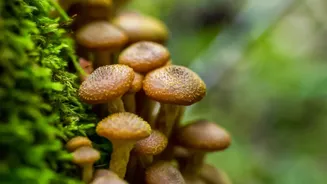
While there are hundreds of mushroom species, beginners should focus on a few easily identifiable ones. The Termitomyces genus, which includes the popular Olmi mushrooms, is a good example. These mushrooms have a symbiotic relationship with termites and are prized for their texture and flavour. In Karnataka, 'Mange mara kum' are mushrooms found on dead mango tree logs. However, identification is a skill that takes years to master. Many edible mushrooms have poisonous lookalikes, and a small mistake can be dangerous. The golden rule is simple: if you are not 100% certain of a mushroom's identity, do not eat it.
The Dangers of Misidentification
Accidental mushroom poisoning is a serious risk, with cases often increasing during the monsoon. India is home to around 100 known poisonous mushroom species. Some of the most dangerous, like species from the Amanita family (including the infamous 'death cap'), can cause severe liver and kidney damage, which can be fatal. These toxic varieties can deceptively resemble edible ones. Common myths, such as poisonous mushrooms always being brightly coloured or having a pungent smell, are dangerously false. Symptoms of poisoning can range from gastrointestinal distress to severe organ failure. A particularly concerning sign is a delay in symptoms; if nausea and vomiting begin more than six hours after consumption, it may indicate a highly toxic species.
Golden Rules for Safe Foraging
To forage safely, beginners must follow strict rules. First and foremost, go with an experienced local guide or join a mycology group. Their knowledge is invaluable. When you find a mushroom, observe its features closely: the shape and colour of the cap, whether it has gills or pores underneath, and the characteristics of its stem. Taking clear pictures from multiple angles can help with identification later. Carry a basket instead of a plastic bag, as this allows spores to disperse and prevents the mushrooms from getting slimy. Finally, never rely on a single feature for identification; use a combination of characteristics and cross-reference with reliable regional field guides.
What to Do in Case of Suspected Poisoning
If you or someone you know suspects they have eaten a poisonous mushroom, seek medical help immediately. Do not wait for symptoms to appear. Go to the nearest hospital's emergency department. If possible, take a sample of the mushroom you ate; place it in a paper bag, not plastic. Taking clear photos of the mushroom where it was found can also be extremely helpful for doctors and poison control experts to identify the toxin and determine the correct treatment. Early intervention is critical, as treatment for the most severe types of mushroom poisoning is most effective when started as soon as possible after ingestion.