





A Rocket's Final Destination
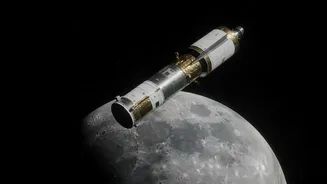
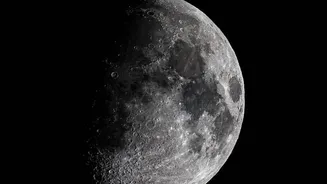
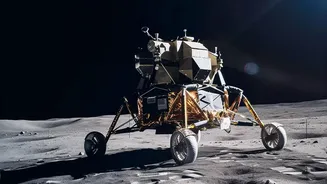
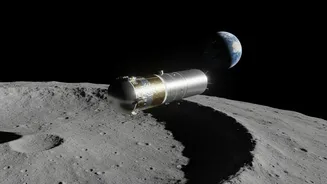
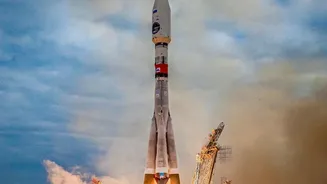
Early on August 5, 2026, a large piece of space junk—specifically, the 4,000-kilogram upper stage of a SpaceX Falcon 9 rocket—is predicted to crash into the Moon. The rocket stage, left over from a January 2025 mission that sent two lunar landers on their
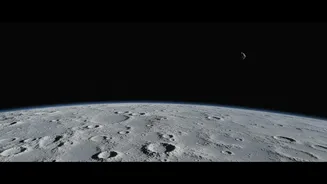
way, has been in a chaotic orbit ever since. It is expected to strike the lunar surface at a blistering 8,700 kilometres per hour. The impact itself poses no danger, but it has become a significant point of interest for astronomers. Initially tracked by independent astronomers, NASA later confirmed a 100% chance of impact. This isn't the first time human-made debris has hit the Moon, but each event provides a rare opportunity to study such a collision up close.
The Science of Cosmic Forensics
Predicting where an object will go in space is incredibly complex. Astronomers start by taking multiple observations to chart an object's path. However, unlike the predictable pull of gravity, other subtle forces can alter an object's trajectory. These are known as non-gravitational forces. For a hollow, lightweight object like a spent rocket stage, the gentle push from sunlight, called solar radiation pressure, can significantly change its orbit over time. Outgassing, where leftover fuel or paint vaporises and acts like a tiny thruster, can also nudge the object off its predicted course. These variables create a 'cone of uncertainty' that slowly narrows as more observations are gathered, but a degree of unpredictability always remains.
A Valuable Scientific Opportunity
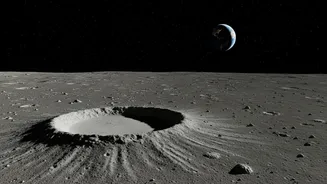
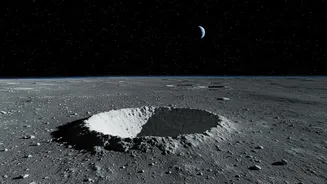
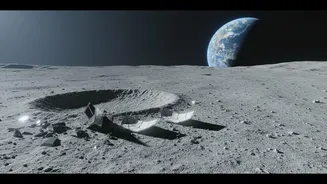
While the impact flash itself may be too faint to see against the sunlit lunar surface, scientists are eager to observe the resulting plume of ejected dust and rock. Researchers have published papers predicting the plume could rise tens of kilometres above the surface, making it potentially visible to powerful telescopes for a few minutes after the crash. Observing this ejecta plume offers a treasure trove of data. It helps scientists understand how impacts behave on the Moon, which is vital for planning the safety of future lunar missions, habitats, and infrastructure. It also serves as a real-world calibration for computer models that are used to simulate impacts from both artificial objects and natural asteroids.
From Space Junk to Planetary Defence
Tracking a discarded rocket stage is, in many ways, a dress rehearsal for a much more serious task: planetary defence. The same principles and technologies used to track space debris are essential for finding and monitoring near-Earth objects (NEOs) like asteroids and comets. Agencies like NASA's Planetary Defense Coordination Office (PDCO) are tasked with cataloguing potentially hazardous objects and developing strategies to mitigate impact threats. Exercises and real-world events, from simulated asteroid threats to the DART mission that successfully altered an asteroid's path, all contribute to this critical capability. Learning from the predictable, and unpredictable, behaviour of space junk helps refine the tools needed to protect Earth from a cosmic threat.