


The Sweet Centrepiece: Modak
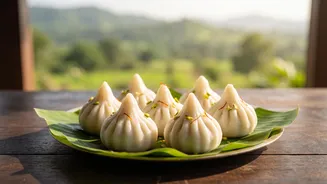
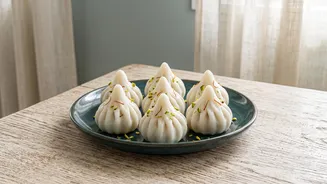
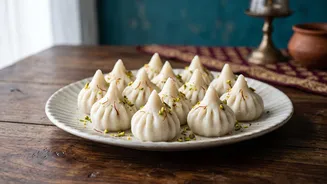
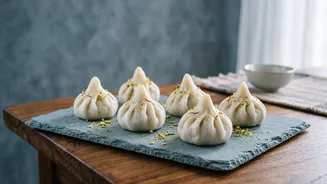
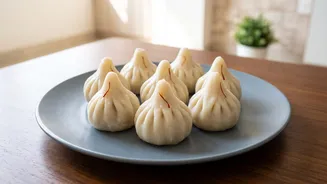
No Ganesh Chaturthi celebration is complete without the modak, the sweet dumpling believed to be Lord Ganesha’s favourite. The most iconic version, especially in Maharashtra, is the 'Ukadiche Modak'—a delicate, steamed rice-flour dumpling filled with a fragrant
mixture of fresh coconut and jaggery, scented with cardamom. The process of making them is a tradition in itself, with family members often gathering to expertly pleat the dough into its distinctive shape. Beyond the steamed variety, there are fried versions with a crispier wheat flour shell, and modern interpretations that include everything from chocolate to mawa fillings, showcasing the sweet's versatility. Offering 21 modaks is a cherished ritual, symbolising devotion and the sweet rewards of wisdom.
The Maharashtrian Festive Thali
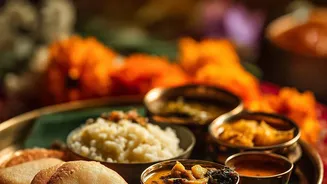
While modak may be the star, the festive meal, or 'naivedya', in Maharashtra is a grand affair. A typical prasad thali served during the festival is a balanced symphony of sweet and savoury dishes. Puran Poli, a soft flatbread stuffed with a sweet lentil and jaggery filling, is another essential festive treat. Savoury dishes provide a delicious contrast. These include Batata Bhaji, a simple yet flavourful potato preparation often made without onion or garlic, and Varan Bhaat, a comforting dish of simple dal and rice. Snacks like the crispy, spiral-shaped Chakli and savoury Kothimbir Vadi (coriander fritters) also find a proud place on the plate, making the meal a true feast for the senses.
Coastal Fragrance from Goa and Konkan
Along the Konkan coast, especially in Goa, the festival carries the unique fragrance of turmeric leaves. Here, a special sweet called Patoli (or Patoleo) is prepared. Similar to a modak in its core ingredients, the Patoli involves spreading a rice flour paste onto fresh turmeric leaves, filling it with a coconut-jaggery mixture, and then folding and steaming the parcels. As the Patoli steams, the leaves impart a distinct, earthy aroma that is inseparable from the festive season. This tradition is deeply connected to the monsoon, when fresh turmeric leaves are abundant, linking the celebration directly to the local harvest and landscape. It's a dish cherished by both Hindu and Christian communities in the region, highlighting a shared cultural fabric.
Southern Variations and Offerings
In the southern states of Karnataka, Andhra Pradesh, and Telangana, the culinary traditions, while sharing common threads, have their own distinct flavours. In Karnataka, you'll find 'karjikai', a crispy, crescent-shaped fried pastry with a coconut and jaggery filling, much like a karanji. You may also see Panchakajjaya, a simple but significant offering made from roasted gram, coconut, sugar, and sesame. In Andhra Pradesh and Telangana, offerings include 'Vundrallu', which are steamed balls of coarsely ground rice flour, and 'Chalividi', a cooked sweet dish made from rice flour and jaggery. Savoury preparations like Sundal, a spiced salad made from boiled chickpeas or other legumes, are also a common sight, balancing the sweetness of other offerings.
More Than Just Food
Ultimately, the food of Ganesh Chaturthi and the final Visarjan week is about more than satisfying hunger. The preparation of these elaborate meals is an act of devotion, a way for families to come together and preserve traditions passed down through generations. The act of sharing 'prasad' with neighbours and visitors reinforces community bonds. The Visarjan itself, the immersion of the idol, is a poignant ritual symbolising the cycle of creation and dissolution, and the idea that all forms are temporary. As families bid farewell to Ganesha with chants of “Pudhchya Varshi Lavkar Ya” (come again soon next year), it's a hopeful conclusion to a festival where faith, culture, and food are beautifully intertwined.