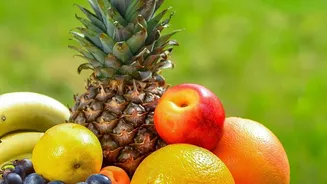







Pineapple and pear are two delicious and popular fruits found in markets across India. One is a tropical icon, the other a temperate classic. But when it comes to nutrition, how do they really stack up? Let's peel back the layers.
Calories and Macronutrients
At a glance, both fruits
seem similar in their calorie count. A medium-sized pear has around 101 calories, while a cup of pineapple chunks contains about 83 calories. Both are low in fat and protein. Their primary energy source is carbohydrates, with a pear containing about 27 grams and a cup of pineapple having roughly 22 grams. The key difference here lies in the type of carbohydrate. Pears are significantly higher in dietary fibre, which is crucial for good digestion and feeling full.
The Vitamin C Powerhouse
When it comes to Vitamin C, there is a clear winner: pineapple. A single cup of pineapple can provide over 100% of your daily recommended intake of this powerful antioxidant, which is essential for a strong immune system and healthy skin. Pears also contain Vitamin C, but in much smaller amounts. However, pears are a good source of other nutrients like Vitamin K, which is important for blood clotting and bone health, as well as potassium.
Fibre for Gut Health
If you are looking to increase your fibre intake, the pear is your friend. A single medium pear packs about 5.5 to 6 grams of dietary fibre, making it an excellent source. This is more than double the amount found in a cup of pineapple, which offers around 2.3 grams. The fibre in pears, including a soluble fibre called pectin, helps maintain bowel regularity, nourishes beneficial gut bacteria, and can contribute to a feeling of fullness, which may aid in weight management.
Pineapple's Secret Weapon: Bromelain
Pineapple contains a unique group of digestive enzymes called bromelain. This compound is not found in pears and is one of pineapple's standout health benefits. Bromelain helps break down protein, which can aid digestion. It is also known for its anti-inflammatory properties, which may help reduce swelling and pain from injuries and certain inflammatory conditions. While eating pineapple provides some bromelain, much of the research has been done on more concentrated supplements.
Impact on Blood Sugar
For individuals monitoring their blood sugar levels, the glycemic index (GI) is an important consideration. The GI measures how quickly a food raises blood sugar. Pears have a low GI of around 38, meaning they cause a slower, more gradual rise in blood sugar. Pineapple has a medium GI, typically around 59, which means it can raise blood sugar more quickly than a pear. This makes pears a potentially better choice for those who need to manage their blood sugar levels carefully.
Which Fruit Should You Choose?
So, pineapple or pear? The answer truly depends on your personal health goals. Both fruits are packed with antioxidants that help protect your body from damage. If you're looking for a major Vitamin C boost and potential digestive and anti-inflammatory benefits from bromelain, pineapple is an excellent choice. If your focus is on increasing your fibre intake for better gut health and managing blood sugar levels, the pear is the superior option.