
The Sun’s Lingering Mystery
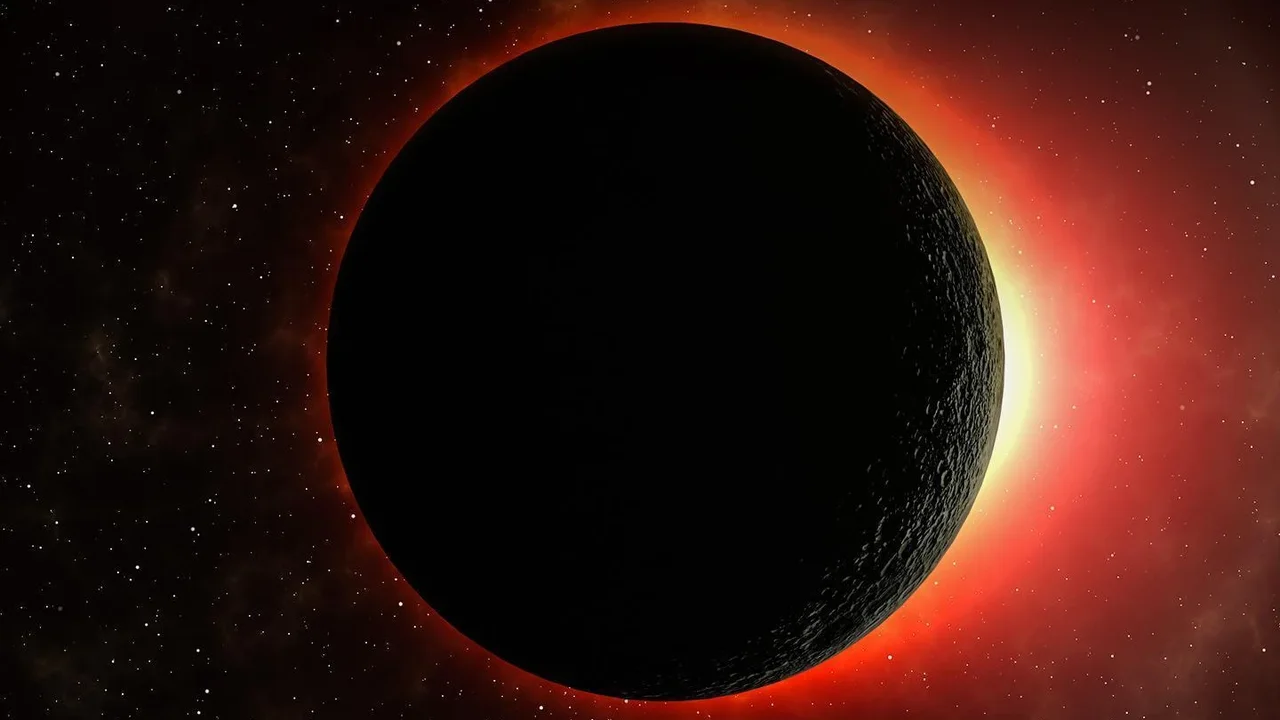
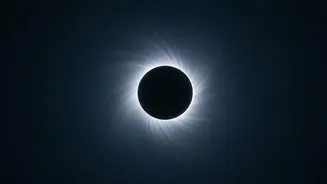
For the few minutes of totality, the Sun's brilliant face is blocked, revealing its ethereal outer atmosphere: the corona. Normally hidden by the Sun's own glare, the corona is one of solar physics' greatest puzzles. It sizzles at temperatures of nearly
a million degrees Celsius, vastly hotter than the surface below, and scientists are still working to understand the mechanics of this extreme heating. Total solar eclipses offer a unique, unobstructed view from Earth, allowing researchers to study the fine structures and dynamics that could hold the key to this mystery and help us better understand the origins of space weather that affects our technology.
An Observatory Above the Clouds
To get the best possible view, NASA will deploy one of its WB-57 high-altitude research aircraft. Soaring at 50,000 feet, the jet will chase the Moon's shadow west of Iceland, flying above most of the distorting atmosphere and any disruptive weather. By flying along the eclipse path, the aircraft can extend the observation time well beyond the two minutes available on the ground. Tucked into its nose cone is a suite of advanced cameras designed to capture at least 20 images per second in multiple wavelengths of light. The goal is to gather high-resolution data on solar prominences, the complex magnetic loops of the corona, and the birth of the solar wind. This mission builds upon learnings from the 2024 eclipse, with teams adjusting camera exposures to better capture extremely bright features that were previously overexposed.
Balloons to Probe Our Atmosphere
The eclipse doesn't just impact the Sun's visibility; it dramatically affects our own planet. As the Moon's shadow passes, it causes a rapid, localized drop in temperature and light, creating waves and disturbances in the atmosphere. To study this, the NASA-supported Nationwide Eclipse Ballooning Project will send student-led teams to Iceland and Spain. They plan to launch approximately 80 scientific balloons, starting 18 hours before totality and continuing for hours afterward. These balloons will measure changes in Earth's boundary layer—the part of the atmosphere closest to the ground. During previous eclipses, this layer was observed to collapse in clear skies but not under cloud cover, and scientists are eager to see if the unique, long-daylight conditions of an Icelandic August produce a different result.
A Global Call for Data
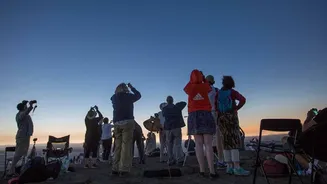
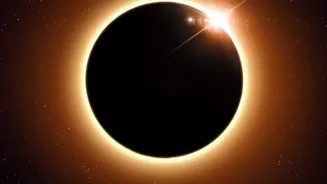
Professional scientists won't be the only ones collecting data. A host of citizen science projects invite the public to contribute to the research effort. The Dynamic Eclipse Broadcast (DEB) Initiative, for instance, is a network of trained volunteers who will use identical telescope setups in Spain to document the corona. Another project invites people to record the faint, shimmering patterns known as shadow bands that race across the ground just before and after totality. By using simple whiteboards and cameras, participants can help scientists understand what causes these elusive waves. Others can use the SunSketcher smartphone app to precisely time images of the "diamond ring" effect, contributing to a more accurate measurement of the Sun's exact size.
Testing Tomorrow's Space Weather Forecasts
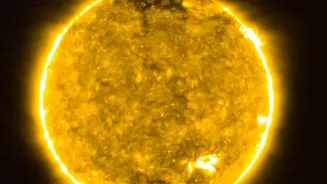
The eclipse also serves as a crucial reality check for the digital models used to predict space weather. Researchers at the European Space Agency and other institutions are using data from missions like the Solar Orbiter to create sophisticated computer simulations that forecast what the corona will look like on August 12. When the real images from the eclipse are captured, scientists will compare them to their predictions. The accuracy of these forecasts directly relates to how well the models capture the Sun's complex three-dimensional magnetic environment. By refining these models, researchers can improve their ability to forecast solar flares and coronal mass ejections that pose a risk to satellites, power grids, and astronauts in space.