






The Power of Zoning: Divide and Conquer
Zoning is the design strategy of creating distinct areas for different activities within one open space. You don't need walls; instead, you can use visual cues to signal where the 'living room' ends and the 'bedroom' begins. One of the most effective
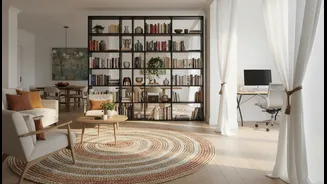
ways to do this is with furniture itself. Placing a sofa with its back to your bed creates a natural and powerful mental division between the two areas. Area rugs are another fantastic tool. By placing a rug under your seating area, you visually group the furniture together, anchoring it as a distinct 'living zone'. Even an open-backed bookshelf can act as a divider, offering storage while allowing light to pass through, which keeps the space from feeling closed off. The goal is to give each activity—sleeping, working, relaxing—its own defined territory, which helps reduce visual chaos and makes the room feel more organised and intentional.
Strategic Storage: Think Vertically and Beyond
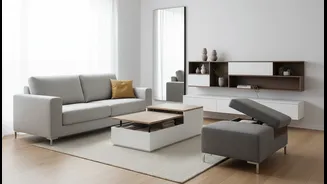
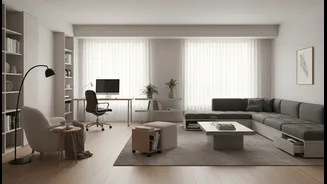
In a small space, clutter is the enemy of function. This is where strategic storage becomes your greatest ally. When floor space is limited, the only way to go is up. Thinking vertically means using tall, slender bookshelves, wall-mounted floating shelves, and over-the-door organisers to get items off the floor and into unused space. Don't neglect the hidden real estate under your furniture. Bed risers can create valuable storage space for seasonal clothing or linens, and many bed frames now come with built-in drawers. Look for furniture that does double duty. A storage ottoman can hide blankets, serve as a footrest, and provide extra seating. A lift-top coffee table offers a place for your drink, a higher surface for your laptop, and hidden compartments for remotes and magazines. By making your storage smart and multi-functional, you keep essentials accessible while minimising visual noise.
Furniture in Motion: The Flexibility You Need
Static, heavy furniture can be a real hindrance in a single room. Embracing moveable and adaptable pieces is key to creating a space that can transform to meet your needs. Furniture on casters or wheels is a game-changer. A bar cart can be a side table one moment and a serving station the next. A desk on wheels can be rolled out of the way when you have guests. Lightweight furniture that is easy to rearrange allows you to change your layout on a whim. Nesting tables are a perfect example; they can be spread out when you need more surface area and stacked neatly away when you don't. Foldable furniture, such as drop-leaf dining tables or wall-mounted desks, provides full functionality when you need it and frees up valuable floor space when you don't. This kind of flexibility allows a single room to effortlessly transition from a workspace to a dining area to a relaxation zone, ensuring it's always working for you.
Bringing It All Together: A Unified Approach
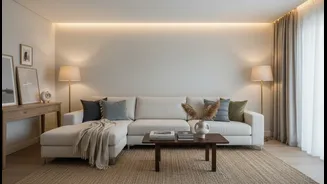
The true magic happens when these three concepts—zoning, storage, and mobility—work in harmony. Your furniture choices can and should serve multiple purposes. A modular sofa can be rearranged for guests, defining a seating zone while offering versatile configurations. A tall, open shelving unit can act as a room divider that provides storage and a surface for decor. A rolling kitchen island can create a boundary for your 'kitchen' zone, offer prep space, and store pots and pans. Look for pieces that integrate these ideas. An ottoman on wheels that has hidden storage is a perfect example of a piece that is moveable, provides storage, and can help define a seating area. By carefully selecting fewer, more functional pieces, you avoid the trap of filling your room with single-purpose items. The result is a space that feels larger, cleaner, and infinitely more adaptable to your daily life.