


Why Your Notes Are Your North Star
Like a wine lover keeping a journal, a tea enthusiast benefits immensely from tracking their tasting journey. The goal isn't to be overly academic but to build a personal 'flavour map'. By consistently noting a tea's origin, its ingredients, and its sweetness
profile, you start to understand your own preferences on a deeper level. This simple habit demystifies why you adore one oolong but feel indifferent about another. It empowers you to walk into a tea shop or browse online with confidence, knowing exactly what characteristics you’re looking for. Instead of randomly picking a box with a pretty design, you'll be making informed choices that lead to a more satisfying cup every time.
Decoding Origin: The Story of Terroir
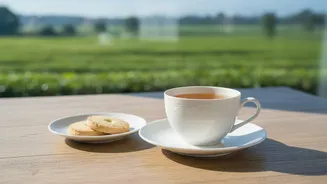
The term 'terroir', often borrowed from the wine world, is crucial in tea. It refers to the complete natural environment in which a tea is grown, including its specific soil, climate, and altitude. These factors have a profound impact on a tea's final flavour. For instance, a Darjeeling from the cool, high-altitude slopes of the Himalayas will have a delicate, floral, and muscatel character, while an Assam grown in the hot, humid river valley of northeast India will be robust, malty, and full-bodied. Even if you took the same plant from one region and grew it in another, its taste would change. When you see a 'single origin' label, it means the tea comes from one specific place, offering a pure taste of that region’s unique environment. Noting the origin—be it Uji, Japan for a vegetal matcha or Sri Lanka for a brisk Ceylon—helps you connect a flavour profile to a place.
Reading the Ingredients: Pure vs. Blended
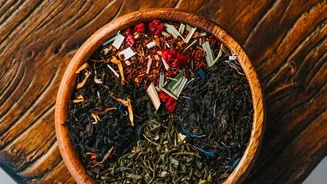
Beyond origin, the ingredient list tells the next part of the story. Is it a single-origin tea, composed only of Camellia sinensis leaves, or is it a blend? Blends combine tea leaves with other botanicals like flowers, fruits, herbs, and spices. Think of classic Earl Grey, where black tea is flavoured with bergamot oil, or a jasmine green tea, where the leaves are scented with fresh jasmine blossoms. Other teas might be blended with ingredients like chamomile, peppermint, ginger, or dried fruit pieces. There is no right or wrong choice here; it's about preference. Noting the ingredients helps you identify patterns. You might discover you love the combination of green tea with citrus, or that you prefer the unadulterated taste of a pure, unblended white tea. This knowledge is especially useful for avoiding ingredients you dislike and seeking out combinations you enjoy.
Understanding Sweetness: Natural vs. Added
Sweetness in tea can be complex. High-quality teas often possess a natural, inherent sweetness. This can manifest as flavour notes of honey, caramel, malt, or fruit. For example, some oolongs have a creamy, honey-like sweetness, while certain white teas are prized for their delicate, sugary finish. This is different from added sweeteners. Many commercial tea blends contain added sugars, artificial sweeteners, or 'natural flavours' to enhance sweetness and create a consistent product. When you take notes, try to distinguish between the two. Does the tea have a natural, nuanced sweetness that is part of its flavour profile? Or is there a more uniform sweetness that might come from an added ingredient? Noting this will help you understand whether you prefer teas that are naturally sweet or if you enjoy a little extra help. Some people find added sweeteners can mask the subtle complexities of the tea leaf itself.
Putting It All Together: Your Tasting Journal
Creating your notes doesn't require a fancy system. A simple notebook or a note-taking app on your phone works perfectly. For each new tea you try, create a simple entry. Start with the tea’s name and brand. Then, add three key sections: Origin, Ingredients, and Sweetness. Under Origin, write down the country and, if available, the specific region (e.g., 'Fujian, China'). For Ingredients, list everything you see on the label (e.g., 'Black tea, bergamot oil'). Under Sweetness, describe your perception—was it naturally sweet with notes of stone fruit, or did it have a more straightforward sugary taste? Finally, add a quick overall rating or a few personal thoughts. Did you enjoy it? Would you buy it again? This structured approach builds a powerful, personalized database that makes every future tea purchase a more intentional and enjoyable act.