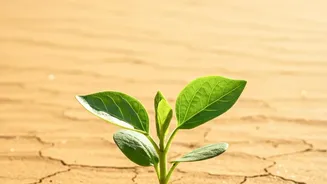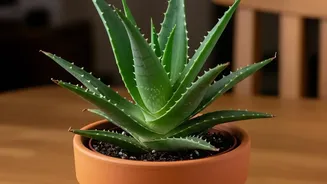




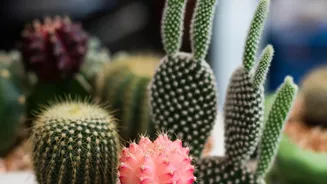
Cacti and succulents bring a touch of the desert's stark beauty into our homes. But the secret to their survival isn't more care—it's the right kind of care. Forget the frequent sprinkles; their health depends on mimicking a desert downpour.
Think Like a Desert
To understand
why infrequent, deep watering works, we have to think about the natural environment of a desert plant. These plants are adapted to long, dry spells punctuated by sudden, heavy rainfall. When the rain does come, it soaks deep into the sandy soil. This pattern is what your potted cactus or succulent craves. Deep watering encourages the roots to grow downwards in search of moisture, creating a strong, extensive root system that anchors the plant and makes it more resilient. In contrast, giving the plant little sips of water every few days does the opposite. It encourages shallow, weak roots to stay near the surface, where they are vulnerable to drying out quickly and are less effective at supporting the plant.
Master the 'Soak and Dry' Method
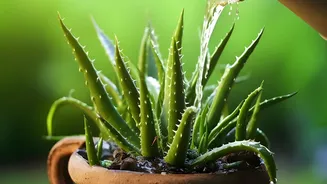
The best practice for watering desert plants is known as the 'soak and dry' method. It is simple but requires a complete shift in mindset from how we water typical houseplants. When it is time to water, do so thoroughly. Take your pot to a sink and pour water evenly over the entire surface of the soil until it freely streams out of the drainage holes at the bottom. This ensures that the entire root ball has access to moisture. After this deep soak, the second part of the method is crucial: you must allow the soil to dry out completely before you even think about watering again. This drying period is what prevents root rot, the number one killer of potted desert plants.
How to Know When It's Time
Throw away the watering schedule. The most common mistake is watering every Saturday, regardless of the plant's actual needs. How quickly the soil dries depends on the season, humidity, sunlight, pot size, and soil type. So, how do you know it's time? The easiest way is to test the soil. You can stick a wooden skewer or chopstick deep into the pot; if it comes out clean and dry, it's time to water. If it comes out with damp soil clinging to it, wait longer. You can also feel the soil's moisture through the pot's drainage hole. Some plants will even give you a visual cue. The leaves of a thirsty succulent might look slightly wrinkled or less plump as it starts to draw on its internal water reserves. This is a sign it's ready for a drink, not a sign of failure.
The Right Foundation Is Everything
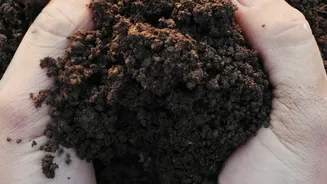
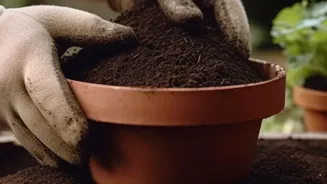
Perfect watering technique will fail if your plant is in the wrong soil. Desert plants need a potting mix that drains exceptionally well. Standard potting soil is designed to retain moisture, which is a death sentence for a cactus or succulent. When you water, you want it to flow through the soil quickly, hydrating the roots before exiting. If the soil stays soggy, the roots are deprived of oxygen and will begin to rot. You can buy pre-made cactus and succulent soil mixes at any garden center. Alternatively, you can create your own by mixing regular potting soil with an equal amount of an inorganic material like perlite, pumice, or coarse sand. This creates the gritty, airy texture that allows for the rapid drainage these plants need to thrive.
Avoid These Common Mistakes
Beyond using the wrong soil or a fixed schedule, a few other habits can harm your desert plants. First, avoid using a spray bottle to water the soil. Misting the leaves might be fine for some tropical plants that enjoy humidity, but for desert plants, it only wets the surface and encourages shallow roots. It does nothing to hydrate the core root system. Another critical error is letting the pot sit in a saucer full of runoff water. After a deep watering, make sure to empty the saucer completely. Allowing the pot to sit in standing water is the equivalent of forcing it to stand in a puddle, and it will lead directly to the dreaded root rot. Always ensure your pot has at least one drainage hole; pots without them are not suitable for desert plants.