


The Land of Record-Breaking Rain
Meghalaya is home to two of the wettest places on Earth: Mawsynram and Cherrapunji (also known as Sohra). During the monsoon months from June to September, these towns receive immense rainfall, which feeds the entire region's natural splendour. Far from being
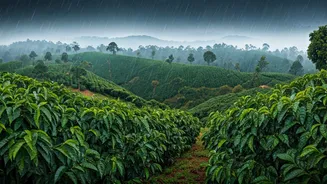
an inconvenience, the rain is the main attraction, creating a dramatic landscape where clouds roll across the hills and valleys. The constant drizzle and heavy downpours turn the countryside into a vibrant, saturated green that feels rejuvenating and otherworldly. This is when the state's famous waterfalls are at their most powerful and photogenic.
Chasing Thundering Waterfalls
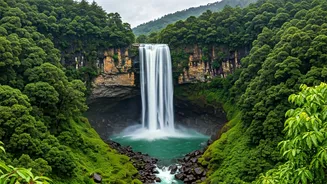
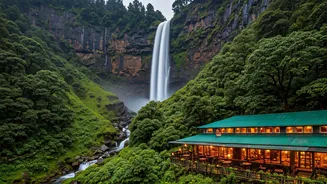
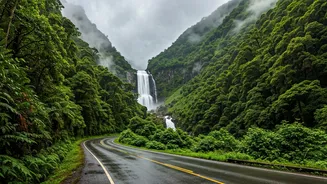
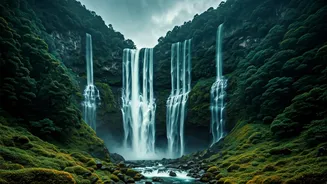
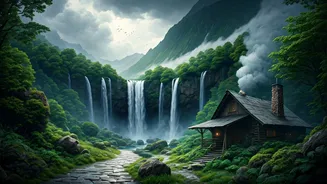
The monsoon swells every river and stream, giving birth to countless waterfalls. The most famous of these is Nohkalikai Falls, India's tallest plunge waterfall, which drops from a height of over 340 meters. During the rains, it's a magnificent and powerful sight. Other must-see cascades include the Seven Sisters Falls (Nohsngithiang Falls), which becomes a wide curtain of seven separate streams, and the triple-tiered Elephant Falls near Shillong. Krang Suri and Dainthlen Falls are other spectacular sights, roaring with full force amidst the lush greenery. Driving from Shillong to Cherrapunji becomes an adventure in itself, with seasonal waterfalls emerging from cliffs along the misty roads.
The Magic of Living Root Bridges
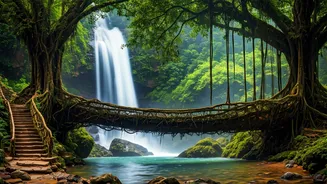
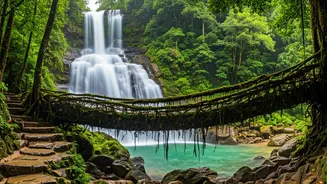
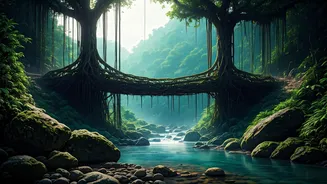
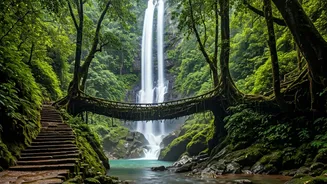
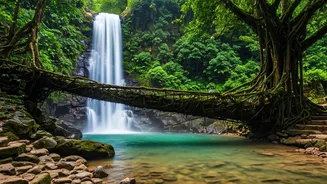
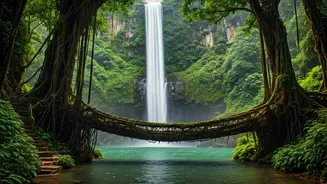
Meghalaya's most unique wonders are its living root bridges, a testament to the ingenuity of the local Khasi and Jaintia tribes. These bridges, grown over decades from the aerial roots of rubber fig trees, become even more magical in the monsoon. The constant moisture strengthens the roots and covers them in glistening moss, making them look truly alive. The trek to the famous Double-Decker Living Root Bridge in Nongriat village, though involving thousands of slippery steps, is an unforgettable journey through a dense, dripping forest that feels primeval. These structures are not just beautiful; they are a resilient, sustainable solution to crossing the region's turbulent rivers during the wet season.
Lush Valleys and Mystical Caves
Beyond the waterfalls, the entire landscape of Meghalaya is a sight to behold. Laitlum Canyons, often called the 'Grand Canyon of India', offers breathtaking views of mist-covered valleys. In Asia's cleanest village, Mawlynnong, the greenery is punctuated by tidy bamboo-fenced homes and flowering plants. The state is also famous for its caves, such as Mawsmai Cave near Cherrapunji. While some caves can be flooded, many remain accessible and offer a different kind of monsoon adventure, with the sound of dripping water echoing through ancient limestone formations.
Practical Tips for Your Monsoon Trip
Traveling to Meghalaya in the monsoon requires some preparation. Roads can be slippery and visibility low due to fog, so it's wise to start your days early and travel with an experienced local driver. Pack high-quality waterproof clothing, quick-dry fabrics, and sturdy shoes with good grip. It's also essential to protect your electronics with dry bags. While the Umngot River at Dawki is famous for its crystal-clear water in winter, the monsoon runoff makes it murky, so it's best to manage expectations for that specific sight. Accommodations, especially in popular spots like Cherrapunji, should be booked in advance. Finally, keep your itinerary flexible, as heavy rain can sometimes alter travel plans.