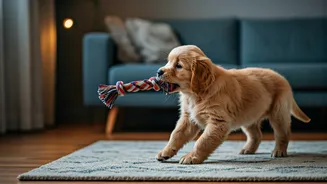

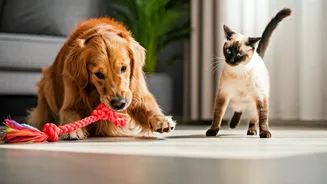




Why Indoor Play Matters
When the weather keeps you and your pet indoors, it’s easy for them to get restless. A daily walk doesn’t just provide physical exercise; it offers crucial mental stimulation through new sights, sounds, and smells. Without this outlet, pets can become
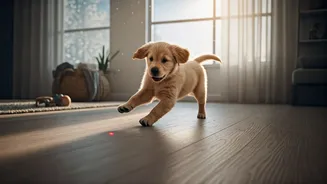
bored, anxious, and even destructive. A session of structured indoor play is more than just fun; it's a way to combat this boredom, reinforce your bond, and expend that coiled-up energy. A tired pet is a happy pet, and you don’t need a big outdoor space to make it happen. A little creativity can transform your living room into a playground.
Brain Games for a Sharp Mind
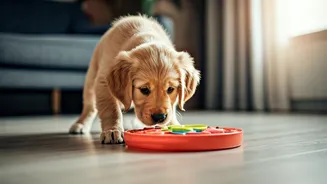
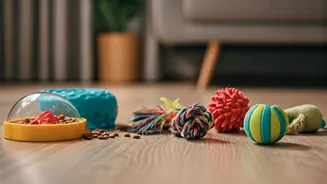
Mental exercise can be just as tiring as physical exercise. Challenge your pet’s mind with puzzle toys or a simple game of 'find the treat.' Hide small, high-value treats around a room—under a rug, behind a cushion, or inside a pet-safe toy—and encourage your pet to use their nose to find them. You can also play the 'shell game' with three empty plastic cups. Place a treat under one cup, shuffle them around, and let your dog or cat guess which one holds the prize. These activities tap into their natural instincts and provide a rewarding mental workout, preventing boredom from setting in.
Build an Indoor Obstacle Course
You don't need professional agility equipment to create a fun obstacle course. Use what you have at home. Line up some dining chairs to create a tunnel to crawl through, use a sturdy cardboard box as a hurdle to jump over (keep it low!), and lay a blanket on the floor as a designated 'stop and wait' station. Guide your pet through the course with treats and praise. This not only burns physical energy but also builds their confidence and listening skills. Remember to keep it safe: ensure all surfaces are non-slip and objects are stable.
Teach an Old Pet New Tricks
A rainy day is the perfect opportunity for a training session. Whether you’re reinforcing basics like 'sit' and 'stay' or teaching something more complex like 'roll over' or 'shake hands,' the focused attention is mentally stimulating for your pet. Keep sessions short (5–10 minutes) and positive, using plenty of praise and treats. Training isn’t just about obedience; it’s a powerful communication tool that strengthens the bond between you and your pet. It gives them a 'job' to do, which can be incredibly satisfying for working breeds in particular.
Scent Work and Nose Games
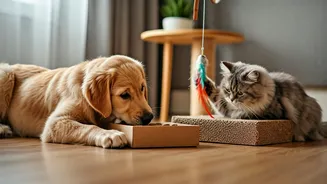
A dog's most powerful sense is its nose. Engaging it provides incredible enrichment. A simple nose game involves getting a few cardboard boxes and placing a treat in one of them. Let your dog sniff them out and reward them when they indicate the correct box. For a more advanced version, you can introduce a specific scent (like clove or birch oil on a cotton swab) and teach them to find only that scent. This taps into their core canine instincts and can keep them happily occupied for a good while, all without needing to run around.
Don’t Forget the Feline Friends
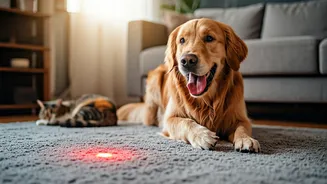
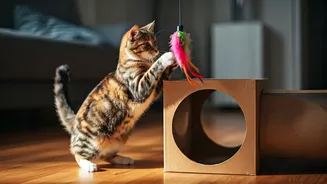
Cats also need stimulation on rainy days. While they may not go for an obstacle course, they love games that mimic hunting. A feather wand or a laser pointer (be sure to end the session by landing the dot on a physical toy they can 'catch' to avoid frustration) can provide great exercise. The humble cardboard box is often a cat’s favourite toy—it’s a safe hiding spot and a perfect ambush point. You can also crumple up a piece of paper into a ball for a cheap and effective toy they can bat around the house. Even a few 10-minute play sessions can make a huge difference to their mood.