



A Telescope the Size of a Continent
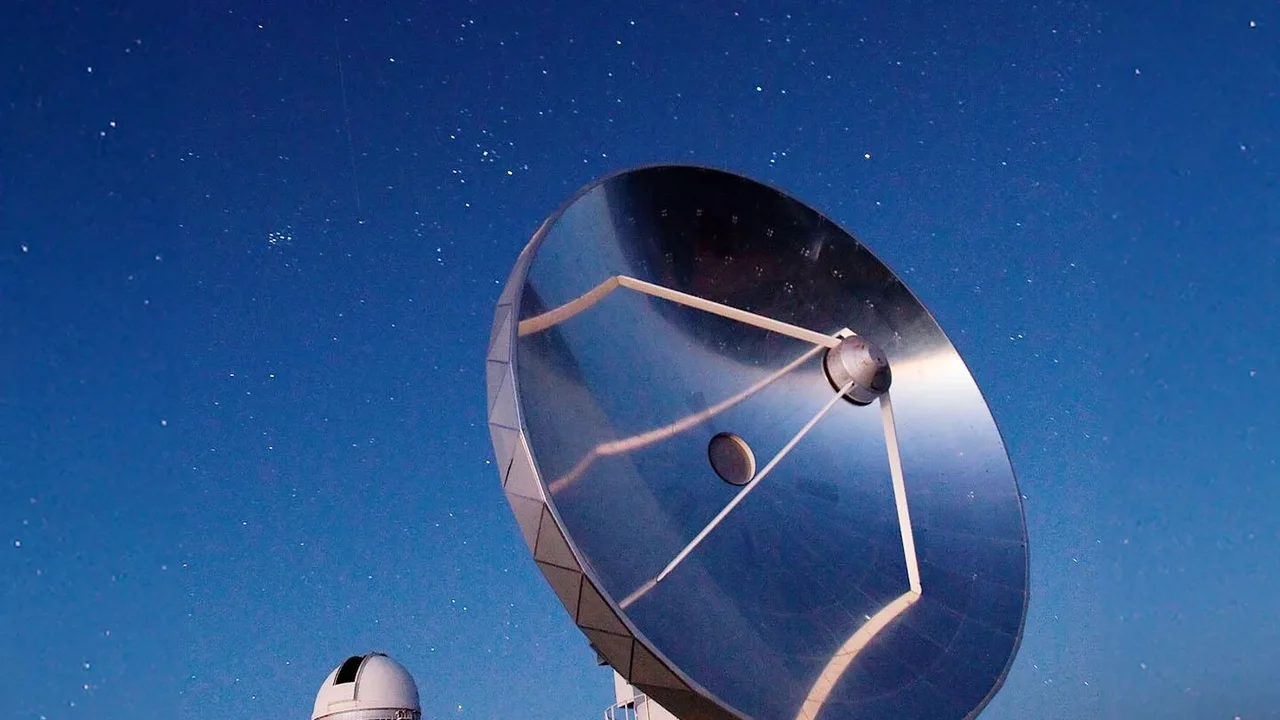
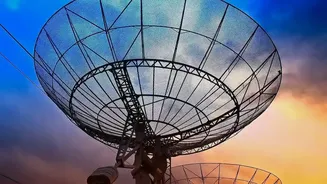
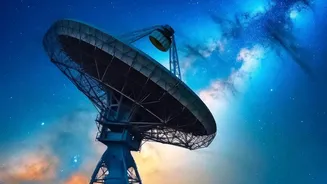
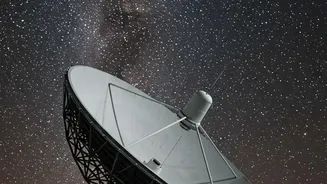
The Square Kilometre Array (SKA) isn't a single telescope but a globe-spanning network of thousands of antennas. Split across two remote, radio-quiet locations in South Africa and Australia, these antennas will work together as one colossal observatory.
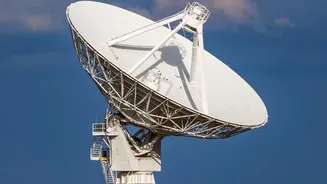
The South African site, SKA-Mid, will feature hundreds of dish antennas, while Australia's SKA-Low will consist of over 130,000 Christmas tree-like antennas. Construction began in 2022 and is progressing, with some initial components already being tested. When completed around the end of the decade, the combined collecting area will make it the most sensitive radio telescope ever built, capable of mapping the sky with unparalleled speed and detail.
Listening to the Universe's First Light
The primary mission of the SKA is to peer back into a mysterious period known as the 'Cosmic Dawn'. This era, from about 100 million to one billion years after the Big Bang, is when the first stars and galaxies ignited, ending the cosmic 'dark ages'. But how can we see something so far back in time? The light from these first objects has travelled for over 13 billion years to reach us. Due to the expansion of the universe, this ancient light has been stretched from visible or ultraviolet light into much longer, lower-energy radio waves. The SKA is specifically designed to detect these faint, stretched-out signals, which hold the secrets of how the first structures in the universe formed.
The Cosmic Frequency: Hydrogen's 21cm Line
The specific 'cosmic frequency' the SKA is hunting for is known as the 21-centimetre line, or H I line. This is a faint but fundamental radio signal emitted by neutral hydrogen atoms, the most abundant element in the early universe. Before the first stars formed, the cosmos was filled with vast clouds of this neutral hydrogen. When these atoms occasionally 'flip' their energy state, they release a photon with a characteristic wavelength of 21.1 cm (a frequency of 1420 MHz). As this signal travels across the expanding universe, its wavelength gets stretched to several metres by the time it reaches Earth, falling squarely into the low-frequency radio band that SKA-Low in Australia is built to detect. By mapping this signal, astronomers can create a 3D picture of the primordial hydrogen gas, revealing where and when the first stars began to ionise the gas around them.
How an Array Creates a Virtual Telescope
The magic of the SKA lies in a technique called interferometry. By itself, a single antenna has limited resolving power. But when thousands of antennas are spread over vast distances and their signals are combined, they function as a single, virtual telescope with a diameter equal to the largest distance between them. For the SKA, this means creating a telescope effectively hundreds of kilometres wide. This requires staggering technological precision. The signals from every antenna must be synchronised with atomic clocks and sent via fibre optic cables to a central supercomputer. This computer processes an immense volume of data—more than the entire internet's current daily traffic—to correlate the signals and construct a coherent image of a tiny patch of the distant universe.
India’s Crucial Role in the Cosmic Quest
India is a full member of the SKA Observatory and a key contributor to this global endeavour. The National Centre for Radio Astrophysics (NCRA) in Pune coordinates the efforts of more than 20 Indian institutions. A major Indian contribution has been leading the design and development of the Telescope Manager, the complex software system that acts as the 'brain' or central nervous system of the entire observatory, controlling and monitoring all its components. Indian teams are also contributing to the digital signal processing hardware and will host a regional data centre to process and store the vast amounts of information the SKA will generate, ensuring Indian scientists are at the forefront of the discoveries to come.