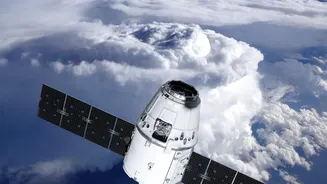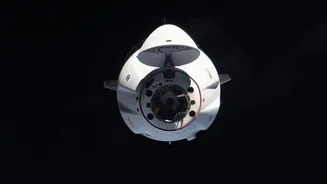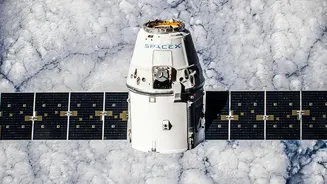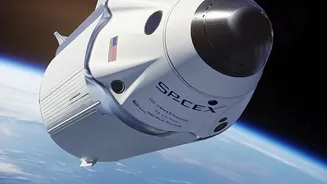





A capsule carrying priceless scientific cargo has splashed down back on Earth, completing a critical mission. The SpaceX Dragon returned from the ISS, not with souvenirs, but with experiments that could change medicine and space travel.
A Successful Splashdown
On Saturday, November
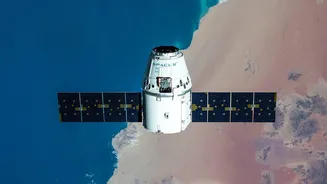
21, a SpaceX Dragon capsule completed its 29-hour journey from the International Space Station (ISS), splashing down in the Pacific Ocean off the coast of California. This event marked the successful conclusion of the CRS-35 mission, the 35th commercial resupply service that SpaceX has operated for NASA. The uncrewed Dragon undocked from the orbiting laboratory on November 20, beginning its fiery but controlled descent through Earth's atmosphere. Unlike cargo vehicles that burn up on reentry, the Dragon is designed to return its contents intact, making it an indispensable part of modern space research. Recovery teams were on standby to quickly retrieve the capsule, beginning a race against time to preserve the sensitive materials inside.
The Precious Cargo Onboard
Packed within the capsule were thousands of pounds of scientific samples, the results of experiments conducted over several weeks in the unique microgravity environment of the ISS. Among the key investigations were frozen tumour organoids that had been treated with experimental drugs in space. Researchers hope that studying how these small, lab-grown tumour models reacted to treatment without the influence of gravity will reveal new avenues for improving cancer therapies and advancing personalized medicine. Also on board was a 3D-bioprinted blood vessel structure, created to help scientists study the mechanisms of vascular aging and cardiovascular disease. By examining these tissues on Earth, scientists can gain a deeper understanding of biological changes that affect not only astronauts but also people on the ground.
Fighting Threats Old and New
The CRS-35 mission also returned crucial data for tackling more immediate threats to human health. One set of experiments focused on antibiotic resistance, a growing global health crisis. Scientists sent bacteria to the station to observe how they survive, adapt, and evolve in the harsh environment of space. The returned frozen microbial samples will be analyzed to understand how these 'superbugs' change in microgravity, which could provide insights into their development on Earth and help protect astronauts on future long-duration missions where medical access is limited. Beyond microscopic threats, research also addressed the well-being of the astronauts themselves. A specialized lighting system that was tested for over three years on the station was returned for analysis. The system was designed to see if tailored lighting could improve astronauts' sleep and psychological health, a key factor for missions to the Moon and Mars.
Why Orbiting Labs Matter
Conducting research in space offers a perspective that is impossible to replicate on Earth. The virtual absence of gravity allows scientists to study fundamental biological and physical processes without its powerful influence. For example, protein crystals, which are key to designing new drugs, can grow larger and more perfectly in microgravity. Similarly, studying how the human body adapts to space—from muscle atrophy and bone density loss to changes in the cardiovascular system—provides a model for accelerated aging. This helps researchers better understand conditions like osteoporosis and heart disease back on Earth. Each returning capsule, packed with data and samples, represents a vital link between the orbiting laboratory 400 kilometres above us and the quest for scientific breakthroughs that benefit all of humanity.