



Defining Our Terms: Day vs. Year
Before we journey to the bizarre world of Venus, let's start with what we know on Earth. A year is straightforward: it’s the time it takes for our planet to complete one full orbit around the Sun, roughly 365 days. A day is the time it takes for the Earth to rotate
once on its axis, giving us our cycle of daylight and darkness over about 24 hours. These two clocks—the orbital and the rotational—are completely independent, but on Earth, they create a familiar rhythm. The year is long, the day is short. This simple, intuitive relationship governs our seasons, our calendars, and our daily lives. But what happens when you travel to a planet that plays by a completely different set of rules? Venus, often called Earth's 'sister planet' because of its similar size and mass, takes this familiar concept and turns it completely on its head.
Venus by the Numbers
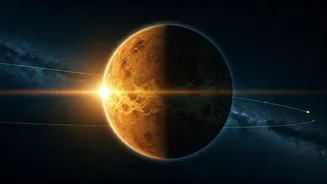
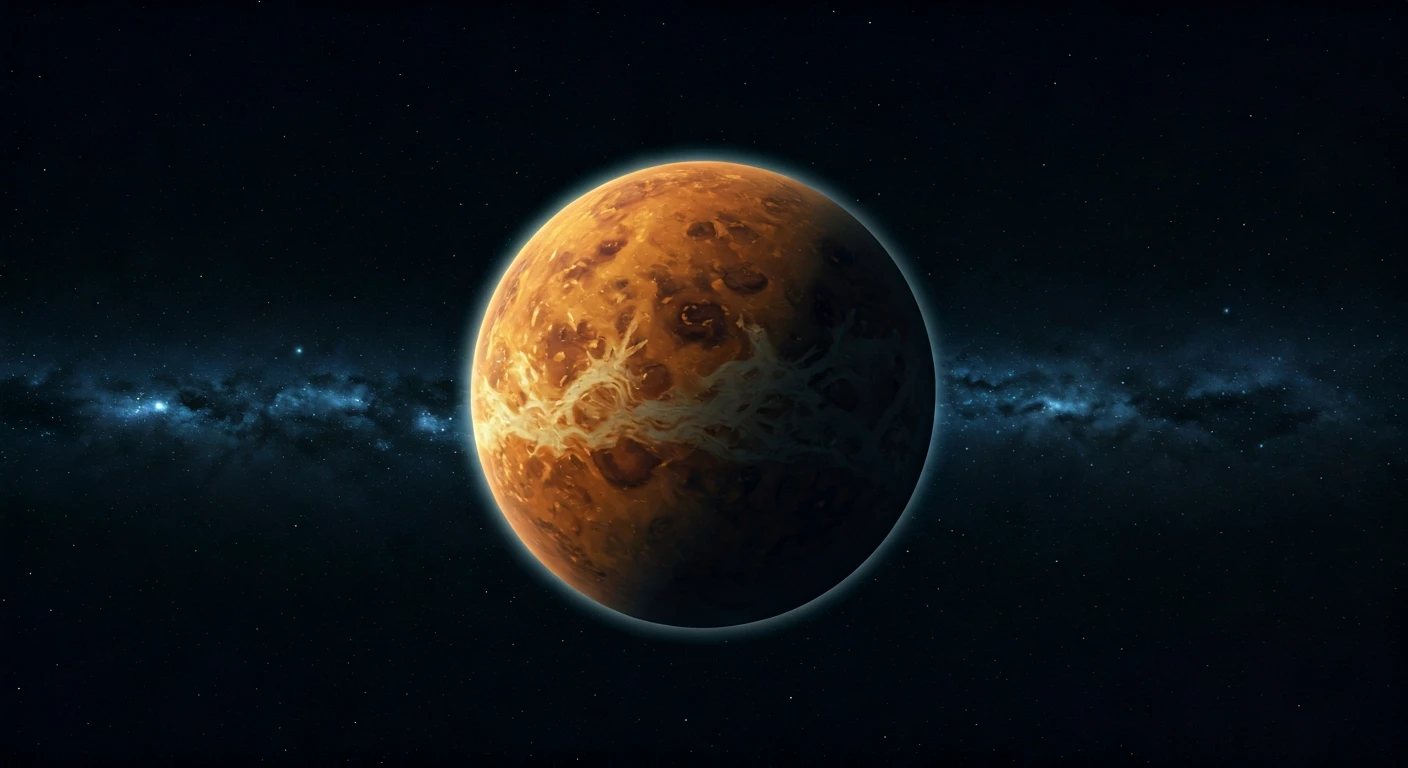
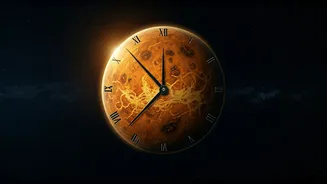
Here's where things get strange. A year on Venus—the time it takes to orbit the Sun—is about 225 Earth days. This is shorter than an Earth year because Venus is closer to the Sun and travels faster. Now for the day. A 'sidereal day' is the time it takes for the planet to complete one full 360-degree rotation on its axis. On Venus, this takes a stunning 243 Earth days. So, yes, the time it takes for Venus to spin once (243 days) is longer than the time it takes for it to complete a full journey around the Sun (225 days). The headline is true: a Venusian day outlasts a Venusian year. This also means that if you could stand on the surface, you'd see the sun rise in the west and set in the east, because Venus rotates backwards compared to Earth and most other planets.
The Slowest Spin in the Solar System
So why does Venus spin so incredibly slowly? The exact reason is still a topic of scientific debate, but there are two leading theories. One popular hypothesis suggests that billions of years ago, a massive object—perhaps a planet-sized asteroid—smashed into Venus. This cataclysmic impact could have been just right to dramatically slow its original rotation, or even reverse it, leaving it with the leisurely spin we see today. Another compelling theory points to Venus's own crushing atmosphere. The planet is shrouded in an atmosphere about 93 times more massive than Earth's, which whips around the planet at high speeds. Some scientists believe that this thick, heavy atmosphere creates a powerful tidal effect, dragging against the solid surface and acting like a brake, slowing the planet’s rotation over billions of years. The sun's gravity also plays a role, trying to tidally lock the planet, but the dynamic atmosphere pushes back, creating this strange, slow rotation.
What a Venusian Day Feels Like
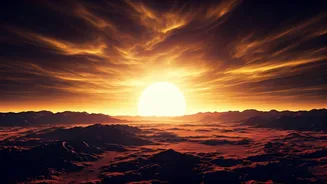
The mind-bending timekeeping on Venus gets even weirder when you consider a 'solar day'—the time from one sunrise to the next. Because the planet is rotating backwards while it's also orbiting the Sun, the time between sunrises is different from its rotational period. A solar day on Venus is about 117 Earth days long. This means you would experience roughly 58 Earth days of continuous daylight followed by 58 Earth days of unbroken night. Of course, 'daylight' is a loose term. The thick, sulphuric acid clouds are so dense that they permanently obscure the Sun. Instead of a bright, sunny day, the surface is cast in a dim, reddish-orange twilight. And don't expect any relief from the heat at night. Thanks to a runaway greenhouse effect caused by its carbon dioxide-rich atmosphere, the surface temperature stays at a scorching 460 degrees Celsius, day and night.
Earth's Twisted Sister
The fact that a day is longer than a year is more than just a fun piece of trivia; it’s a key clue to understanding why Venus is so different from Earth. Our planet's relatively quick rotation helps generate its protective magnetic field and contributes to the climate systems that make life possible. Venus, on the other hand, lacks an internal magnetic field and has a climate that went catastrophically wrong. Its slow, backward rotation, extreme heat, and crushing atmosphere are all interconnected parts of a planetary puzzle. Scientists believe that in the early solar system, Venus might have been much more like Earth, possibly with liquid water on its surface. Understanding how and why it evolved into this hellish world helps us better appreciate the delicate balance of factors that make our own planet habitable.