





From Farm Waste to Studio Wall
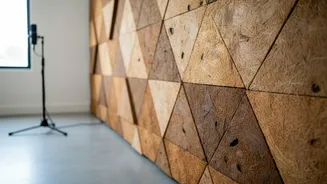
At the heart of this innovation is a material often left to rot or be burned after harvest: straw. Companies have developed a process to transform this agricultural byproduct—from crops like wheat, rice, and barley—into dense, rigid panels. The manufacturing
method is elegantly simple, often using just heat and immense pressure to compress the straw fibres into a solid board. This process typically avoids the need for synthetic glues and binders, turning what was once waste into a valuable, carbon-storing building material. The concept itself isn't new, with early versions developed in Sweden decades ago, but modern manufacturing has refined these panels into a high-performance product suitable for demanding environments like professional recording studios.
The Science of Sound Absorption
Every recording studio relies on acoustic treatment to control sound reflections, preventing the echoes and reverberation that can ruin a perfect take. Traditional acoustic foam works by forcing sound waves to travel through its open-cell structure, where friction converts sound energy into a tiny amount of heat. Compressed straw panels function on a similar principle but with a natural advantage. The inherent fibrous and porous nature of straw is excellent at trapping and dampening sound waves across a broad frequency spectrum. While standard foam is often effective at absorbing high-frequency sounds, it can struggle with problematic low-end bass frequencies. The density and rigidity of straw panels can provide more balanced absorption, making them a strong contender for creating a neutral listening environment.
Healthier Air, Safer Spaces
A significant advantage of straw panels over their synthetic counterparts lies in indoor air quality. Many conventional building materials, including certain foams and engineered woods, release volatile organic compounds (VOCs) into the air through a process called off-gassing. These chemicals can cause irritation and have been linked to long-term health effects, a concern for audio engineers and musicians who spend countless hours in enclosed studio spaces. Because they are made from natural materials without synthetic binders, straw panels are a non-toxic alternative that doesn't release these harmful gases. A common misconception about straw is that it poses a fire risk. However, when straw is highly compressed into a dense panel, the lack of oxygen makes it surprisingly fire-resistant. Official tests show that straw panel systems can withstand fire for up to two hours, often outperforming conventional construction materials and meeting stringent building code requirements.
Is Straw the Future of Studio Design?
While synthetic foam remains a cost-effective and widely available option, the shift towards sustainable materials is gaining momentum in the construction and design industries. Straw panels represent a compelling blend of eco-friendliness, acoustic performance, and health benefits. They are already being used in a range of landmark projects, including convention centres, airports, and film studios. For recording studio owners, the choice is no longer just about acoustic properties. It’s also about creating a healthier creative environment and making a sustainable business choice. As awareness grows, this humble agricultural byproduct is proving to be a sophisticated solution for the future of sound-controlled spaces, with some designers even building entire studios from straw bales.