






That groan when you stand up after hours at your desk is more than just a sound—it's your body calling for help. The modern workday often means prolonged sitting, which can quietly sabotage your joint mobility. But you're not doomed to a stiff future.
Why Sitting Makes You Stiff
Our bodies are designed for movement. When you sit for extended periods, several things happen that contribute to stiffness. Your joints contain synovial fluid, a natural lubricant that circulates when you move, keeping everything gliding smoothly. When you're stationary, this fluid doesn't circulate as well, leading to that feeling of being 'stuck'. Furthermore, sitting keeps certain muscles in a shortened, tight position—particularly your hip flexors—while others, like your glutes, become inactive and weak. This muscular imbalance pulls on your joints, especially in the hips and lower back, causing strain and reducing your overall range of motion.
The Posture Problem
It’s not just sitting, but how we sit. Slouching or leaning towards a computer screen forces your head forward, which dramatically increases the strain on your neck and shoulder muscles. This common 'tech neck' posture can lead to chronic stiffness and pain. Similarly, a chair without proper back support allows your lower back to round, putting pressure on the spinal discs and surrounding ligaments. Over time, these postural habits contribute to weakened core muscles and an unstable spine, making you more susceptible to injury and persistent discomfort.
Simple Stretches Right at Your Desk
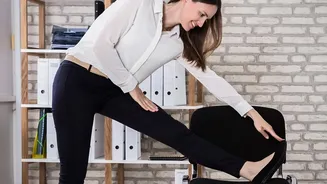
The best antidote to stillness is frequent movement. You don't need a full workout; small 'movement snacks' can make a huge difference. Try these discreet exercises every hour: - Neck Tilts: Gently tilt your head from side to to side, holding for 15-20 seconds on each side to release neck tension. - Shoulder Rolls: Shrug your shoulders up towards your ears, then roll them back and down. Repeat 5-10 times to combat slouching. - Seated Spinal Twist: Sit tall and gently twist your torso to one side, using the chair for a light stretch. This helps mobilize your mid-back. - Wrist Stretches: Extend one arm and gently pull your fingers back towards you, then point them down. This counters the strain from typing. - Seated Figure-4: Cross one ankle over the opposite knee and gently lean forward to feel a stretch in your hip and glutes.
Rethink Your Workspace
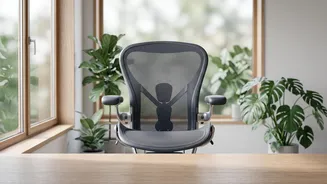
A few ergonomic adjustments can significantly reduce the strain on your body. Start by positioning your monitor so the top of the screen is at or slightly below eye level to keep your neck in a neutral position. Adjust your chair height so your feet are flat on the floor and your knees are roughly level with your hips. Your chair should support the natural curve of your lower back; if it doesn't, a small pillow or rolled-up towel can work wonders. Keep your keyboard and mouse close enough that your elbows can stay near your body, preventing shoulder and wrist strain.
Beyond the Desk: A Lifestyle of Movement
While desk–side changes are crucial, your efforts shouldn't end there. The goal is to break up sedentary time as much as possible. Set a timer to stand up and walk around for a few minutes every hour. Take phone calls while standing or pacing. Opt for the stairs instead of the elevator. Incorporating more general physical activity into your week—like brisk walks, yoga, or swimming—will strengthen the muscles that support your joints, further protecting you from the impacts of a desk–bound job. Consistency is key; small, frequent movements are far more effective than one intense workout session surrounded by hours of sitting.