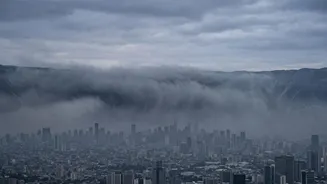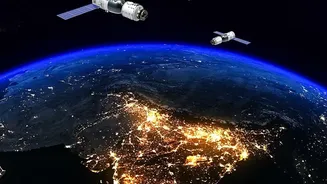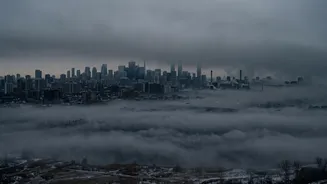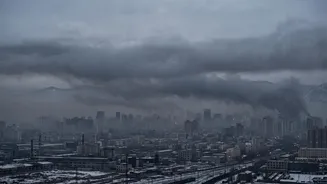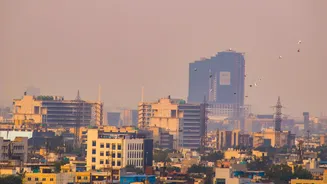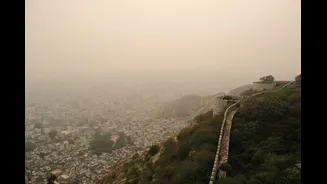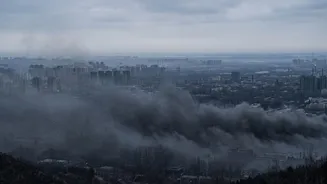



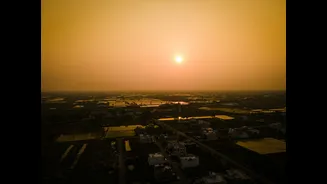
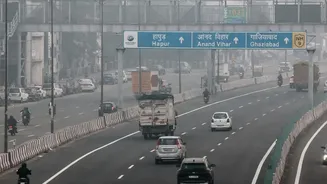
As winter begins, a familiar, toxic haze descends upon Delhi-NCR, turning the sky a murky grey and pushing the Air Quality Index (AQI) to hazardous levels. It’s an annual crisis, but not a sudden one. The reason is a predictable, perfect storm.
The Weather Puts a Lid on the City
The primary
culprit that sets the stage for severe pollution is a weather phenomenon called temperature inversion. Normally, air is warmer near the ground and gets cooler at higher altitudes, allowing pollutants to rise and disperse. In winter, the opposite happens. Colder, denser air gets trapped near the ground beneath a layer of warmer air, which acts like a lid on a pot. This lid, combined with very low wind speeds common in October and November, prevents pollutants from escaping. The mixing height—the altitude up to which pollutants can disperse—shrinks dramatically from about a kilometre in summer to just a few hundred metres, concentrating everything in the air we breathe.
The Arrival of Smoke from Farm Fires
This atmospheric trap coincides with the end of the paddy harvest in the neighbouring states of Punjab and Haryana. To quickly and cheaply clear their fields for the next crop, many farmers resort to burning the leftover crop stubble. This practice releases enormous plumes of smoke and fine particulate matter (PM2.5). Prevailing north-westerly winds carry this smoke directly towards the Delhi-NCR region, where it gets caught under the inversion layer. While stubble burning is a seasonal contributor, its timing is critical; it injects a massive load of pollutants into an already stagnant atmosphere, often accounting for a significant percentage of the daily pollution.
Delhi's Own Daily Pollution Cocktail
Even without a single farm fire, Delhi-NCR generates a staggering amount of pollution on its own. Vehicular emissions are a constant and major source, with some studies attributing over 25% of PM2.5 to traffic. Add to this the dust from a booming construction sector, which is another significant source of particulate matter. Industrial emissions from factories in and around the region release pollutants like sulphur dioxide and nitrogen dioxide. Finally, the open burning of waste and the use of biomass like wood or coal for heating in lower-income communities add another layer of toxic emissions to this daily mix. These local sources provide the baseline pollution that gets trapped and amplified during winter.
A Landlocked Geographical Disadvantage
Delhi’s geography makes a bad situation worse. The city sits in the landlocked Indo-Gangetic plains. The Himalayan mountain range to the north acts as a massive barrier, blocking the natural flow of air and preventing pollutants from dispersing northwards. This creates a 'bowl' effect where air and the pollutants within it tend to get stuck and accumulate. Without the cleansing effect of coastal sea breezes or strong, consistent winds, the entire region is predisposed to trapping air for long periods, especially during the calm poststmonsoon months.