



The High Cost of Power
For years, the dream of affordable electric mobility has hit a major speed bump: the battery. A typical lithium-ion battery pack can account for 30-40% of an electric scooter's total cost, making it the single most expensive component. This high price
is largely due to the materials inside, like lithium and cobalt, which are not only expensive but also subject to volatile global supply chains. India's reliance on imports for these critical minerals has kept prices high for consumers and exposed the market to international price swings and supply disruptions. This financial barrier has slowed the widespread adoption of electric two-wheelers, even as fuel prices continue to climb.
Enter Sodium-Ion: The Cheaper Contender
The most promising solution on the horizon is the sodium-ion battery. Instead of lithium, it uses sodium—an element abundantly available from common salt, making it hundreds of times more plentiful. This drastically cuts down on raw material costs and aligns with the 'Make in India' initiative by allowing for domestic sourcing. Industry estimates suggest that sodium-ion batteries could be 20-30% cheaper than their lithium-iron-phosphate (LFP) counterparts, which are already a more affordable option. While sodium-ion batteries currently offer slightly lower energy density, meaning less range for the same size, this is an acceptable trade-off for most urban commuters, whose daily travel is well within the 50-80 km range of current prototypes. Companies are already moving to commercialize this technology, with some planning to launch sodium-ion powered scooters in India soon.
Battery Swapping: Pay As You Go
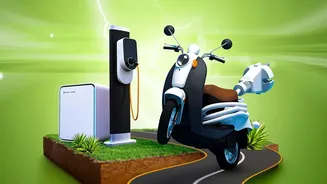
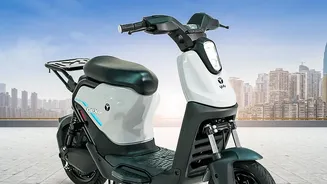
Another strategy to lower costs doesn't change the battery chemistry, but rather the ownership model. 'Battery as a Service' (BaaS) allows a customer to buy an electric scooter without the battery, instantly slashing the upfront purchase price. Instead, the rider subscribes to a service and uses a network of swapping stations to exchange their depleted battery for a fully charged one in minutes. This model, supported by government initiatives like the Draft Battery Swapping Policy, effectively turns the battery into an operational expense rather than a large capital investment. For commercial users like delivery riders, the time saved by swapping—minutes versus hours of charging—translates directly into higher earnings, making it a highly efficient alternative.
Smarter Systems and Future Tech
Beyond new chemistries, advancements in Battery Management Systems (BMS) are also playing a crucial role. These intelligent systems act as the battery's brain, optimizing performance, predicting faults, and ensuring safety, which extends the battery's lifespan and reduces long-term ownership costs. Looking further ahead, solid-state batteries promise another leap forward. By replacing the liquid electrolyte with a solid material, these batteries could offer higher energy density, faster charging, and improved safety, especially in India's hot climate. While mass adoption of solid-state technology is still several years away, with some targeting initial production around 2027, the research and development are accelerating. Researchers in India have already patented innovative designs using materials that could make batteries last longer and cost only a few thousand rupees.