


A Tale of Two Moons
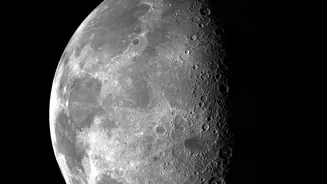
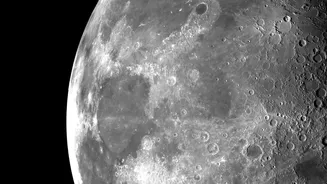
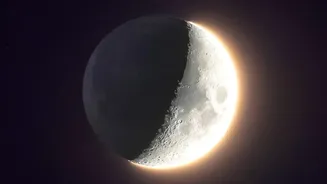
Anyone looking up at the night sky is familiar with the 'man in the Moon'. Those dark patches are vast, ancient plains of solidified volcanic lava called 'maria'. They dominate the nearside, covering about a third of its surface. This hemisphere also
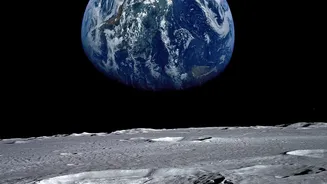
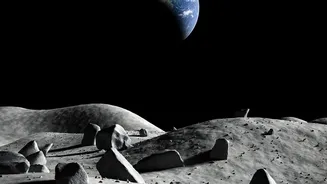
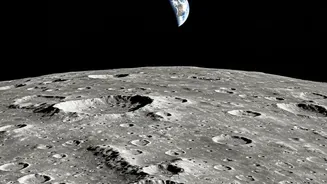
has a relatively thin crust. But the farside, which we never see from Earth due to tidal locking, is a completely different world. First glimpsed by a Soviet probe in 1959, it is almost entirely devoid of these large maria. Instead, its surface is a chaotic landscape of countless overlapping craters, with a crust that is significantly thicker and more mountainous. This stark difference, known as the lunar dichotomy, has been one of planetary science's most enduring puzzles.
First Contact with the Farside
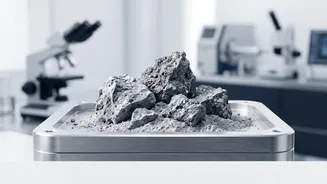
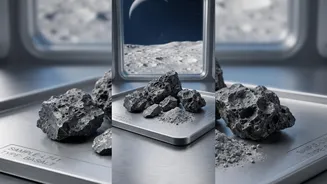
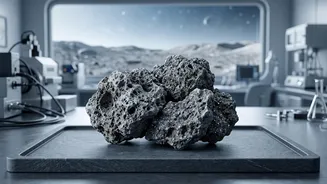
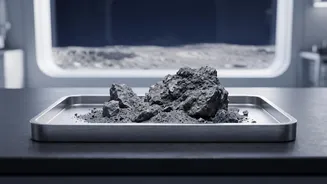
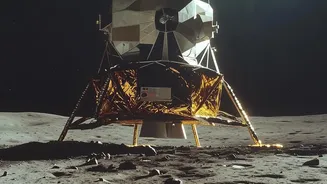
The game changed with China's Chang'e-6 mission, which in 2024 became the first to successfully land on the lunar farside and return samples to Earth. Landing in the vast South Pole-Aitken (SPA) basin—the largest and oldest impact crater on the Moon—the probe collected nearly two kilograms of precious soil and rock. For the first time, scientists could directly compare materials from both hemispheres in a lab. The analysis, published in late 2026, revealed a fascinating story. While the surface looks wildly different, the farside samples showed that the mantle deep beneath both sides had broadly similar chemical characteristics. The difference wasn't in the deep interior, but in the crust and the layers just beneath it.
The Case of the Missing Heat
The leading theory for the Moon's asymmetry centres on a unique geological feature on the nearside called the Procellarum KREEP Terrane (PKT). KREEP is an acronym for a cocktail of elements: Potassium (K), Rare Earth Elements (REE), and Phosphorus (P). Crucially, this mixture also includes heat-producing radioactive elements like thorium and uranium. Analysis of the Chang'e-6 samples confirmed that the farside is significantly poorer in these KREEP elements. This concentration of radioactive material on the nearside acted like a giant heating pad. It kept the mantle hotter for longer, lowered the melting point of rocks, and fuelled the massive volcanic eruptions that created the dark maria we see today. The farside, without this extra heat source, cooled down much faster, its crust solidifying and becoming thick and rigid.
An Uneven Beginning
So, how did all that heat-producing KREEP get concentrated on one side? Researchers now believe it happened very early in the Moon's history, shortly after it formed from the debris of a giant impact with a young Earth. As the Moon's molten magma ocean began to cool and solidify, it also became tidally locked, with one side perpetually facing our planet. The new thinking, supported by the Chang'e-6 sample analysis, is that tidal forces and heating from the still-glowing early Earth kept the nearside warmer. This uneven heating could have driven massive flows of material within the Moon's interior, effectively pushing the lighter crustal materials toward the cooling farside while concentrating the dense, KREEP-rich dregs of the magma ocean on the nearside.
Why This Cosmic Story Matters
Solving the mystery of the Moon's two faces does more than just satisfy our curiosity about our closest celestial neighbour. Because the Moon has no atmosphere or active geology to erase its past, its surface is a beautifully preserved record of the early Solar System. By understanding how the Moon formed and evolved, we gain invaluable insights into the processes that shaped all rocky planets, including our own. The story of its asymmetric cooling, driven by tidal forces and elemental distribution, provides a template for understanding how planets develop from a molten ball into a complex world. The farside samples have given us a crucial chapter in that story, confirming that even seemingly identical halves of a world can have vastly different destinies.