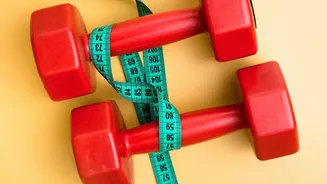







Beyond the Scale: A Better Story
Stepping on the scale can be misleading. Your total body weight fluctuates daily due to factors like hydration, hormones, and what you ate for dinner. More importantly, the scale doesn't distinguish between fat and muscle. When you start a new fitness
routine, you might gain dense muscle while losing bulky fat, a significant win that the scale might register as no change or even a slight gain. This is where measurements shine. Tracking inches lost or gained tells a more accurate story of your body’s transformation, a concept known as body recomposition. Losing inches, especially around the waist, is a far better indicator of health improvements and fat loss than a number on the scale.
What Measurements Matter Most?
You don’t need to measure every part of your body to get a clear picture. Focusing on a few key areas provides excellent insight. Experts recommend consistently tracking your waist, hips, chest, thighs, and upper arms. Your waist circumference, measured at the narrowest point of your torso or across the belly button, is a crucial health marker. A shrinking waistline often indicates a reduction in visceral fat, the dangerous fat that surrounds your internal organs. Your hip measurement, taken at the widest part of your glutes, is also important. Together, these numbers can tell you a lot about your changing body shape and progress.
How to Create Your Diagram
The beauty of this method lies in its simplicity. You don't need fancy software; a simple notebook and a pen will do. Start by drawing a basic outline of a human figure. It doesn't need to be a work of art—just a simple stick figure or a gingerbread-man shape works perfectly. Next to each key area (chest, waist, hips, each thigh, each arm), create a space to log the date and the measurement. Some people prefer using a printable chart, which can be easily found online. The goal is to create a single, at-a-glance visual. This diagram becomes your personal health blueprint, showing trends over time that a simple list of numbers in a spreadsheet might hide.
The Power of a Visual Record
Seeing your progress visually is incredibly motivating. When you feel discouraged because the scale hasn't budged, your diagram can show you the real story: that your waist is smaller or your arms are more toned. This visual feedback reinforces that your efforts are paying off, which helps build consistency. Unlike the jarring daily fluctuations of the scale, a monthly measurement check-in provides a more stable and encouraging view of your long-term progress. It turns the abstract goal of "getting healthier" into a tangible, visible journey, making you more likely to stick with your positive habits.
Tips for Accurate Tracking
Consistency is the key to useful data. Always measure yourself under the same conditions. The best practice is to take measurements in the morning, before eating or drinking. Use a flexible, non-metal tape measure and ensure it’s snug against the skin but not digging in. For each body part, make sure you measure the same spot every time. For example, always measure your thigh at its widest point or your waist just above your navel. Taking each measurement twice and averaging the numbers can help ensure accuracy. Record the numbers on your diagram once a month. This frequency is enough to show meaningful change without encouraging obsession.