





What Exactly Is a Dark Sky Reserve?
Think of a Dark Sky Reserve as a national park for the stars. It's a designated area where artificial light pollution is strictly controlled to preserve the natural darkness of the night sky. These reserves aren't just for stargazers; they protect nocturnal
ecosystems and reconnect humanity with a view of the cosmos that has inspired awe for millennia. The Hanle Dark Sky Reserve was officially designated in 2022, becoming the first of its kind in India and South Asia. It covers a core area of about 22 kilometres in radius within the larger Changthang Wildlife Sanctuary. This protection is the result of a landmark agreement between the UT Ladakh administration, the Ladakh Autonomous Hill Development Council (LAHDC), and the Indian Institute of Astrophysics (IIA).
Why Hanle Is an Astronomer's Paradise
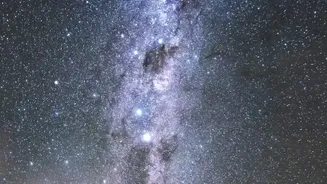
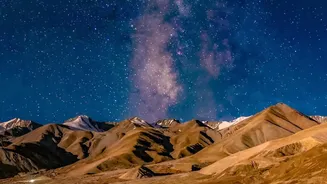
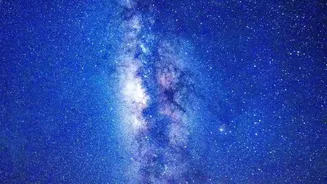
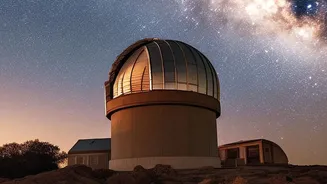
Hanle's location in the Changthang plateau of Ladakh makes it uniquely suited for gazing into deep space. Situated at a breathtaking altitude of 4,500 meters (around 14,800 feet), the atmosphere here is thin, dry, and remarkably stable. This means there's very little atmospheric water vapour or haze to blur the view. Combined with its remoteness and minimal population, the region experiences near-zero light pollution. These conditions grant Hanle a Bortle 1 rating, the highest possible score on a scale that measures sky darkness. This pristine clarity is why the Indian Institute of Astrophysics established the Indian Astronomical Observatory (IAO) here back in 2001, making it one of the world's highest sites for optical and infrared astronomy.
The Network of Protection
Protecting Hanle's skies is a collaborative effort. The 'network' refers to the partnership between scientists, local communities, and the administration working together to enforce a strict light management plan. To combat light pollution, every household in the reserve has been provided with blackout curtains, warm-coloured bulbs, and specialised lampshades to prevent light from spilling upwards. Vehicle headlights, a major source of glare for sensitive telescopes, are also regulated, with high beams prohibited within the reserve. An Eco-Development Committee, including local village representatives and officials, has been formed to manage these efforts, ensuring that conservation rules are followed while promoting sustainable tourism. This community-driven approach is vital for the project's long-term success.
A Boost for Science and Astro-Tourism
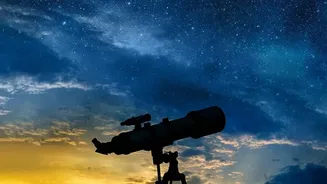
The preservation of Hanle's dark skies is a boon for both science and the local economy. For the Indian Astronomical Observatory, which houses several world-class telescopes like the Himalayan Chandra Telescope and the MACE gamma-ray telescope, the darkness is critical for studying distant galaxies, supernovae, and other cosmic phenomena. At the same time, the Dark Sky Reserve has kickstarted a new wave of astro-tourism. The IIA and local bodies have trained dozens of villagers, many of them women, as 'Astronomy Ambassadors' or 'astropreneurs'. Equipped with telescopes, they guide visitors through the wonders of the night sky, offering intimate stargazing sessions. This initiative provides a sustainable livelihood for the community, turning Hanle's unique natural asset into an engine for socio-economic development while preserving its ancient culture and fragile environment.