
The Problem: How 'Tech Neck' Travels Down Your Spine
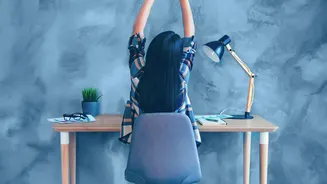
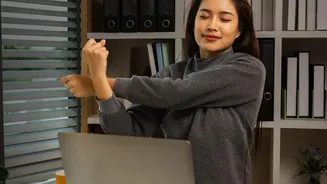
Hours spent hunched over a phone or desk don't just strain your neck. This forward-head posture, often called 'tech neck', causes your shoulders to round and your chest muscles to tighten. To compensate for this shift, your body's entire alignment is thrown
off. The curve in your upper back increases, which in turn places immense pressure on your lower back, leading to chronic tightness, stiffness, and pain. The good news is that targeted stretching and strengthening can reverse this pattern, improve posture, and provide lasting relief. These simple yoga poses are designed to work together to open the chest, realign the shoulders, and release the lower back.
Cat-Cow Pose (Marjaryasana-Bitilasana)
This gentle, flowing movement is one of the most effective for warming up the spine and relieving tension from your neck to your tailbone. It improves spinal flexibility and awareness. Start on your hands and knees in a tabletop position, with wrists under shoulders and knees under hips. As you inhale (Cow Pose), drop your belly towards the mat, lift your chest and tailbone, and look forward. As you exhale (Cat Pose), round your spine toward the ceiling, tucking your chin to your chest and drawing your navel in. Continue flowing between these two poses for 10-15 breaths, coordinating your movement with your breath to gently mobilise the entire back.
Cobra Pose (Bhujangasana)
Cobra is a gentle backbend that specifically targets the problems caused by slouching. It strengthens the spine while stretching the chest, shoulders, and abdomen. Lie on your stomach with your legs extended and hands placed under your shoulders, elbows hugged in close to your body. Press the tops of your feet into the floor to engage your legs and protect your lower back. On an inhale, use your back muscles to lift your chest off the floor, keeping your hips on the ground. Keep a slight bend in your elbows. Draw your shoulders back and down, away from your ears, to feel a broad stretch across your collarbones. Hold for five breaths before gently releasing back down.
Bridge Pose (Setu Bandhasana)
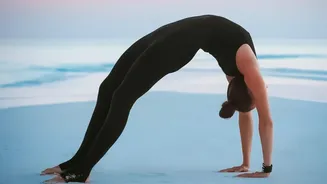
Bridge Pose is excellent for strengthening the glutes and hamstrings, which provides better support for the lower back and helps relieve pain. It also opens the chest and fronts of the shoulders. Lie on your back with your knees bent, feet flat on the floor hip-width apart, and close enough that you can graze your heels with your fingertips. On an inhale, press through your feet and lift your hips off the floor. You can keep your arms flat on the floor or interlace your fingers underneath your back, rolling your shoulders under to create more lift in the chest. Keep your thighs parallel and engage your core. Hold for 30 seconds before slowly rolling back down.
Downward-Facing Dog (Adho Mukha Svanasana)
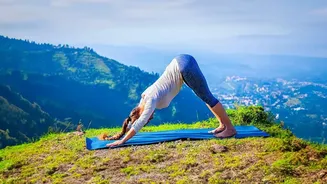
An iconic yoga pose, Downward-Facing Dog is a full-body stretch that is fantastic for lengthening the spine and relieving back pain. It stretches the hamstrings, opens the shoulders, and strengthens the arms. From a tabletop position, tuck your toes and lift your hips up and back, forming an inverted 'V' shape with your body. You can keep your knees generously bent to focus on creating a long, straight line from your hands to your hips, which is more important for back health than having straight legs. Press firmly through your palms, draw your shoulders away from your ears, and let your head hang heavy to release neck tension. Hold for five to eight breaths.
Reclining Spinal Twist (Supta Matsyendrasana)
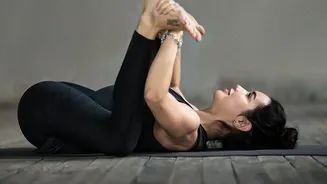
This restorative pose is a perfect way to end your routine. It gently twists the spine, helping to release accumulated tension in the lower back and improve spinal mobility. Lie on your back and draw your knees into your chest. Extend your arms out to the sides in a 'T' shape. As you exhale, gently lower both knees to one side, keeping both shoulders pressed firmly to the floor. You can turn your head to gaze in the opposite direction of your knees for a deeper stretch. Hold for 30 seconds to a minute on each side, breathing deeply to allow your back muscles to relax and release.