


Choose Your Route Wisely
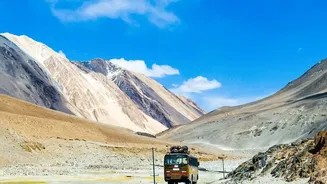
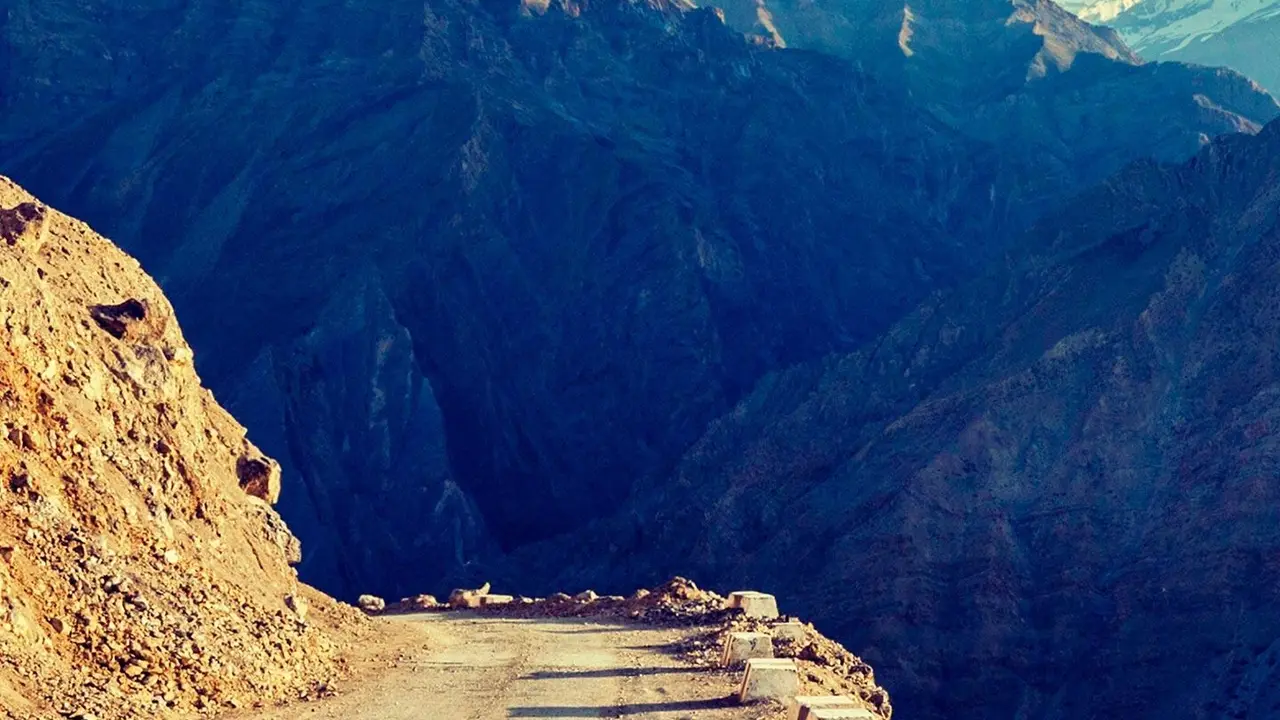
The route you take into Spiti Valley is your single most important safety decision. While the Manali-Kaza highway is shorter, it involves a rapid, punishing ascent over high passes like Kunzum La (4,551 metres), significantly increasing the risk of Acute
Mountain Sickness (AMS). For a safer journey, always choose the Shimla-Kaza highway for your entry. This route allows your body to acclimatize gradually over two to three days as you slowly gain altitude through Kinnaur Valley. The roads are also generally in better condition and remain open for a longer part of the autumn season. You can still exit via Manali if weather and road conditions permit, but a slow entry is non-negotiable for high-altitude safety.
Respect Acute Mountain Sickness (AMS)
Altitude sickness can affect anyone, regardless of age or fitness level. It is caused by ascending too quickly, not giving your body enough time to adjust to lower oxygen levels. Symptoms start with a persistent headache, nausea, and fatigue. The best prevention is a gradual ascent. Beyond choosing the Shimla route, you must hydrate aggressively by drinking at least three to four litres of water daily. Eat light, carbohydrate-rich meals and avoid alcohol, especially during the first 48 hours at altitude, as it hinders acclimatization. If you start feeling unwell, stop ascending. Rest at your current altitude and do not go higher until symptoms subside. If they worsen, descending is the only effective treatment.
Pack for All Four Seasons
Autumn weather in Spiti is a game of extremes. Sunny afternoons can feel pleasant, but temperatures plummet the moment the sun disappears, often dropping well below freezing at night. The key is layering. Your packing list must include thermal innerwear, a fleece jacket for mid-layering, and a windproof down or padded jacket as your outer shell. Woollen socks, a warm beanie, gloves, and a scarf or buff are essential to protect your extremities. Due to the thin atmosphere and high UV radiation, a strong sunscreen (SPF 50+), UV-protection sunglasses, and lip balm are just as important as your warmest jacket. Sturdy, comfortable shoes with good grip are crucial for navigating uneven village paths.
Prepare Your Vehicle and Mindset
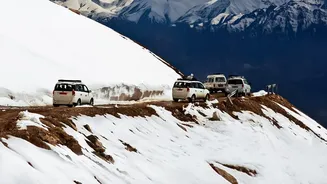
A Spiti road trip is as much a test of your vehicle as it is of your body. Ensure your car is in excellent condition, paying special attention to tyres, brakes, and engine fluids. A 4x4 offers an advantage, but SUVs and even high-ground-clearance sedans can manage if driven carefully. Be prepared for poor road conditions, especially if you venture off the main highway or use the Manali-Kaza route, which has notoriously rough stretches. A major hazard in autumn is black ice, which forms on roads overnight and is often invisible in the morning shadows. It’s safer to start your drives a little later in the day after the sun has had time to melt any ice. Also, remember that services are scarce. Carry extra fuel, a basic toolkit, and a puncture repair kit.
Essential On-the-Ground Logistics
Once in the valley, self-sufficiency is key. Mobile connectivity is sparse; Jio has the most reliable network, but even that is limited to towns like Kaza and Tabo. Do not rely on online maps. Download offline maps of the entire region on your phone before you leave. Cash is essential. The ATM in Kaza is the only one in the valley and is often out of service. Withdraw enough cash in Shimla, Reckong Peo, or Manali to cover your entire trip. Carry a thermos flask to store hot water, which is a great comfort in the cold and helps with hydration. Finally, carry a basic medical kit with medications for headache, stomach issues, and any personal prescriptions. It's wise to consult a doctor about carrying Diamox, a prophylactic for AMS, before your trip.