
Venus: The Brilliant Evening Star
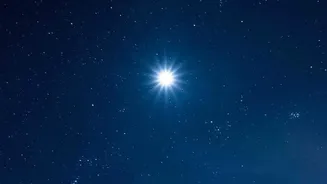
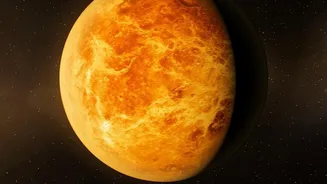
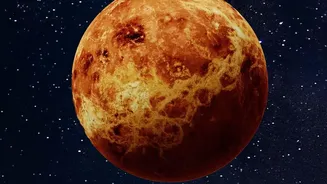
Throughout September, Venus will command attention as a stunningly bright object in the western evening sky right after sunset. While it appears lower each night as the month progresses, its brightness intensifies, reaching its peak for the entire year
on September 18 and 22, shining at a brilliant magnitude of -4.8. This is bright enough to be easily spotted even from light-polluted cities. Look for it near the western horizon as twilight deepens. On September 14, you can catch a beautiful sight as the crescent Moon passes near the radiant planet, making for a memorable photo opportunity.
The Autumnal Equinox: A Day of Balance
Mark your calendars for September 22 or 23, depending on your exact location in India, for the autumnal equinox. For those in New Delhi, the event occurs early on September 23, while for Mumbai it's also September 23. This astronomical event signals the official start of autumn in the Northern Hemisphere. On the equinox, the Earth's axis is tilted neither toward nor away from the sun, resulting in nearly equal lengths of day and night across the globe. For us in India, it marks the transition to milder weather. Culturally, equinoxes have long been associated with balance and harvest, a time for reflection as the days begin to shorten and the nights grow longer.
The Harvest Moon's Golden Glow
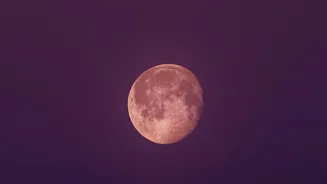
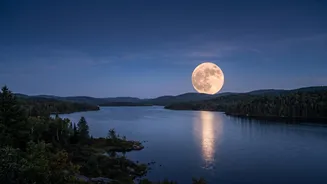
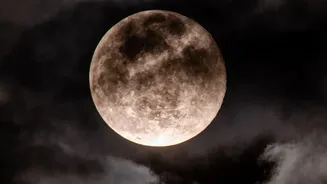
September’s full moon, which reaches its peak illumination on September 26, is famously known as the Harvest Moon. It will be at its fullest at 10:19 PM IST, making India a prime location for viewing. The Harvest Moon is the full moon that occurs closest to the autumnal equinox. What makes it special is that for several evenings around its peak, the moon rises at nearly the same time shortly after sunset. This phenomenon historically provided farmers with extra hours of bright moonlight to bring in their crops, hence the name. When you watch it rise near the horizon, it may appear larger and cast a beautiful orange-yellow hue.
More Planetary Sightings
Beyond the main events, September is a great month for planet-spotting. Saturn will be visible for most of the night, rising in the east shortly after sunset. On the night of the Harvest Moon, Saturn will appear as a bright, star-like object near the Moon. Early risers can look to the pre-dawn eastern sky to spot Mars and the very bright Jupiter. On September 6, a crescent Moon will be near Mars, and on September 8, it will be very close to Jupiter, offering a delightful celestial grouping to start your day.
Your Skywatching Toolkit
You don’t need expensive equipment to enjoy these cosmic sights. The most important tool is a clear, dark sky, away from city lights if possible. Give your eyes about 15-20 minutes to fully adjust to the darkness. While planets like Venus and Jupiter are bright enough to be seen with the naked eye, a simple pair of binoculars can reveal more detail, such as the crescent phase of Venus or even Jupiter's largest moons. For the Harvest Moon, a tripod can help you take steady photos with a smartphone or camera, especially when it’s low on the horizon. Planetarium apps can also be a great help in pinpointing the exact location of these celestial objects in your local sky.