



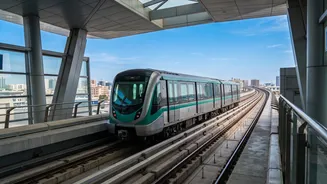
A New Era of Commuting
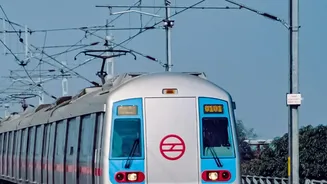
On November 2, 2026, the driverless corridors of the Delhi Metro—the Magenta and Pink lines—ferried an astounding 1.6 million passengers, a single-day record spurred by the pre-Diwali rush. This milestone means that roughly one in every five passengers on the entire
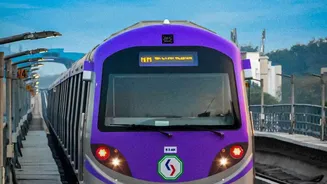
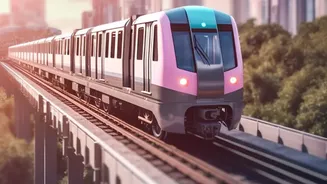
network that day travelled on a train with no human driver. First launched in December 2020 on the Magenta Line, the Unattended Train Operation (UTO) system has become an integral part of Delhi's public transport fabric. Currently, 100 driverless trains operate across 120 kilometres, making it one of the largest such networks globally. With plans to expand the driverless network to nearly 198 kilometres, Delhi is cementing its status as a pioneer in modern urban mobility in India.
What 'Driverless' Really Means
The term 'driverless' can sound alarming, but it refers to a highly sophisticated and safe mode of operation. The technology, officially known as Unattended Train Operation (UTO) or Grade of Automation 4 (GoA4), relies on an advanced signalling system called Communication-Based Train Control (CBTC). This system allows trains to communicate constantly with a central control centre, which manages everything from speed and braking to precise platform docking. This eliminates the possibility of human error, a major cause of accidents. While there is no 'driver' in a cabin, staff are still present to monitor operations and assist passengers in emergencies, ensuring a layer of human oversight remains.
The Price of Progress
This leap into the future comes with a hefty price tag. Critics and even some government officials point to the high upfront capital costs as a major concern. Implementing driverless technology requires significant investment in CBTC signalling, platform screen doors to ensure passenger safety, and other advanced infrastructure. While exact figures for the Delhi Metro's upgrade are not readily public, studies of similar global projects confirm that the initial capital costs for UTO-capable lines are higher than for conventional metro lines. This financial barrier is a key reason why experts caution against a one-size-fits-all approach, suggesting that each Indian city must weigh the costs against its specific needs and financial capacity.
The Payoff: Efficiency, Frequency, and Safety
Despite the high costs, the benefits are substantial. Proponents, including the Delhi Metro Rail Corporation (DMRC) leadership, argue that automation leads to greater operational flexibility and reliability. Driverless trains can run at a higher frequency, reducing waiting times for commuters. Automated systems optimize acceleration and braking, leading to smoother rides and better energy efficiency. Perhaps most importantly, the system enhances safety by removing the element of human error. DMRC's managing director, Vikas Kumar, notes that driverless trains perform exhaustive self-tests before each service run, significantly improving dependability.
The Human Factor and India's Future
A common concern with automation is job loss. However, DMRC has stated that no train operators have been laid off since the introduction of driverless services in 2020. Instead, the roughly 3,000 operators have been redeployed to other crucial roles like station management and crowd control, addressing a key criticism. The debate now extends beyond Delhi. With metro services operating in 26 Indian cities, the success on the Magenta and Pink lines serves as a powerful case study. However, experts like Sudhanshu Mani, a key figure behind the Vande Bharat Express, advise caution. He argues that India, with its lower staffing costs compared to Western nations, should perform its own cost-benefit analysis rather than simply following global trends. While a definitive financial comparison for India is not yet available, Delhi's experience provides an invaluable blueprint for the future of urban transport across the nation.