







Indoor walking is a fantastic, accessible exercise, but how do you know if your pace is effective? Finding a comfortable yet challenging speed is key to unlocking the full benefits, from improved heart health to better stamina.
Why Your Pace Matters
Simply moving is great,
but your walking pace determines the kind of results you get. A leisurely stroll is good for mobility and breaking up long periods of sitting. A brisk, more intentional pace, however, is what elevates your walk into a powerful cardiovascular workout. Research has shown that a faster walking pace is linked to better health outcomes, including a lower risk of cardiovascular disease and improved overall longevity. Finding the right intensity ensures you’re challenging your body enough to improve fitness without over-exerting yourself or risking injury.
The Simple 'Talk Test'
One of the easiest, most reliable ways to gauge your walking intensity requires no equipment at all: the talk test. It's a simple method recommended by health organisations to measure your effort level. If you're walking at a moderate intensity, you should be able to hold a conversation comfortably but not be able to sing. If you can belt out your favourite song, you need to pick up the pace. If you can only manage a few words before needing to pause for breath, you're likely in a vigorous zone and might want to slow down to a more sustainable, comfortable pace. For most health benefits, that moderate 'talk-but-don't-sing' zone is the sweet spot.
Using the RPE Scale
Another way to tune into your body is by using the Rate of Perceived Exertion (RPE) scale. This is a subjective measure of how hard you feel your body is working. A common version is a simple 0-10 scale, where 0 is 'sitting in a chair' and 10 is 'maximal, all-out effort'. For a moderate-intensity walk, you should aim for a level between 3 (moderate) and 5 (somewhat hard). This feeling corresponds to a brisk walk for most people. This method helps you learn what different intensities feel like for your own body, which is a crucial skill for exercising safely and effectively.
A Basic Guide to Heart Rate
If you use a fitness tracker, you can also use your heart rate as a guide. For moderate_intensity exercise, a general goal is to be within 50–70% of your maximum heart rate. A common, simple formula to estimate your maximum heart rate is to subtract your age from 220. So, for a 40–year–old, the estimated max heart rate is 180 beats per minute (bpm). Their target moderate–intensity zone would be between 90 and 126 bpm. Most brisk walking will put you in this zone, which is excellent for building aerobic fitness and burning fat.
Paces for Different Goals
Your ideal pace also depends on your goal for the day. A slower pace (around 2–3 mph) is great for warm–ups, cool–downs, or active recovery days. A moderate, brisk pace (around 3–4 mph, or roughly 100–115 steps per minute) is ideal for general fitness, improving heart health, and burning calories. If you’re looking to boost your stamina, you can incorporate intervals of vigorous walking (where talking is difficult) for $1–$2 minutes, followed by a minute of recovery at a slower pace. The most important thing is to listen to your body and choose a pace that feels sustainable for you.
Putting It All Together
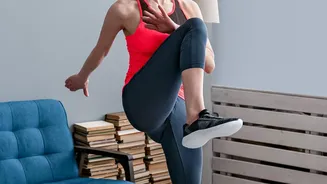
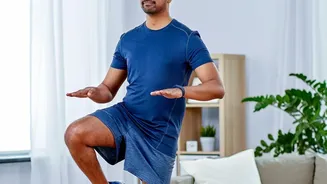
You don’t need a treadmill to have a great indoor walking workout. You can simply march in place, do side steps, or walk in a clear path through your home. Start with a few minutes of slower walking to warm up. Then, increase your speed until you can talk but not sing. Try to maintain this pace for $20–$30 minutes. You can even use music with a tempo of $100–$120 beats per minute (bpm) to help guide your steps. As you get fitter, you’ll naturally find that you can walk faster while staying in that same comfortable–but–challenging zone. Consistency is more important than speed, so find a pace you enjoy and can stick with.