



A Successor to Hubble, But Different
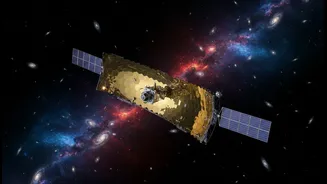
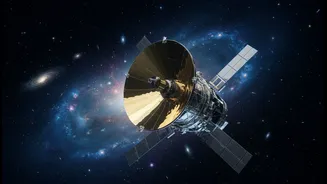
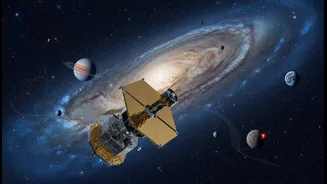
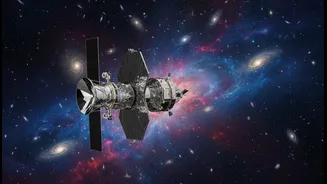
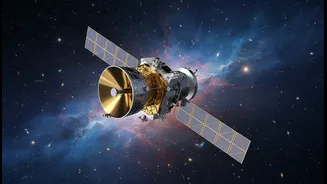
Set to launch around August 30, 2026, the Nancy Grace Roman Space Telescope is often mentioned in the same breath as Hubble and the James Webb Space Telescope (JWST). Like Hubble, it has a 2.4-metre primary mirror. But that's where the similarities end.
Roman, named after NASA's first chief of astronomy, Nancy Grace Roman, isn't designed to be a more powerful version of its predecessors; it's designed to be a different kind of tool altogether. Its main instrument, the Wide-Field Instrument (WFI), will give it a field of view 100 to 200 times larger than Hubble's infrared camera. Think of it this way: if Hubble and Webb are like microscopes, designed for detailed close-ups of specific cosmic targets, Roman is like a panoramic camera, built to capture vast swathes of the sky with incredible speed and efficiency.
The Ultimate Cosmic Surveyor
Roman's superpower is its ability to survey the universe at an unprecedented scale while maintaining Hubble-like image quality. In just under a year and a half, one of its core surveys will map an area of the sky more than 5,000 square degrees—that's about 12% of the entire sky. It's estimated that one month of observation time on Roman will gather more data than Hubble has in over three decades of operation. The primary goal of these massive surveys is to tackle two of the biggest mysteries in cosmology: dark energy and dark matter. By mapping the positions of billions of galaxies and observing thousands of distant supernovae, scientists will trace the expansion history of the universe. This data will help them understand the nature of the mysterious dark energy that is causing this expansion to accelerate.
A New Way to Hunt for Planets
While the Kepler and TESS missions found thousands of exoplanets by watching for the slight dimming of a star as a planet passes in front of it (the transit method), Roman will primarily use a different technique called gravitational microlensing. This method detects planets by observing how the gravity of a foreground star and its planets can bend and magnify the light of a much more distant star that happens to align perfectly behind it. This technique is sensitive to planets that are farther from their stars, similar to the gas giants in our own solar system, and can even find 'rogue' planets that wander through the galaxy without a host star. While some reports have claimed it could find up to 100,000 exoplanets or more, this is a high-end estimate. A more conservative expectation is that it will discover thousands, dramatically increasing our census of worlds, especially those in the cold outer regions of planetary systems.
Managing the Hype and Strong Claims
This is where we need to separate fact from fiction. Will Roman take breathtaking, colourful close-ups of alien worlds? No. Its strength is in statistics and surveys, not detailed characterization of individual planets. The Coronagraph Instrument on board is a technology demonstration, designed to test techniques for directly imaging large, Jupiter-like planets by blocking the light of their star. It's an important step for future missions, like the Habitable Worlds Observatory, but Roman itself is not primarily a planet-imager. It complements, rather than replaces, telescopes like JWST. Roman will be a discovery engine, identifying countless targets for Webb and other observatories to study in greater detail. Webb is designed to peer deeper into the early universe, while Roman will help us understand how the universe evolved since that time.