






A Giant Leap in Self-Reliance
For decades, Indian space ambitions have soared, but sending humans into space required relying on international partners for critical training. The establishment of a comprehensive astronaut training facility in Bengaluru, spearheaded by the Indian Space
Research Organisation's (ISRO) Human Space Flight Centre (HSFC), marks a pivotal shift. This indigenous infrastructure is designed to manage every aspect of an astronaut's preparation, from classroom learning to complex mission simulations. The goal is to create a self-contained hub that not only prepares the first Gaganyaan crew but also sustains a long-term human spaceflight program, reducing dependency on foreign facilities and hefty costs. This evolving centre is the heart of India's strategy to ensure its astronauts are trained on systems specific to their mission, a level of detail generic training abroad cannot provide.
Bioastronautics: The Science of Space Survival
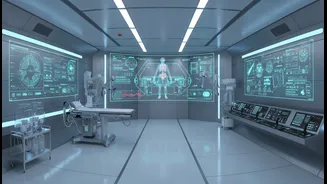
Bioastronautics is the critical field dedicated to studying and counteracting the effects of spaceflight on the human body. Prolonged exposure to microgravity, cosmic radiation, and the psychological stress of isolation pose significant health risks. ISRO's new infrastructure directly addresses these challenges. It combines medical science with engineering to ensure astronauts are physically and mentally prepared. A key part of this is a recent collaboration with the Sree Chitra Tirunal Institute for Medical Sciences and Technology (SCTIMST), which established a Center for Space Medicine Research and the country's first postdoctoral fellowship in bioastronautics. This partnership aims to develop biomedical solutions to protect astronauts from issues like bone density loss and muscle atrophy, ensuring they return to Earth safely.
Simulating the Extremes of Space
To prepare for the harsh realities of space, astronauts must experience them first. The Bengaluru facility is being equipped with a suite of advanced simulators to replicate every phase of the Gaganyaan mission. A human centrifuge, a technology possessed by few nations, will train astronauts to withstand the crushing gravitational forces (G-forces) during launch and re-entry. Other simulators will mimic the weightlessness of microgravity, extreme temperature variations, and different atmospheric pressures. Virtual Reality (VR) systems are also being integrated, allowing astronauts to practice mission procedures, navigation, and emergency protocols in a highly realistic, immersive digital environment. This allows them to master the crew module's systems and build muscle memory for critical operations without leaving the ground.
Preparing for Every Contingency
Human spaceflight is inherently risky, and safety depends on preparing for anything that could go wrong. The new training infrastructure is built around a philosophy of extreme preparedness. Astronauts undergo rigorous survival training to handle off-nominal landings, whether on land or at sea. The training covers everything from using the Crew Escape System, which can pull the module to safety in case of a launch failure, to post-splashdown procedures like the inflation of floats to keep the capsule upright. The crew practices in mission and flight simulators, mastering procedures for every scenario imaginable. This intense focus on contingency management, combined with deep familiarity with the Gaganyaan-specific hardware, is what elevates the safety metrics for India's indigenous crewed flights.