





A Critical Safety Milestone
In the complex and high-stakes world of human spaceflight, nothing is more important than crew safety. The recent test demonstrated the flawless functioning of the Gaganyaan Crew Escape System (CES), a mechanism designed to be the ultimate lifeline for
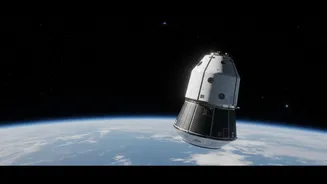
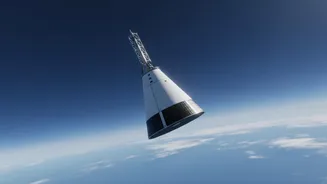
astronauts. This system is engineered to rapidly pull the crew module—the capsule where the astronauts will be seated—away from the main launch vehicle in the event of an emergency during the ascent phase. Think of it as a highly advanced ejection seat, but for an entire space capsule, designed to work within milliseconds of detecting a problem. The successful test proves ISRO's commitment to building a robust, human-rated system where every contingency is planned for.
Simulating a Real-Life Emergency
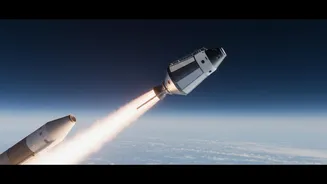
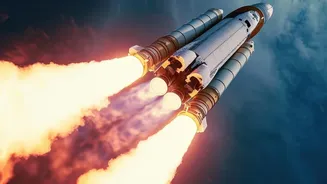
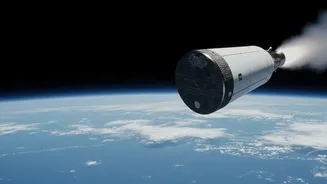
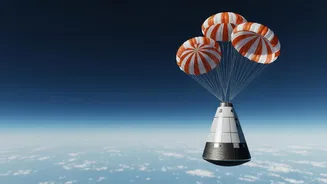
The high-altitude abort test was a meticulously choreographed sequence designed to mimic a worst-case scenario. A dedicated test vehicle, acting as a stand-in for the powerful Human-Rated LVM3 rocket, launched the uncrewed crew module to a specific altitude. At a pre-determined point, an 'abort' command was triggered, simulating a catastrophic failure of the launch vehicle. Instantly, powerful, quick-acting solid motors on the Crew Escape System fired, generating immense thrust to pull the crew module clear of the rocket. After reaching a safe distance, the escape system jettisoned, and the crew module began its descent, deploying a series of parachutes to slow its speed for a gentle splashdown in the sea. Every phase, from the high-G acceleration to the parachute deployment, performed as expected, validating the end-to-end design.
The Ultimate Insurance Policy
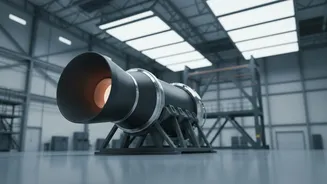
Why is this single test so crucial? The ascent phase, when the rocket is battling Earth's gravity and experiencing maximum aerodynamic pressure, is one of the most dangerous parts of any space mission. The Crew Escape System is the astronauts' only means of survival if something goes wrong during this critical window. It must be powerful enough to out-accelerate the main rocket and precise enough to orient the crew module for a safe landing. This system, composed of multiple high-burn motors, has been rigorously qualified on the ground. This successful high-altitude demonstration provides the confidence that, should an emergency ever arise, India's 'Gaganauts' will have a reliable way to get to safety.
The Path to the Stars
This successful abort test is a major feather in the cap for the Gaganyaan programme, but it is one of many crucial steps. ISRO has been methodically ticking off boxes on its complex checklist, including integrated air-drop tests of the parachute system, static firing of various motors, and the development of the human-rated launch vehicle itself. According to the latest timelines, the first uncrewed Gaganyaan mission, which will feature the humanoid robot 'Vyommitra', is planned for late 2026. This will be followed by more test flights before the historic first crewed mission is launched in 2027, which will make India only the fourth nation in the world to have independent human spaceflight capability.