




For years, the power of a passport was simple: how many countries could you visit without a visa? But as the world changes, a new perspective is emerging, one that asks a deeper question: What good is a ticket to the world if you lack freedom at home?
More Than Just Visa-Free Miles
For decades, global mobility has been measured by indices like the Henley Passport Index, which ranks nations based on the travel freedom their passports afford. In 2026, Singapore again holds the top spot, its citizens able to access 192 destinations without a prior visa. Following closely are Japan, South Korea, and the United Arab Emirates. These rankings are a powerful symbol of a nation’s diplomatic reach and global integration. However, this single metric tells only half the story. The concept of a 'happy passport' reframes this, arguing that true national strength lies in balancing this external mobility with a high degree of internal liberty. It’s a comparison between the freedom to leave and the quality of freedom you experience by staying.
Defining 'Freedom at Home'
So what does 'freedom at home' actually mean? This is where data from reports like the Human Freedom Index, co-published by the Cato Institute and the Fraser Institute, becomes crucial. This index provides a comprehensive measure of personal, civil, and economic freedom. It assesses 87 distinct indicators, including the rule of law, security and safety, freedom of expression and religion, and the ability to trade or start a business. In the 2026 rankings, countries like Denmark, Switzerland, and New Zealand consistently top the charts, praised for their robust democratic institutions and protection of individual rights. This creates a fascinating second data point to place alongside passport power, revealing a more holistic picture of a citizen's true quality of life.
The Mobility-Freedom Gap
When you compare both indices, a 'Mobility-Freedom Gap' appears. Some nations offer immense travel freedom but score poorly on personal liberties. The United Arab Emirates is a prime example; its passport is one of the world's most powerful, ranking second globally for travel access. Yet, it sits much lower on indices measuring personal and political freedoms. Conversely, some countries with high levels of personal freedom don't have passports that offer extensive visa-free travel. This gap highlights a fundamental trade-off. It suggests that economic power and strategic diplomacy can build a powerful passport, but that doesn't always correlate with a society that values and protects personal expression, a free press, and other civil liberties.
Where India and World Powers Stand
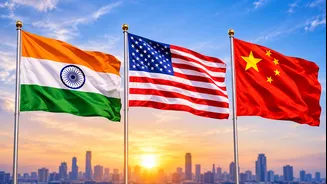
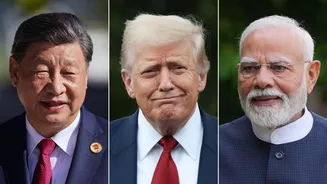
The analysis reveals complex profiles for global powers. The United States, for example, has seen its ranking decline on both the Henley Passport Index and the Human Freedom Index in recent years. In 2026, the US passport sits in 10th place, well behind many European and Asian nations, while its freedom score has also eroded. Meanwhile, China ranks 147th for freedom, reflecting significant restrictions on individual rights despite its economic might. For India, the picture is mixed. The 2026 Henley Passport Index shows India's ranking fluctuating, sitting around the 84th mark with visa-free access to 55 countries. On the Human Freedom Index, India is ranked 110th out of 165 countries, a notable decline over the past decade that reflects concerns over civil liberties and rule of law.