





Embrace Your Space, Don't Fight It
The first step is to change your mindset. Instead of seeing a small room as a limitation, view it as a focused training zone. You only need a space roughly the size of a yoga mat to perform a huge variety of exercises. Clear a small area by pushing a coffee
table aside or utilizing the space between your bed and the wall. The key is consistency, not square footage. Bodyweight training, which uses your own body as resistance, is perfect for these situations because the movements are often stationary. Research has shown that calisthenics can produce comparable improvements in muscle strength and body composition to traditional weight training, proving that your body is the only tool you really need.
High-Intensity Cardio Without the Noise
Getting your heart rate up in an apartment requires moves that are high-intensity but low-impact, especially if you have neighbours below. Focus on exercises that get you breathless without shaking the floor. Mountain climbers are excellent, engaging your core while providing a cardio challenge. High knees, where you run in place while bringing your knees toward your chest, are another classic. For a quieter alternative to jumping jacks, try plank jacks: start in a plank position and 'jack' your feet out wide and back in, keeping your core tight. Even shadow boxing or simply dancing to upbeat music can be surprisingly effective ways to get a cardio session in.
Build Strength with Foundational Movements
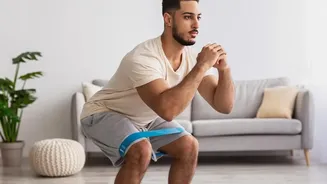
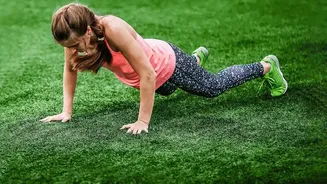
You can build significant strength using just your body weight by focusing on a few core movements that engage multiple muscle groups simultaneously. The push-up is a gold standard for the upper body, targeting the chest, shoulders, triceps, and core. If a standard push-up is too difficult, you can modify it by doing them against a wall or with your knees on the floor. For the lower body, bodyweight squats are fundamental for strengthening your quads, glutes, and hamstrings. Lunges, which can be done forward or in reverse, are perfect for small spaces as they train each leg independently, improving balance and addressing strength imbalances.
Use Your Environment as Equipment
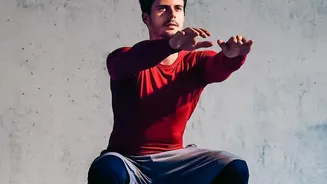
Your walls, floor, and even a sturdy chair can become valuable pieces of fitness equipment. Use a wall for wall-sits, an isometric exercise that torches your quads and glutes. To perform one, slide your back down a wall until your knees are at a 90-degree angle, as if sitting in an invisible chair, and hold. A stable chair or the edge of your bed is perfect for tricep dips to target the back of your arms. Sit on the edge, place your hands beside your hips, move your hips forward off the chair, and lower your body down before pushing back up. You can also use the floor for exercises like glute bridges, which are fantastic for your glutes and hamstrings.
Focus on Core Stability and Flexibility
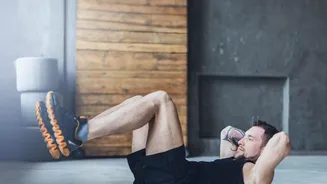
A strong core is the foundation of all movement, and many core exercises require very little space. The plank is one of the most effective for developing core stability, which supports posture and protects your lower back. You can increase the difficulty with variations like plank shoulder taps or by extending one leg or arm. Don't forget to incorporate flexibility. Simple stretches, yoga poses, or holding a deep squat can improve mobility and aid in recovery. Dedicating even a few minutes to stretching after your workout can make a huge difference in how you feel and perform.