
The Beginning of the End: The Red Giant
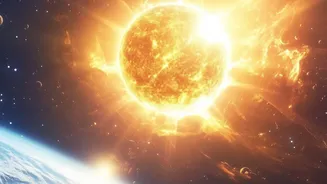
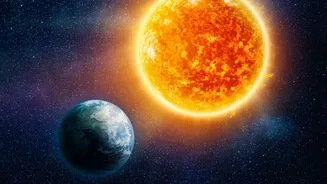
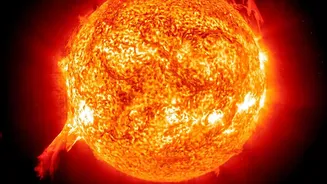
Our Sun, like all stars, has a finite lifespan. It currently fuses hydrogen into helium in its core, a process that has provided Earth with light and warmth for over four billion years. But when that hydrogen fuel runs out in about five billion years,
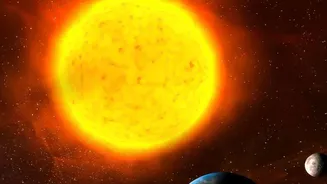
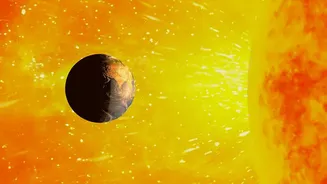
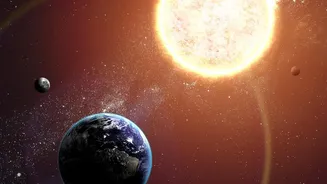
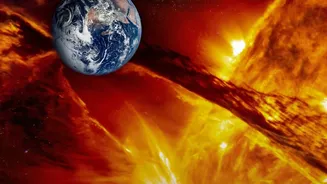
the Sun's core will contract and heat up, while its outer layers will expand dramatically. It will swell into a 'red giant', growing hundreds of times larger than it is today. This expansion will be catastrophic for the inner solar system. Mercury and Venus will be the first to be consumed by the Sun's expanding atmosphere. Earth's fate hangs in the balance; recent studies suggest it is on the very edge of survival, where it might be engulfed or left as a burnt, lifeless rock. Even if it escapes being swallowed, the intense heat will have boiled away our oceans long before.
A Weaker Grip Causes Cosmic Drift
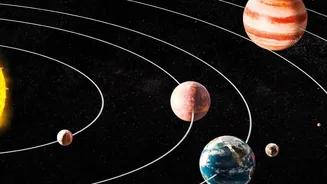
As the Sun swells into a red giant and later sheds its outer layers, it will lose a significant portion of its mass—perhaps up to half. This mass loss is the critical factor in destabilising the solar system. According to the laws of gravity, the less massive the Sun becomes, the weaker its gravitational pull on the remaining planets. As this grip loosens, the orbits of the surviving planets, from Mars outwards, will begin to expand. Imagine a weight spinning on a string; if the string is slowly let out, the weight's circle becomes wider. In the same way, planets like Jupiter, Saturn, Uranus, and Neptune will drift into much larger orbits, potentially doubling in size. This fundamental change sets the stage for a new and much more chaotic celestial dance.
The Giant Planets' Gravitational Dance
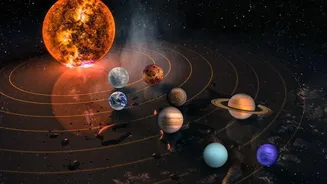
While a smooth, gradual loss of solar mass would lead to a larger but still stable solar system, recent studies suggest the process might be more violent. The Sun could shed its mass in uneven, powerful bursts. These 'stochastic kicks' would nudge the giant planets in unpredictable ways, disrupting the delicate gravitational balance that has kept them in orderly orbits for billions of years. The four giant planets—Jupiter, Saturn, Uranus, and Neptune—exert powerful gravitational forces on each other. As their orbits shift and change, they will begin to tug on one another in new ways. This can lead to a condition known as dynamical instability. Simulations show a range of dramatic outcomes, including Uranus and Neptune being flung out of the solar system entirely or even swapping orbits with each other.
The Final Act: A White Dwarf and its Debris
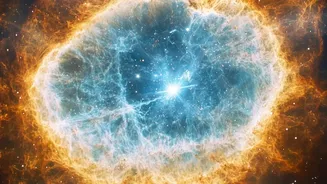
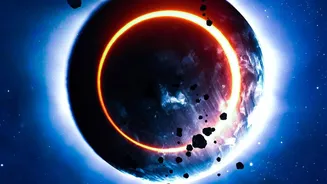
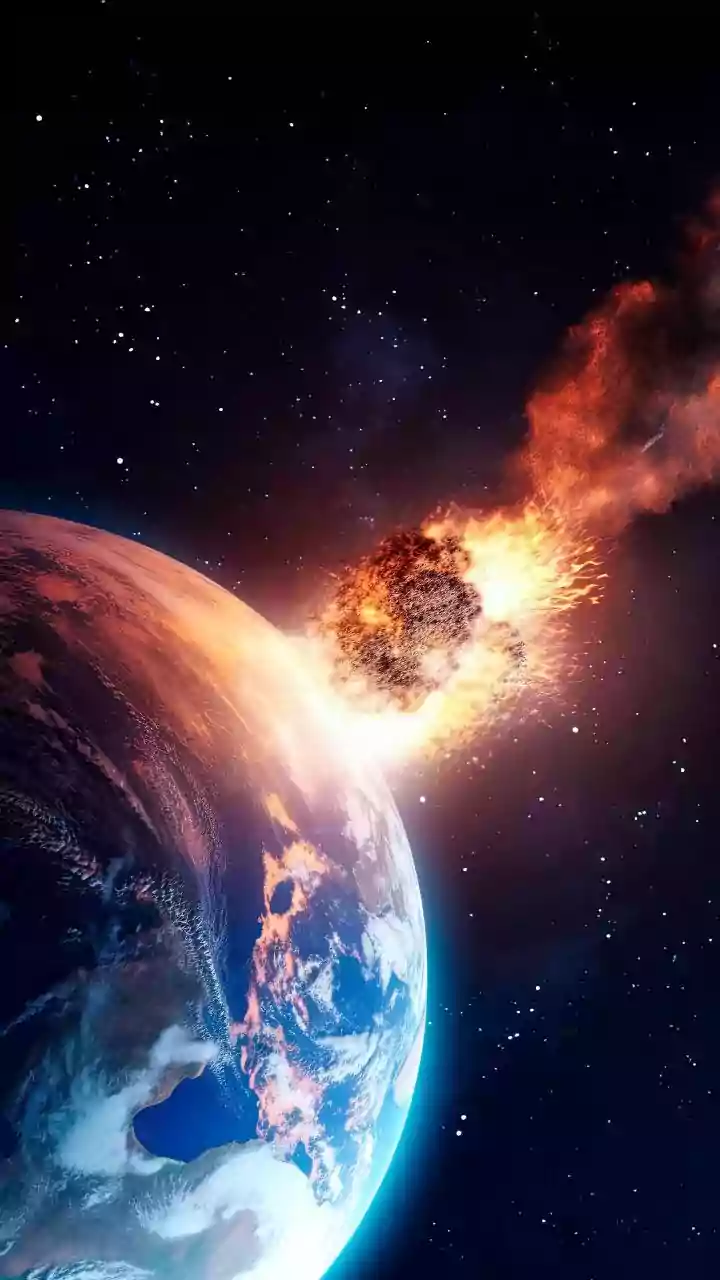
After the red giant phase, the Sun will cast off its outer layers, creating a beautiful, fleeting cloud of gas called a planetary nebula. All that will remain of our star is its hot, dense core: a white dwarf. This Earth-sized stellar remnant, containing about half the Sun's original mass, will no longer produce energy through fusion and will simply cool and fade over trillions of years. But the chaos isn't over. The gravitational shifts during the Sun's death throes will likely send asteroids and comets from the outer solar system hurtling inward. Those that pass too close to the white dwarf will be torn apart by its intense gravity, forming rings of dust and debris. Astronomers have observed this exact phenomenon around other white dwarfs, seeing their atmospheres 'polluted' with heavy elements from disintegrated rocky bodies, offering a real-world preview of our own system's fate.