





Meet the 'Hot Jupiter'
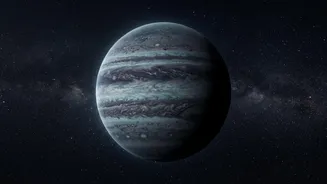
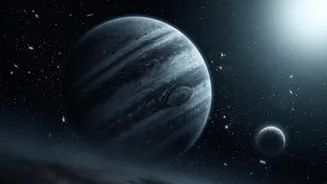
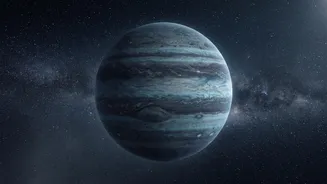
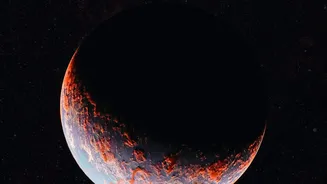
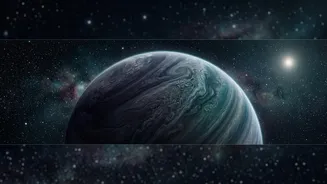
First, let's get acquainted with the main character. TOI-2535 b is what astronomers call a 'hot Jupiter'. It's a gas giant planet similar in size to our own Jupiter, but it orbits its star at an incredibly close distance. To put it in perspective, it completes
a full orbit in just over eight Earth days, whereas Mercury, our solar system's innermost planet, takes 88 days. These planets are a hot topic—literally and figuratively—because their existence challenges our understanding of how planetary systems form. They are thought to form far from their stars, where it's cold enough for ice to accumulate, and then migrate inward over time.
The Disappearing Act
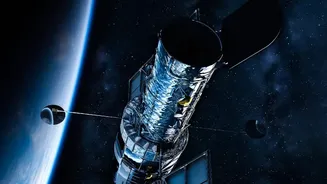
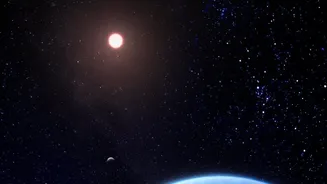
For seven years, from 2019 to early 2026, astronomers using NASA's Transiting Exoplanet Survey Satellite (TESS) watched TOI-2535 b. They detected it using the 'transit method', which involves watching for a tiny, periodic dip in a star's brightness caused by a planet passing in front of it from our point of view. But then, something strange happened. The planet's appearances became erratic, arriving up to six hours early or late. The transits grew shorter and shallower, and then in March 2026, they stopped altogether. The planet seemingly vanished.
The Wobble and the Hidden Neighbor
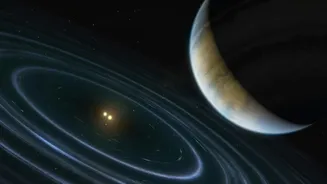
So, where did it go? The planet hasn't actually disappeared. The culprit behind its vanishing act is an 'orbital wobble'. Astronomers concluded that the gravitational pull of a second, unseen planet in the same system is tugging on TOI-2535 b. This constant pulling and pushing between the two massive planets causes their orbits to wobble, like a spinning top that's slightly off-balance. Over the years, this wobble tilted TOI-2535 b's orbital plane just enough that, from our perspective on Earth, it no longer crosses the face of its star.
Cosmic Detective Work
The irregular timing of the transits was the key clue. These deviations, known as Transit Timing Variations (TTVs), are a tell-tale sign of gravitational influence from another body. By analyzing how much the transits of TOI-2535 b were being delayed or advanced—by as much as six hours—scientists could deduce the presence and influence of its hidden companion. This makes TOI-2535 b the first exoplanet directly observed ceasing to transit due to this kind of orbital precession around a single star. The phenomenon is similar to why we don't have a solar eclipse every month; the Moon's orbit is tilted relative to Earth's, so perfect alignments are rare.
Why This Discovery Matters
This discovery is more than just a fascinating cosmic anomaly. It provides a rare, real-time look at how planetary systems evolve. The extreme interactions in the TOI-2535 system suggest a dynamic and perhaps violent history, offering new insights into how hot Jupiters end up so close to their stars. It also showcases the power of the TTV method to find planets that are otherwise invisible to us. While TOI-2535 b may not transit again for another 30 to 50 years, astronomers are hopeful that its wobbling partner, currently dubbed TOI-2535 c, might just wobble into our line of sight in the coming decades, giving us a direct look at the system's hidden giant.