




Why Bodyweight Training Works
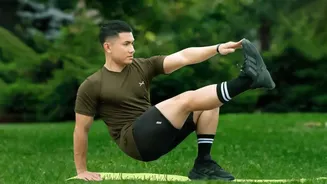
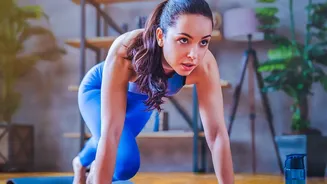
The biggest advantage of bodyweight exercise is its convenience. There are no financial barriers or intimidating gym environments to overcome. You just need a small amount of space and the motivation to start. This approach focuses on functional fitness,
meaning the exercises mimic everyday movements like pushing, pulling, and squatting. By strengthening these patterns, you not only build muscle but also improve your balance, flexibility, and coordination, making daily tasks easier and reducing injury risk. For beginners, mastering these fundamental movements creates a strong foundation before potentially adding weights or more complex exercises later on.
The Foundational Squat
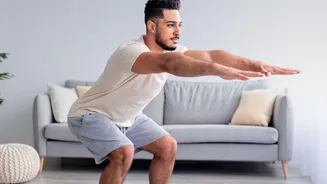
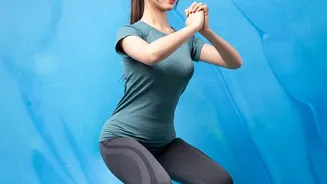
The bodyweight squat is a powerhouse exercise for your lower body, targeting your quadriceps, hamstrings, and glutes. To perform a squat correctly, stand with your feet slightly wider than your hips, with your toes pointing forward. Imagine you're about to sit in a chair, sending your hips back and bending your knees while keeping your chest up and your back straight. Lower yourself until your thighs are parallel to the floor, or as low as you can comfortably go, then press through your heels to return to the starting position. For beginners, aim for two sets of 10 to 15 reps, focusing on slow, controlled movement.
The Classic Push-Up
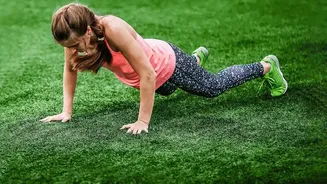
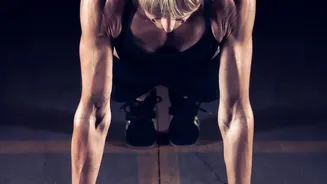
Push-ups are one of the best exercises for building upper-body strength, working your chest, shoulders, and triceps. If you're a beginner, a standard push-up can be challenging. Start with a modified version by placing your hands on a wall or a sturdy table. To make it slightly harder, perform them on your knees. For any variation, place your hands slightly wider than your shoulders. Lower your body until your chest approaches the floor or wall, keeping your back straight and your core engaged. Push back to the starting position. Aim for 2 sets of 6 to 10 repetitions, prioritising good form over quantity.
The Core-Strengthening Plank
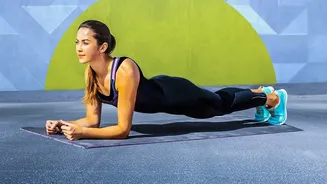
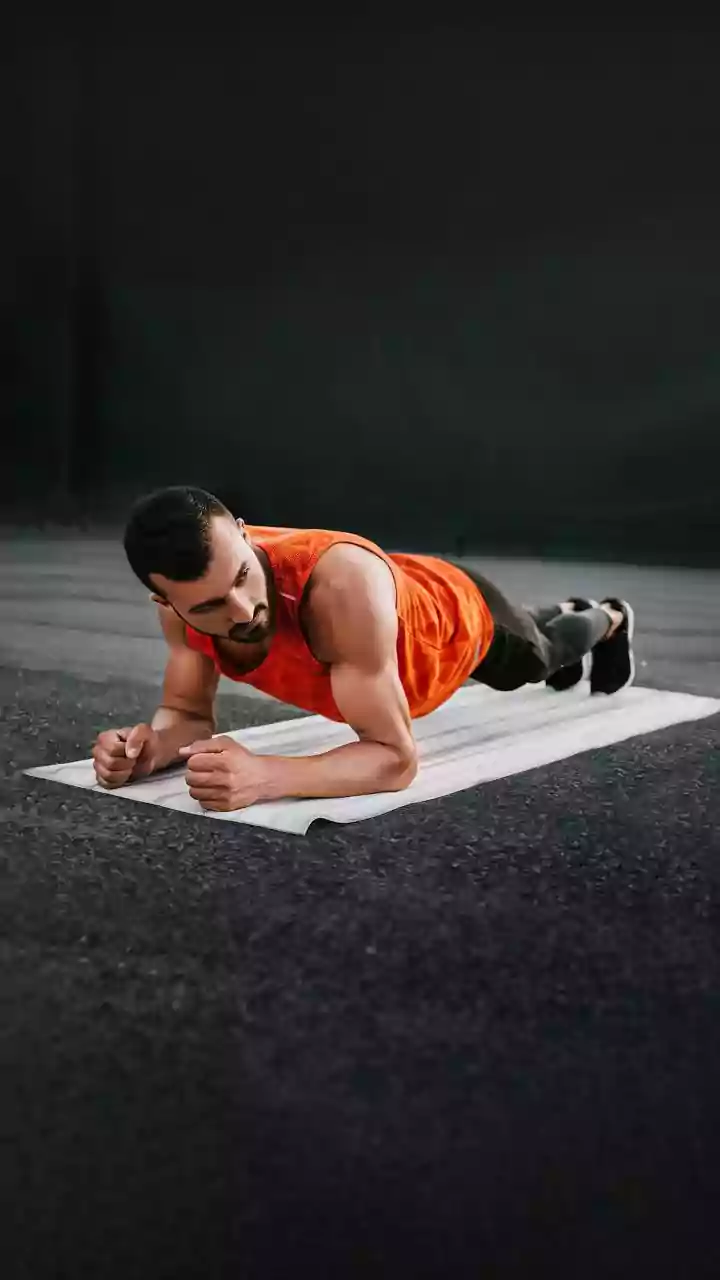
The plank is an isometric exercise that is incredibly effective for building core stability, which is essential for good posture and a healthy back. To get into a plank, position yourself as if you're about to do a push-up, with your forearms on the ground and your elbows directly under your shoulders. You can also perform it on your hands. Your body should form a straight line from your head to your heels. Engage your abdominal muscles and glutes to prevent your hips from sagging. For a beginner, holding this position for 20 to 30 seconds is a great start. Try to complete 2 to 3 sets.
Lunges for Balance and Strength
Lunges are excellent for targeting each leg independently, which helps improve balance and corrects strength imbalances. They work the quads, glutes, and hamstrings. Start by standing tall, then take a big step forward with one leg. Lower your hips until both knees are bent at approximately a 90-degree angle, ensuring your front knee doesn't extend past your toes and your back knee hovers just above the ground. Push off your front foot to return to the starting position. Alternate legs with each repetition. Aim for 2 sets of 10 to 12 reps per leg.
The Glute Bridge for Your Posterior Chain
The glute bridge is a simple yet effective exercise for strengthening your glutes and hamstrings, which are often underused if you sit for long periods. Lie on your back with your knees bent, feet flat on the floor about hip-width apart, and your arms by your sides. Pushing through your heels, lift your hips off the floor until your body forms a straight line from your shoulders to your knees. Squeeze your glutes at the top of the movement. Hold for a moment before slowly lowering your hips back down. Complete 2 sets of 12 to 15 repetitions.