





An Interplanetary Survival Guide
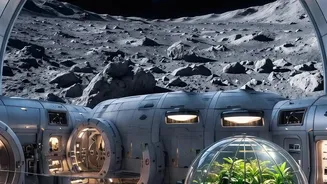
The Apollo missions were sprints, but NASA's Artemis program is an endurance race. The goal is to establish a permanent foothold on the Moon, a 'Moon Base' that will serve as a hub for science and a stepping stone to Mars. Before astronauts can live and work
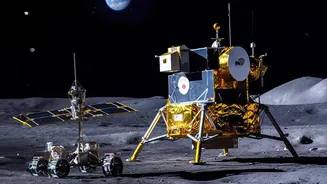
there for long periods, however, we need a detailed understanding of the local conditions. Living on the Moon means contending with extreme temperatures, radiation, and tiny, abrasive dust particles. It also means needing local resources like water ice and shelter. To write the ultimate interplanetary survival guide, NASA's Payloads and Research Investigations on the Surface of the Moon (PRISM) program has selected three instrument suites to scout the lunar landscape. These projects will be delivered to the Moon by commercial partners under the CLPS initiative and will provide the foundational data needed to keep future astronauts safe.
GIMLI: Hunting for Lunar Caves
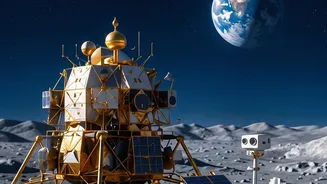
One of the most exciting prospects for a lunar habitat is using what's already there. Scientists believe the Moon is threaded with subterranean lava tubes, vast caves carved by ancient volcanic activity. These natural tunnels could provide ready-made shelters, protecting astronauts from the punishing radiation and extreme temperature swings on the surface. The Geophysical Instruments for Marius Lunar pit Investigation, or GIMLI, will be the first to find out. Deployed at a promising site called the Marius Hills Pit, GIMLI will use a combination of radar, seismic sensors, and gravity measurements to peer beneath the surface. Its mission is to confirm whether this pit is an entrance to a larger lava tube system and to map its dimensions. Discovering a large, stable cave would be a game-changer for long-term habitat planning, offering a pre-built and shielded home for the first lunar settlers.
DISCO: Searching for Hidden Ice
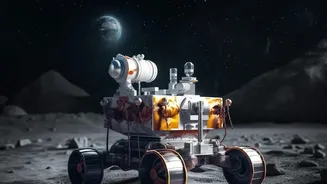
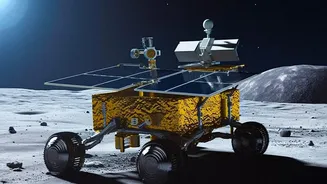
Water is the lifeblood of space exploration. It's essential for drinking, growing food, and can be broken down into hydrogen and oxygen for breathable air and rocket fuel. Hauling it all from Earth is incredibly expensive, so finding it on the Moon is a top priority. The Depth Imager with Spectral and Color Optics, or DISCO, is designed to do just that. This payload will provide the first direct, on-the-ground measurements of ice hidden in 'micro-cold traps' — small, permanently shadowed areas where temperatures are low enough for ice to remain stable. DISCO will not only pinpoint where ice exists but also study how much is there. Additionally, it will examine the behavior of the lunar soil, or regolith, studying its stability for rovers and how it's affected by the blast of a rocket engine during landing. This information is critical for designing safe surface operations and developing the technology to turn lunar ice into usable resources.
LEMS-SP: The Environmental Watchdog
To live on the Moon, you need a reliable weather forecast, but for a world with no atmosphere, 'weather' means something different. The Lunar Environment Monitoring Station – South Pole (LEMS-SP) will act as a long-term environmental watchdog, keeping an eye on the unique hazards of the lunar surface. This autonomous station will use a seismometer to monitor 'moonquakes' and track the constant rain of micrometeoroids, providing crucial data for designing habitats and equipment that can withstand these impacts. LEMS-SP will also measure the flow of volatiles—materials that easily turn to gas—that drift across the lunar surface, helping scientists understand the Moon's thin exosphere. This suite of instruments will build a comprehensive picture of the dynamic lunar environment, assessing risks and ensuring that the future Moon Base and its inhabitants are prepared for the challenges of their new home.