




Why Go Big with Art?
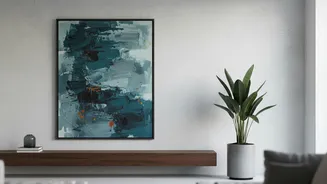
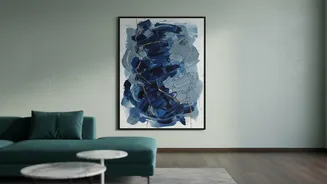
Interior design is moving toward spaces that feel personal, warm, and intentional. Instead of a gallery wall with many small items, designers and homeowners are opting for a single, dramatic piece of art. This approach simplifies decorating by creating
an instant focal point without adding visual clutter. A large artwork can define a room's color scheme, add emotional atmosphere, and even make a space feel larger by drawing the eye upwards and creating a sense of scale. It's a confident choice that makes a room feel curated and complete.
The 57-Inch Rule and Its Limits
You may have heard of the '57-inch rule,' a gallery standard that suggests hanging art so its center is 57 inches from the floor—the average human eye level. This is a fantastic starting point for most art. However, when you're working with a truly oversized piece, this rule can sometimes place the art too high on the wall, making it feel disconnected from the room. A huge canvas might need its center point a little lower, around 54 inches, to feel more grounded. The key is to treat the rule as a guideline, not a law, especially when furniture or high ceilings are involved.
Hanging Art Over Furniture
Placing a large piece of art above a sofa, console, or headboard is a classic design move. The goal is to create a cohesive unit where the art and furniture feel connected. To achieve this, the bottom of the frame should be about 6 to 8 inches above the top of the furniture. This gap is close enough to create a relationship between the objects but provides enough clearance to avoid hitting your head on the frame when you sit down. For proportion, aim for the artwork to be about two-thirds the width of the furniture below it. This ensures the scale feels balanced and intentional.
Measure Twice, Use the Right Tools
Before you put any holes in the wall, plan your placement. One trick is to trace the outline of your art on paper and tape it to the wall to see how the size and height feel. When you're ready to hang, safety is paramount, especially with heavy pieces. Weigh your artwork first. Do not rely on a single nail. For heavy art, you need proper support. The best option is to locate wall studs and drill directly into them. If studs aren't in the right place, use heavy-duty hardware like toggle bolts or a French cleat system. A French cleat, which involves mounting a bracket to the wall that interlocks with one on the frame, is a professional favorite because it distributes weight evenly and can support hundreds of pounds. Always use two hanging points for stability, especially for art wider than 24 inches.
Trust Your Eye
While rules and measurements provide an excellent framework, the final decision comes down to what looks right in your space. Factors like ceiling height, natural light, and the overall vibe of the room play a role. After you've taped up your paper template, step back. Look at it from the doorway and from where you typically sit in the room. Does it feel balanced? Does it command attention without overwhelming the space? Sometimes, adjusting the height by just an inch or two can make all the difference. The goal is to create a home that feels like you, and sometimes that means trusting your intuition over a measuring tape.