
A New Lunar Resource Map
For decades, scientists have theorised that water, in the form of ice, could be trapped in the frigid, dark craters of the Moon's poles. Missions like India's Chandrayaan-1, carrying NASA's Moon Mineralogy Mapper, provided the first definitive evidence
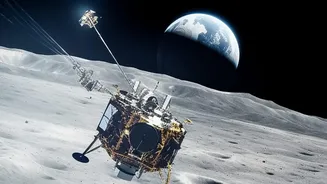
of surface ice in these permanently shadowed regions. Subsequent observations confirmed that water isn't just locked away in deep, dark craters. NASA's SOFIA observatory discovered water molecules even on sunlit portions of the Moon, though in very small concentrations. Recent work, including data from Chandrayaan-2's advanced radar, has gone a step further, suggesting evidence of more stable, buried ice deposits. These findings are helping scientists build the first-ever detailed resource maps, pinpointing the most promising locations to find this crucial resource near the lunar south pole, the target for upcoming crewed missions.
Seeing in Permanent Darkness
Detecting this hidden ice is a technological marvel. The key lies in looking for hydrogen, the 'H' in H₂O. Instruments like neutron spectrometers can detect the presence of hydrogen from orbit, giving a broad overview of where water might be concentrated. To get a more detailed look, especially for ice that is mixed with lunar soil (regolith) or buried, scientists employ different techniques. Data from synthetic aperture radar, like the one on Chandrayaan-2, can penetrate the surface and distinguish the unique signature of thick ice deposits from the surrounding rock. Another innovative method being developed involves using seismometers to listen for how small moonquakes travel through the ground. The way these vibrations bend and reflect would change distinctly if they pass through buried ice, allowing future rovers to effectively 'sound out' the subsurface without having to drill everywhere.
Why 'Accessible' Is the Key Word
Finding water on the Moon is one thing; being able to use it is another. The latest discoveries are exciting because they point to ice that is considered more 'accessible'. Previously, much of the known ice was located deep inside permanently shadowed craters, where temperatures can plunge below -160°C and sunlight never reaches. Operating a rover or mining equipment in such extreme conditions is a monumental engineering challenge. However, newer findings suggest some ice deposits might be buried but located in more reachable areas, or that water molecules are more widespread than once thought. Accessibility means not having to send robotic missions into the most treacherous, coldest parts of a crater to extract resources. If ice can be found mixed in shallower soil or in less extreme cold traps, it dramatically improves the feasibility of harvesting it.
The Game-Changer for Lunar Bases
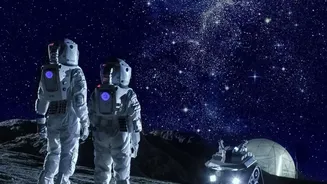
Accessible water transforms the economics and logistics of space exploration. Launching materials from Earth is incredibly expensive, so the ability to 'live off the land' is critical for establishing a permanent lunar station. Water is not just for drinking. Through a process called electrolysis, it can be split into its component parts: oxygen for breathable air and hydrogen for rocket fuel. This on-site production of propellant could refuel rockets for their return journey to Earth or for missions deeper into the solar system, like to Mars, turning the Moon into a vital interplanetary pitstop. By providing the most essential resources in-situ, lunar water reduces the mass that needs to be launched from Earth, making long-term human presence more sustainable and affordable.
What Happens Next?
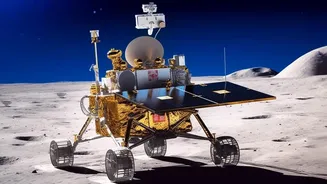
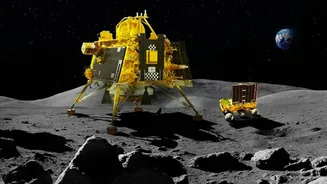
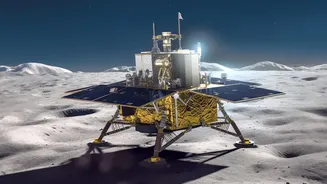
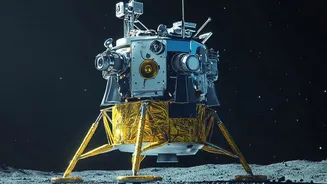
While orbital data is incredibly promising, the next step is verification on the ground. Upcoming robotic missions are designed to do just that. NASA's VIPER (Volatiles Investigating Polar Exploration Rover) is specifically designed to prospect for ice at the lunar south pole, drilling into the soil to understand the concentration and composition of the water ice it finds. Furthermore, international collaborations like the LUPEX mission, a joint effort by Japan's JAXA and India's ISRO, will carry instruments designed to map sub-surface ice in detail. Even China's Chang'e-7 mission, planned for late 2026, will carry a seismometer that could test the theories of using moonquakes to find hidden ice. The data gathered by these surface missions will be essential for creating the first water resource maps of the Moon, paving the way for the astronauts of NASA's Artemis program and beyond to one day establish a lasting foothold.