




The New Digital Study Partner
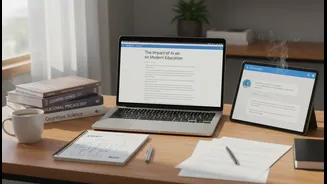
Not long ago, a draft check meant running a simple spell-checker. Today, it involves sophisticated AI assistants that do much more. Tools like Grammarly, Paperpal, and even integrated features in Microsoft Word can now refine grammar, improve sentence
structure, and enhance clarity in ways that were previously unimaginable. Students are using these tools to polish their language, make their writing sound more academic, and check for consistency in tone. This goes beyond basic error correction; these AIs can suggest alternative phrasing and help ensure a paper flows logically, acting as a tireless digital tutor available 24/7.
Boosting Efficiency and Confidence
For many students, especially those for whom English is a second language, these tools are a significant confidence booster. They help level the playing field by providing instant, private feedback on language and style, reducing the anxiety that often accompanies academic writing. The benefits extend to the research process itself. Students report using AI to summarize dense articles, brainstorm ideas, and even find supporting evidence for their arguments. This can dramatically cut down on the time spent on preliminary research and routine tasks, allowing students to focus more on critical thinking and analysis.
Navigating a New Ethical Maze
However, this new technology brings a host of complex ethical questions. The biggest concern for universities is academic integrity. Where is the line between using AI as a helpful editor and letting it do the intellectual work? Many institutions in India are grappling with this question. While the University Grants Commission (UGC) has not issued a single, binding regulation specifically for AI, its existing rules on plagiarism are often interpreted to cover undisclosed AI use. Universities like the National Law University Delhi have proactively created policies that mandate full disclosure of any AI tools used during the writing process. The core principle is that while AI can assist, the authorship and responsibility for the work remain entirely with the human student.
The Risk of Over-Reliance
Beyond outright plagiarism, educators worry about the risk of over-reliance. If students use AI to generate entire drafts, they may not develop essential critical thinking and writing skills. There are also concerns about the accuracy of AI-generated content. These models have been known to 'hallucinate' or invent facts and citations, which a discerning student must be able to spot. Some students remain rightly skeptical, noting that AI-generated text can sound repetitive and that its data is often outdated. The challenge for the modern student is to use these tools critically—as a co-pilot for their own thinking, not as an autopilot that takes over completely.
A Shift in Academic Skills
Ultimately, the rise of AI draft checks signals a fundamental shift in what skills are valued in academia. The focus may slowly move away from the mechanics of writing—grammar, spelling, and citation formatting—and more towards the quality of a student's ideas, the rigor of their research, and the strength of their arguments. Educators are beginning to see the need to teach students how to use AI responsibly and effectively, viewing it as a new form of academic and professional literacy. Writing with AI is becoming a skill in itself, one that requires critical evaluation, thoughtful integration, and a firm grasp of the ethical boundaries.