


The Problem with 'Tech Neck'
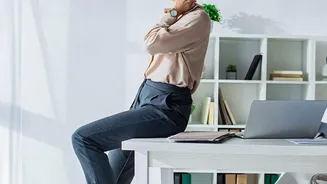
That familiar ache in your neck and shoulders after a long day of work has a name: 'tech neck'. It's the result of prolonged hours spent looking down at screens, which puts significant strain on the cervical spine. When you tilt your head forward, its
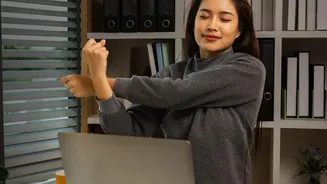
effective weight increases, forcing the muscles in your neck and upper back to work overtime to support it. This constant tension can lead to stiffness, pain, headaches, and a gradual slump in your posture. Fortunately, you don't need a full yoga studio to find relief. Taking short, mindful breaks for simple stretches can counteract this daily strain, improve circulation, and help retrain your posture.
Seated Cat-Cow for Spine Mobility
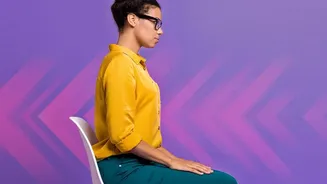
This gentle movement is perfect for warming up your spine and releasing tension in your back. Sit upright in your chair with your feet flat on the floor and your hands on your knees. As you inhale, gently arch your back, push your chest forward, and look up towards the ceiling—this is the 'Cow' position. As you exhale, round your spine, tuck your chin to your chest, and let your shoulders curve forward—this is the 'Cat' position. Flow between these two poses, coordinating the movement with your breath. Repeat for 8-10 cycles to increase spinal flexibility and gently massage the muscles along your back.
Gentle Neck Rolls and Tilts
To directly address neck stiffness, incorporate gentle rolls. Start by sitting tall and dropping your chin to your chest. Slowly roll your right ear toward your right shoulder, hold for a few deep breaths, then return to the center and repeat on the left side. This helps stretch the muscles on the side of your neck. Avoid rolling your head all the way back, as this can compress the vertebrae. Instead, focus on slow, deliberate half-circles from shoulder to shoulder. You can deepen the stretch by gently placing your hand on the opposite side of your head, but never force the movement.
Seated Spinal Twist for Back Relief
A seated twist is fantastic for improving spinal mobility and relieving lower back pain. Sit tall on the edge of your chair with your feet firmly planted. Inhale to lengthen your spine. As you exhale, twist your torso to the right, placing your left hand on the outside of your right thigh and your right hand on the back or side of the chair for support. Keep your hips facing forward as much as possible. Hold the twist for several breaths, feeling the stretch through your spine, before gently releasing and repeating on the other side. This movement also helps massage your internal organs.
Chest Opener to Correct Slouching
Poor posture often involves rounded shoulders and a collapsed chest. A chest opener helps counteract this. Sit at the edge of your chair and interlace your fingers behind your back. If you can't reach, simply grasp the back of your chair with both hands. Straighten your arms as much as you can, squeeze your shoulder blades together, and lift your chest towards the ceiling. You should feel a broad stretch across the front of your chest and shoulders. Hold this pose for 15-30 seconds while taking deep breaths. This stretch is excellent for improving posture by opening up the front of the body.
Seated Pigeon for Hip-Opening
Tight hips can contribute to lower back pain and poor posture. The seated pigeon pose helps to release this tension. While sitting, cross your right ankle over your left knee, keeping your right foot flexed to protect the knee joint. Sit up straight, and if you feel enough of a stretch, stay there. To deepen it, gently lean forward with a flat back until you feel a stretch in your right hip and glute. Hold for 20-30 seconds, breathing deeply into the sensation, then switch legs. Releasing hip tension can provide surprising relief for your entire back.