






The Harvest and the Haze
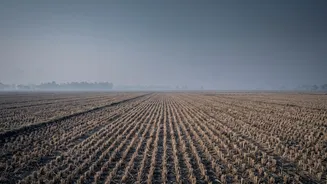
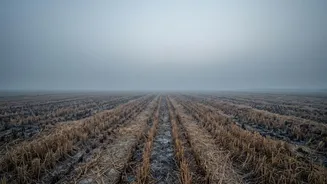
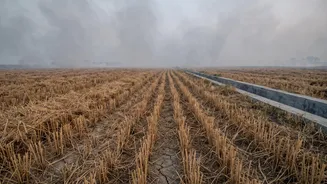
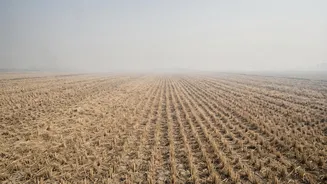
Every year, primarily between October and November, farmers in India's northern states like Punjab and Haryana are in a race against time. After harvesting paddy (rice), they have a very narrow window, often just a few weeks, to clear their fields to sow
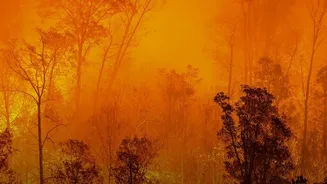
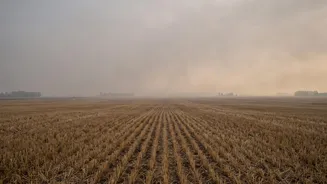
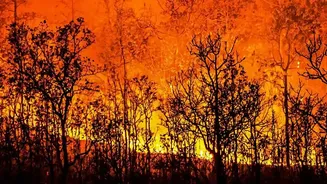
the next crop, wheat. The most common method for clearing the leftover rice stubble is to burn it. This practice, known as stubble or crop-residue burning, is seen by many farmers as the quickest and most cost-effective solution to prepare their land. The use of mechanised harvesters, which leave behind taller stalks compared to manual harvesting, has further entrenched this practice. Millions of tonnes of this agricultural residue are set ablaze annually, releasing vast clouds of smoke into the atmosphere.
A Perfect Storm of Pollution
The timing of this burning period is what turns a regional agricultural practice into a national air quality crisis. Post-monsoon weather conditions create a perfect trap for pollution. As temperatures begin to drop, wind speeds decrease, limiting the dispersal of pollutants. This is often compounded by a phenomenon called temperature inversion, where a layer of cool air is trapped beneath a layer of warmer air, acting like a lid over the region. This atmospheric setup prevents pollutants from rising and scattering, concentrating them at ground level. The smoke from farm fires, rich in harmful particles, gets trapped in this stagnant air, forming a thick smog that blankets the vast Indo-Gangetic Plain, impacting cities hundreds of kilometres away, including Delhi.
The Unbreathable Cocktail of Pollutants
The smoke from burning crop residue is not just visually unpleasant; it is a toxic cocktail of dangerous pollutants. The most significant component is fine particulate matter, or PM2.5—tiny particles less than 2.5 micrometres in diameter that can penetrate deep into the lungs and enter the bloodstream. Stubble burning is a massive source of these particles, at times contributing up to half or more of the PM2.5 pollution in cities like Delhi during peak burning days. The smoke also contains other harmful pollutants like carbon monoxide (CO), nitrogen oxides (NOx), and volatile organic compounds (VOCs). This mix of pollutants not only creates smog but also severely degrades soil health by destroying essential nutrients and organic matter.
From Farm Fires to a Public Health Emergency
The health consequences of this seasonal pollution are severe and widespread. Hospitals report a significant surge in patients with respiratory problems, with increases of 30-40% during this period. Exposure to high levels of PM2.5 is linked to a host of health issues, including irritation of the eyes and throat, coughing, and shortness of breath. It can worsen chronic conditions like asthma and bronchitis and is associated with an increased risk of cardiovascular diseases, lung cancer, and other serious ailments. Children and the elderly are particularly vulnerable to these effects. The recurring air quality crisis forces school closures and disrupts daily life for millions of people across North India each year.
The Search for Lasting Solutions
Tackling stubble burning requires a multi-pronged approach, as simple bans have proven difficult to enforce. Governments are promoting a range of alternatives. In-situ management involves using machines like the 'Happy Seeder' or 'Super Seeder' that can sow wheat seeds directly into the soil through the stubble, eliminating the need to burn it. Another promising solution is the use of bio-decomposers, such as the one developed by the Pusa Institute, which are sprayed on fields to break down the residue into manure in a matter of weeks. Ex-situ solutions focus on creating economic value from the stubble, such as converting it into biomass pellets for co-firing in thermal power plants, producing bio-ethanol, or making biochar to enrich soil. Recent government proposals include imposing fines and designating land where burning occurs as a "red category," potentially making it ineligible for certain schemes. However, the success of these measures depends on making them accessible, affordable, and practical for farmers.