





Your Starting Point: The Per 100g Column
The first rule of reading any food label in India is to find the ‘Per 100g’ column on the nutrition facts panel. While many labels also show a ‘Per Serving’ column, serving sizes are set by the manufacturer and can be misleadingly small. A serving of biscuits
might be just two or three pieces, while you might eat several more. The ‘Per 100g’ value, however, is a standard measure mandated by the Food Safety and Standards Authority of India (FSSAI). It is the only reliable way to compare two different products fairly, whether you're choosing between two brands of breakfast cereal or two types of namkeen. Always use this column to decide which product is the healthier option before you buy.
Spotting Salt by Finding Sodium
Indian food labels rarely list ‘salt’. Instead, you will find ‘sodium’ listed in milligrams (mg). As a quick rule of thumb, you can convert sodium to salt by multiplying the number by 2.5. For example, a product with 400 mg of sodium per 100g contains about 1g of salt. According to dietary guidelines, more than 1.5g of salt (or 600mg of sodium) per 100g is generally considered high. Keeping an eye on sodium is crucial, as it’s hidden in everything from sauces and soups to bread and breakfast cereals, not just in obviously salty snacks. The recommended daily limit for an adult is around 5g of salt, which translates to about 2,000 mg of sodium.
The Truth About Total vs. Added Sugar
The sugar section on a label can be tricky. You’ll often see ‘Total Sugar’ and ‘Added Sugar’. Total sugar includes sugars that are naturally present in ingredients like fruit (fructose) or milk (lactose). ‘Added Sugar’ is the one to watch closely. This refers to sugars and syrups put in during manufacturing to enhance flavour, and they provide calories without much nutritional benefit. Ingredients are listed by weight, so if sugar or one of its many aliases (like corn syrup, dextrose, maltodextose, or fruit juice concentrate) appears in the top three ingredients, the product is likely high in added sugars. For a healthy adult, the Indian Council of Medical Research (ICMR) suggests a limit of about 25 to 30 grams of added sugar per day.
Fathoming Fats: The Good and The Bad
Not all fats are created equal. The nutrition label breaks down ‘Total Fat’ into saturated fat and, sometimes, trans fat. While your body needs some fat for energy, it's the type that matters most. Pay close attention to saturated fat, which is often high in bakery items, snacks made with palm oil, and creamy products. The most important line to check is for trans fat. Thanks to strong regulations from FSSAI, industrially produced trans fats have been limited to no more than 2% by mass in all oils, fats, and food products in India since 2022. You should aim for products that list 0g of trans fat. If you see 'partially hydrogenated oils' in the ingredients list, it's a sign that the product may contain trans fats, which are linked to an increased risk of heart disease.
The Future: Front-of-Pack Warnings
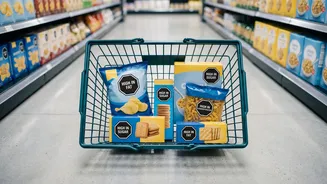
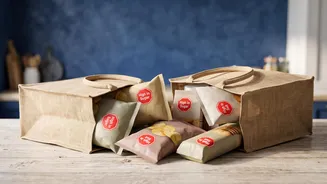
To make healthy choices even simpler, India is moving towards a new Front-of-Pack Labelling (FoPL) system. The FSSAI has recently proposed a system of mandatory warning labels. These would be red, hexagonal symbols on the front of packages indicating if a product is ‘High in Sugar’, ‘High in Salt’, or ‘High in Fat’. This would allow consumers to see at a glance if a product exceeds recommended thresholds for these nutrients, without having to search for the detailed panel on the back. While the final regulations are still being finalised, food businesses will likely be given a year to adopt these new labels once they are notified.