




Your Gut Is Talking, Are You Listening?
The conversation around health has increasingly turned inward, focusing on the complex world of our gut microbiome. This bustling ecosystem of trillions of microorganisms influences everything from digestion and immunity to even our mood. A healthy gut is a diverse
one, and a key way to support this diversity is by consuming probiotics—live, beneficial bacteria. While yogurt has long been the poster child for probiotics, a powerful and ancient source is making a comeback: traditionally fermented vegetables. For urban dwellers, this ancient practice offers a surprisingly simple and effective way to boost their microbiome wellness right from their own kitchens.
Not All Pickles Are Created Equal
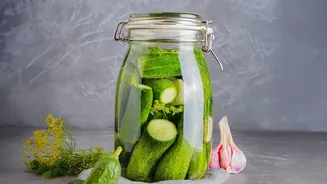
Here's the crucial detail many people miss: the typical pickle found on a supermarket shelf is not the probiotic powerhouse you might be looking for. Most commercially available pickles are created using vinegar and heat pasteurization. This method makes them shelf-stable and gives them a sharp, tangy flavour, but the process effectively kills off all the beneficial bacteria. The pickles that offer gut health benefits are 'lacto-fermented'. This traditional method uses only salt and water to create a brine, allowing naturally present bacteria, primarily from the Lactobacillus genus, to work their magic. These are the living foods you'll usually find in the refrigerated section of stores, often with labels like 'naturally fermented' or 'contains live cultures'.
The Ancient Magic of Lacto-Fermentation
The process of lacto-fermentation is an elegant, natural art that dates back thousands of years across cultures, from Indian 'achaar' to Korean kimchi. When vegetables are submerged in a saltwater brine inside a sealed container, an anaerobic (oxygen-free) environment is created. Salt acts as a filter, preventing the growth of harmful bacteria while allowing beneficial Lactobacillus bacteria, which are naturally present on vegetables, to thrive. These good bacteria then begin to consume the natural sugars in the vegetables, converting them into lactic acid. This lactic acid is a natural preservative that gives fermented foods their characteristic complex, tangy taste and, most importantly, creates a food teeming with live probiotics.
The Benefits in Every Bite
Consuming these traditionally pickled foods introduces a host of beneficial microbes into your digestive system. These probiotics can help balance your gut microbiome, aid digestion, reduce bloating, and support a robust immune system. The fermentation process also acts as a form of 'pre-digestion', breaking down compounds in vegetables that can be hard for our bodies to process and making nutrients more easily absorbable. Furthermore, these fermented foods are often rich in fiber, which acts as a prebiotic—food for the good bacteria already living in your gut. It’s a two-for-one benefit: you’re adding new allies while also feeding the ones you have.
Bringing Ancient Wisdom to the Urban Kitchen
The beauty of this practice is its simplicity. You don't need a sprawling country garden or expensive equipment to start fermenting. An urban kitchen, a glass jar, some vegetables, salt, and water are all you need to begin. This method was, after all, developed for food preservation long before refrigeration existed. You can start with almost any vegetable: cucumbers, carrots, cabbage (for sauerkraut), or radishes. The process is straightforward: chop your vegetables, place them in a jar, cover them with a simple saltwater brine, and let time and microbiology do the rest. It’s a sustainable, budget-friendly way to reduce food waste by preserving produce that might otherwise wilt in the fridge.