





A Galaxy of Startups
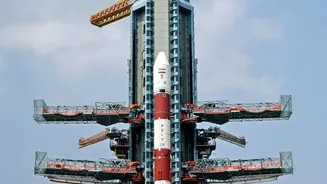
The Indian space landscape has transformed dramatically since the sector was opened to private participation in 2020. Before this, private firms were mostly limited to being suppliers for the Indian Space Research Organisation (ISRO). Today, India is home
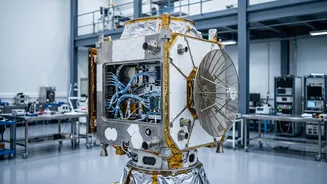
to over 450 space-tech startups, a huge leap from just a handful in 2020. These companies are not just supporting players; they are building everything from launch vehicles and satellites to propulsion systems and ground stations. This surge is fuelled by significant policy support, including the Indian Space Policy 2023, and a new agency called the Indian National Space Promotion and Authorisation Centre (IN-SPACe). IN-SPACe acts as a single-window agency to promote, authorise, and supervise private space activities, effectively creating a launchpad for a new generation of space entrepreneurs.
ISRO's New Role: The Anchor
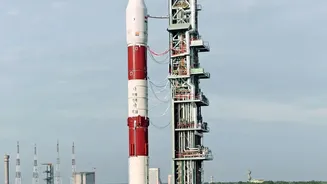
The rise of the private sector doesn't mean ISRO is taking a backseat. Instead, its role is evolving. ISRO leaders have clarified that the agency will focus on advanced research, deep space exploration, and national security missions, while private industry takes on more mature activities like satellite manufacturing and launch services. This collaborative model is seen as essential for India to scale its space economy, which is projected to grow from around $8.4 billion today to over $40 billion by 2033. ISRO is actively handholding startups by sharing its facilities, providing technical expertise, and transferring technology. For example, it supported private company Agnikul Cosmos with its recent suborbital rocket launch. This partnership allows the nation to meet the huge upcoming demand for space assets, which ISRO says it cannot handle alone.
The New In-Demand Roles
This expansion creates a broad spectrum of career paths for young engineers that go far beyond traditional aerospace. While aerospace, mechanical, and electronics engineers remain core to the industry, the demand for software skills has exploded. Aerospace software engineers who can code in C++ and Python are needed for flight software, mission planning, and autonomous systems. Another rapidly growing field is satellite data analytics. Companies are hiring data scientists and GIS experts to interpret the vast amounts of information sent back by Earth observation satellites, providing insights for agriculture, climate monitoring, and urban planning. Emerging roles also include space systems engineers, mission operations specialists, and robotics engineers, opening doors for graduates from various engineering disciplines.
Who is Hiring and What They Want
The hiring landscape is now multifaceted. Beyond ISRO, leading private players like Skyroot Aerospace (launch vehicles), Agnikul Cosmos (3D-printed engines), and Pixxel (hyperspectral satellites) are actively recruiting. Other key names include Dhruva Space, which works on satellite platforms, and Bellatrix Aerospace, which specializes in propulsion systems. These companies are looking for graduates with strong fundamentals in engineering, programming, and data literacy. A B.Tech in aerospace, mechanical, electronics, or computer science is a common entry point. For those aspiring to join, gaining hands-on experience through internships, university projects like CubeSat programs, and developing strong programming skills is becoming increasingly important to stand out. The sector's growth means that salaries in private companies are becoming competitive, with entry-level roles for engineers often starting in the Rs. 10 to 18 lakh per annum range.