








Why Your Degree Isn't Enough Anymore
For decades, a good degree from a reputable college was the golden ticket to a promising career. While still valuable, the game has changed. Recruiters today are inundated with thousands of applications for a single entry-level role, many with similar
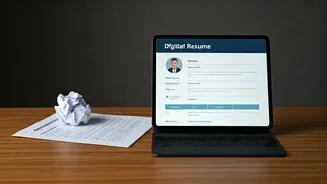
academic credentials. In this sea of sameness, how do they identify real talent? They look for proof. HR leaders across industries report a major shift in hiring philosophy: they now prioritise demonstrated skills and practical application over theoretical knowledge. A 9-point GPA is impressive, but a project that solves a real-world problem is memorable. This is where a portfolio moves you from the 'maybe' pile to the 'must-interview' list.
Demystifying the 'Portfolio'
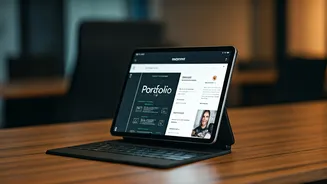
When you hear 'portfolio', you might picture an art student with a large folder of sketches. It's time to broaden that definition. For a graduate, a portfolio is simply a curated collection of your best work that proves your skills and abilities. It’s a living document that tells the story of what you can do. It’s not just for creative fields anymore. A portfolio transforms abstract claims on your CV like 'strong analytical skills' or 'proficient in Python' into tangible evidence. For a recruiter spending less than a minute on your resume, a link to a portfolio showcasing your projects is a powerful and convincing shortcut to understanding your potential.
For Engineering and Tech Students
This is your home ground. Instead of just listing technologies on your CV, show them in action. Your portfolio can be a GitHub or GitLab profile with well-documented code for your college projects. Did you build an app for a hackathon? Include a link to it, along with a brief explanation of the problem you solved and the tech stack you used. Contributions to open-source projects are highly valued as they demonstrate collaboration and coding standards. Even a technical blog where you explain complex concepts in simple terms can serve as a powerful portfolio piece, showcasing both your expertise and your communication skills.
For Commerce and Business Students
Your skills can feel less tangible, but they are just as demonstrable. Did you analyse a company's financial statements for a class project? Polish that report, highlight your key insights, and add it to your portfolio. Create a mock investment thesis for a stock you follow. If you participated in a business case competition, include your presentation deck and a summary of your team's strategy. You can even conduct a small-scale market research survey for a local business and present the findings. These items prove you can think critically, analyse data, and formulate strategies—skills every company needs.
For Arts and Humanities Students
You are a master of research, critical thinking, and communication—highly sought-after skills. Your portfolio is the place to prove it. Don't just say you're a good writer; show it. Include your best research papers, essays, or articles written for a college magazine. Did you manage social media for a college fest? Create a mini case study with metrics on engagement and reach. If you have a passion for a niche topic, start a blog or a simple newsletter about it. This demonstrates initiative, expertise, and the ability to build an audience. A well-argued video essay script or a podcast episode plan can also showcase your ability to structure a compelling narrative.
Building and Sharing Your Portfolio
Creating a portfolio doesn't require advanced web development skills. Start simple. You can compile your best work into a clean, well-organised PDF. For a more professional touch, use simple, free tools. A service like Notion allows you to build a clean, personal webpage with text, images, and links. Canva now offers simple website-building templates. The goal is to have a single, clean link that you can put at the top of your CV and on your LinkedIn profile. Make it easy for a busy recruiter to click once and see everything. Ensure your project descriptions are clear, concise, and focused on the outcome of your work.