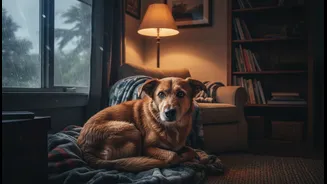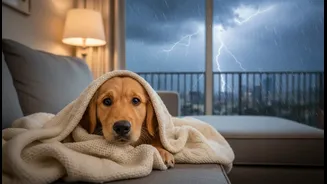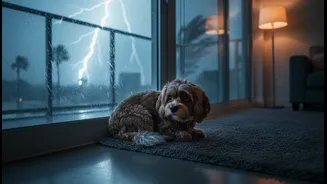



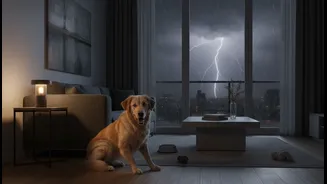




Why Monsoons Upset Your Pet
A pet's fear of monsoon storms, often called storm phobia, isn't just a simple dislike of loud noises. Their senses are far more acute than ours. The low-frequency rumbles of distant thunder, which we might not even hear, can be startling for them. Changes
in barometric pressure and static electricity in the air that precede a storm are also palpable to dogs and cats, making them anxious long before the first drop of rain falls. Add to that the startling flashes of lightning, the howling wind, and a disrupted routine with fewer walks and outdoor activities, and you have a perfect recipe for a stressed and anxious animal. This isn't disobedience; it's a genuine fear response.
The Ripple Effect on Your Household
When a pet is stressed, nobody in the house gets a good night's sleep. The anxiety can manifest in behaviours that are impossible to ignore: incessant barking or whining, destructive chewing on furniture, frantic pacing, or hiding in inconvenient places. A panicked pet trying to escape can even cause damage or injure themselves. This constant state of alert doesn't just affect the animal; it frays the nerves of everyone in the family, leading to lost sleep, frustration, and a general sense of unease that shatters the tranquility of your home. Managing their stress is as much about their well-being as it is about restoring peace for the human members of the family.
Create a Safe and Secure Den
One of the most effective strategies is to provide your pet with a safe space where they can retreat. This doesn't have to be fancy; an interior closet, a bathroom, or a crate covered with a thick blanket can work wonders. The goal is to create a den-like environment that muffles the sound of thunder and blocks out flashes of lightning. Fill this space with their favourite soft bedding and a toy or two. Encourage them to use this space even when it's not raining, so they associate it with comfort and security. Importantly, never force them into their crate or safe space, as this can make them feel trapped and increase their panic.
Mask the Noise and Stay Calm
You can't stop the thunder, but you can drown it out. Playing calming music, turning on the television, or using a white noise machine can help mask the sudden, startling booms from outside. Your own behaviour is also a powerful tool. Pets are highly attuned to our emotions, so if you're anxious or annoyed, they will pick up on it, reinforcing their fear. Instead, act calm and normal. Speak in a soothing voice and go about your evening as you usually would. This sends a powerful signal to your pet that there is nothing to be afraid of. You can offer comfort and gentle pets, but avoid excessive coddling, which can sometimes be interpreted as a reward for fearful behaviour.
Maintain Routine and Use Calming Aids
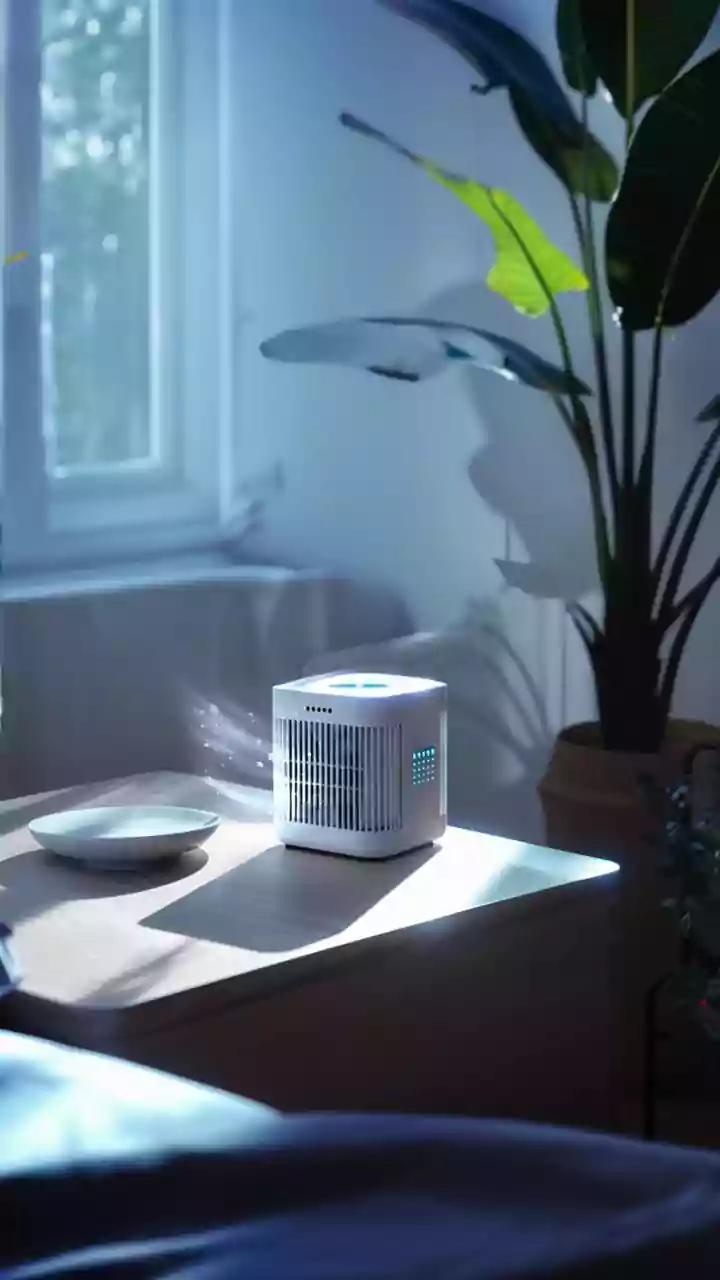
Monsoons can throw schedules into disarray, but maintaining a sense of routine is vital for an anxious pet. Stick to regular feeding times and, if walks are cut short, compensate with indoor activities like puzzle toys or a game of fetch to burn off excess energy. There are also several products designed to help with anxiety. Pressure wraps or 'thunder shirts' apply gentle, constant pressure, which has a swaddling, calming effect on many animals. Pheromone diffusers, available for both dogs and cats, can also help create a more relaxed environment. For severe cases, it's always best to have a conversation with your vet.