

Why Venus is the Perfect Starting Point
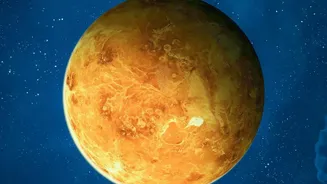
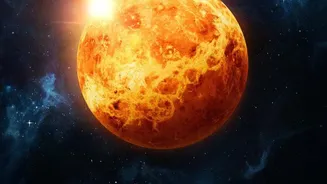
Venus is often called the 'Evening Star' or 'Morning Star' for good reason. It’s the brightest planet in our sky and the third brightest object after the Sun and the Moon. This makes it incredibly easy to spot, even from city suburbs where light pollution
can wash out fainter stars. You don’t need a fancy telescope or any prior experience to see it. Its sheer brilliance makes it a rewarding target for your first stargazing adventure, offering an immediate 'wow' moment that can spark a lifelong hobby. Throughout August 2026, Venus will be beautifully placed for viewing, making this the perfect month to begin your journey into the cosmos.
When to Look for Venus This August
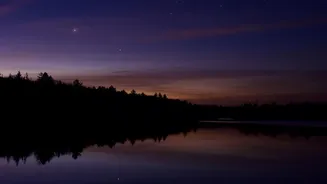
The best time to see Venus throughout August 2026 is in the western sky shortly after sunset. As the sky darkens, Venus will emerge as a dazzling, unblinking point of light. A particularly special date to mark on your calendar is August 15. On this evening, Venus reaches what astronomers call its 'greatest elongation,' meaning it will be at its farthest apparent distance from the sun in the sky. This makes it easier to spot against the twilight glow. As a bonus, a thin crescent Moon will be visible near Venus around this date, creating a stunning celestial pairing. As the month progresses, watch for Venus to get closer to the bright star Spica, located in the constellation Virgo, heading for a close approach in early September.
How to Find Venus: A Simple Guide
Finding Venus requires no special skills. Simply find a spot with a relatively clear view of the western horizon. About 30 to 45 minutes after the sun has set, scan the sky in the direction where the sun disappeared. You won't be able to miss Venus. It will be the first 'star' to appear and will be significantly brighter than any other star in the sky. It shines with a steady, silvery light, unlike true stars which tend to twinkle more. If you see a brilliant, stationary light in the west during evening twilight, you have almost certainly found it.
What You Do (and Don't) Need
The best part about observing Venus is that you need absolutely no equipment to start. Your own eyes are powerful enough to enjoy its brilliant light. However, if you have a pair of binoculars, they will enhance the view. While you won't see surface details, binoculars will make the planet appear as a tiny, distinct disc rather than just a point of light. Some observers with very sharp eyesight might even be able to discern its phase, similar to the phases of the moon. To get your bearings, you can use a stargazing app on your smartphone. Many free apps use your phone's location and sensors to show you exactly what's in the sky when you point it upwards.
Tips for a Great First Experience
To make your first stargazing session successful, try to get away from the direct glare of streetlights and house lights. Even moving to a local park or a darker corner of your neighbourhood can make a big difference. Give your eyes about 15-20 minutes to adjust to the darkness; this will help you see fainter objects in the sky. Dress comfortably for the weather, as you might be standing outside for a while. Most importantly, be patient. The universe has been there for billions of years, so taking a few quiet moments to simply look up and appreciate the view is part of the magic.