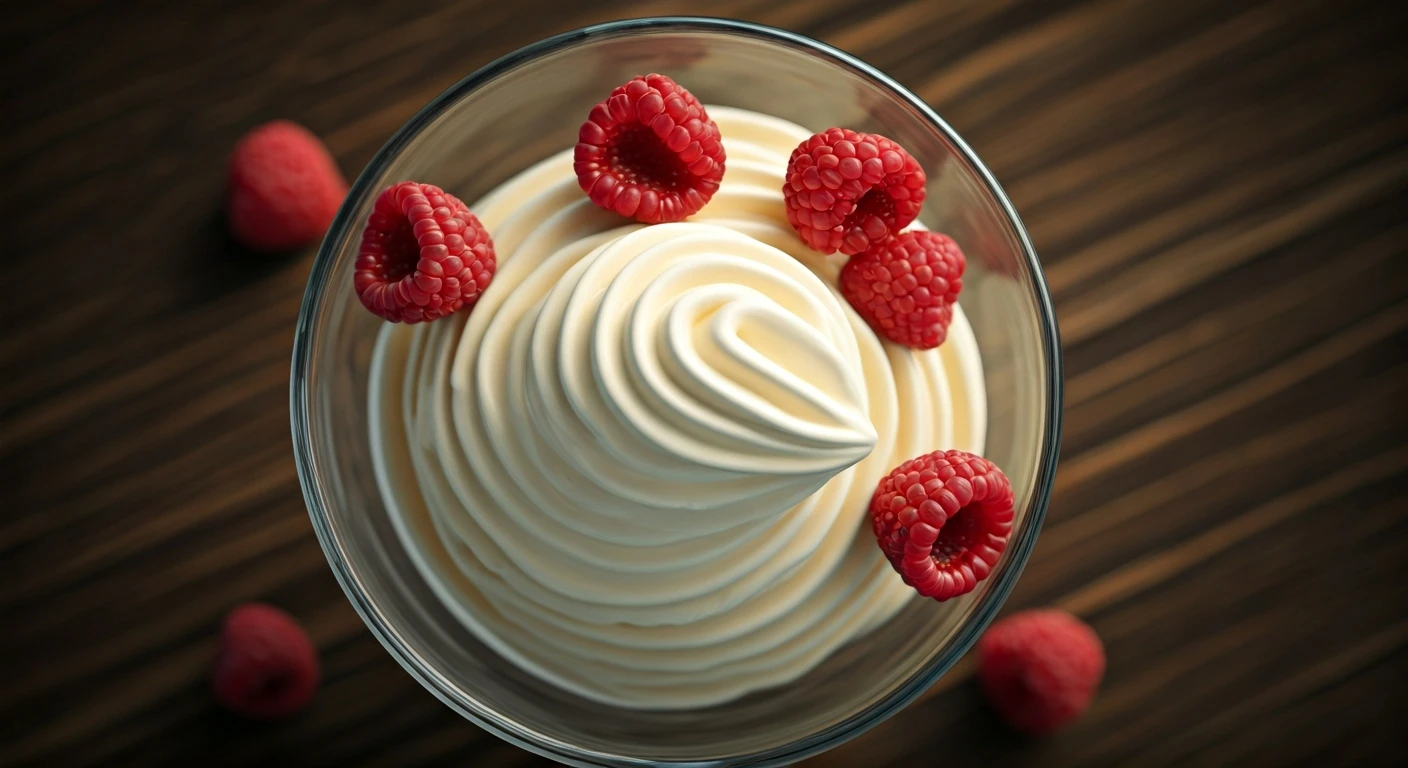



The Sugar Dilemma in Ice Cream
To conquer sugar, we first need to understand its role. In ice cream, sugar isn’t just for sweetness; it’s a master of texture. Its main job is to lower the freezing point of the cream mixture. This is crucial because it prevents large, crunchy ice crystals
from forming, ensuring the final product is soft, smooth, and scoopable right out of the freezer. Without it, you’d essentially end up with a sweetened, frozen block of cream. The challenge, therefore, isn't just replacing the sweet taste of refined sugar, but also replicating its magical effect on texture. Luckily, science and a few clever ingredients are on our side.
Your New Sweetener Toolkit
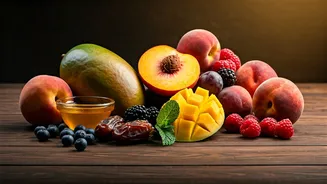
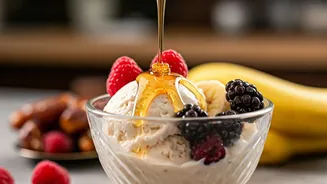
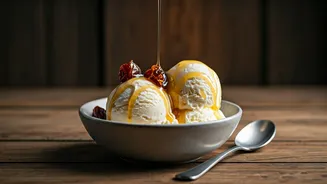
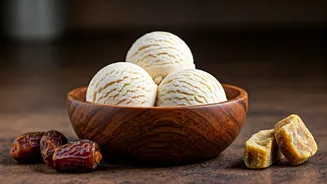
Forget refined white sugar; your pantry likely holds superior options. Liquid sweeteners like pure maple syrup and raw honey are fantastic starting points. They integrate beautifully into the base, contribute their own complex flavours, and help with that crucial freezing point depression. For a caramel-like depth and added body, soaked and blended Medjool dates are a game-changer. If you’re aiming for a lower-calorie option, modern natural sweeteners like allulose and erythritol are brilliant. Allulose, a rare sugar found in figs, is particularly effective as it mimics sugar's texture-enhancing properties without the calories, resulting in a softer scoop.
The Secret to Ultimate Creaminess
Sweetness is only half the battle; true ice cream bliss comes from a rich, creamy mouthfeel. The number one rule is: don’t be afraid of fat. This is what gives ice cream its luxurious consistency. For dairy-based versions, this means using full-fat heavy cream and whole milk. For a dairy-free approach, full-fat coconut milk or coconut cream is your best friend, providing an incredibly rich base. To take things to the next level, consider adding a few egg yolks for richness or a splash of vodka (about a tablespoon), which is flavourless in such small amounts but helps keep the ice cream from freezing rock-solid. Some recipes also use natural thickeners like a small amount of tapioca starch or xanthan gum to ensure a silky-smooth finish.
A Simple Vanilla Base to Get You Started
Ready to try it? Here’s a versatile and simple no-churn vanilla recipe that showcases these principles. In a blender, combine one 13.5-ounce can of full-fat coconut milk, 1/2 cup of pure maple syrup, and two teaspoons of pure vanilla extract. For extra body, you can add 1/4 cup of raw cashews that have been soaked in hot water for at least an hour and drained. Blend everything on high until the mixture is completely smooth and silky. The key here is to create a perfectly emulsified base before you even think about freezing. Once blended, your base is ready for the next step, which is turning it from a sweet cream into actual ice cream.
Freezing, Churning, and Customising
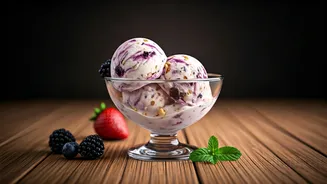
If you have an ice cream maker, simply pour your chilled base into the machine and churn according to the manufacturer’s instructions. No machine? No problem. Pour the mixture into a shallow, freezer-safe container, like a loaf pan. Freeze for about 4-6 hours, but here's the trick: every 45 minutes, take it out and give it a vigorous stir with a fork or a whisk, breaking up any ice crystals that are forming. This manual 'churning' is what will help you achieve a creamier final product. Once it reaches a firm, scoopable consistency, it's ready. Feel free to fold in your favourite mix-ins during the last stir, like dark chocolate chips, chopped nuts, or a swirl of fruit puree.