





The Golden Age of Rovers
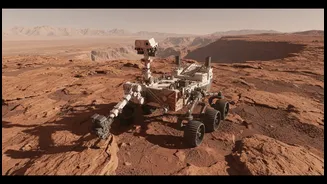
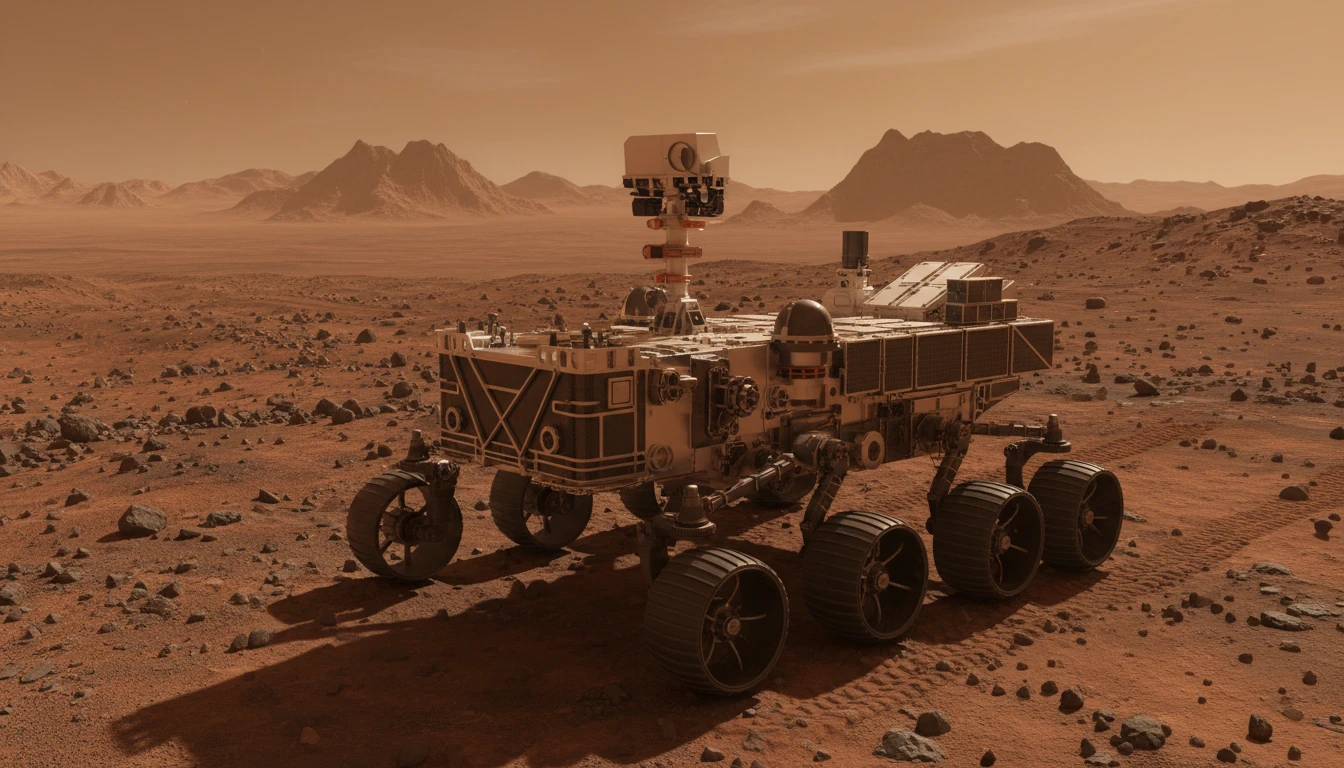
For decades, our primary explorers on Mars have been wheeled rovers. From the microwave-sized Sojourner in 1997 to the SUV-sized Curiosity and Perseverance rovers active today, these machines have been geological superstars. They have trekked across craters,
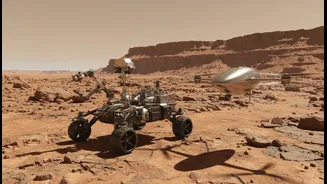
analysed rocks, and fundamentally reshaped our understanding of the Red Planet, confirming it once had environments capable of supporting life. The Ingenuity helicopter, which hitched a ride with Perseverance, proved that powered flight is possible in the thin Martian atmosphere, opening up a new dimension for exploration. But even these incredible machines have their limits. They struggle with very steep slopes, can't descend into deep caverns or lava tubes, and can get stuck in sandy terrain. To answer the biggest remaining question—is there, or was there, life on Mars?—we need to get into these hidden, hard-to-reach places.
Slithering Into the Unknown
Imagine a robot that doesn't roll, but slithers. That's the idea behind the Exobiology Extant Life Surveyor, or EELS. Developed at NASA's Jet Propulsion Laboratory (JPL), EELS is a 4-meter-long, 100-kilogram autonomous snake-like robot. It's made of multiple segments with rotating corkscrew-like threads that allow it to grip surfaces like sand, ice, and rock, propelling itself forward like an inchworm or a snake. Its primary advantage is versatility. EELS is being designed to autonomously map its environment, calculate risks, and navigate terrain that would be impossible for a rover. While its initial inspiration was to explore the hidden ocean of Saturn's moon Enceladus, its potential applications on Mars are immense. It could rappel into deep craters, explore polar ice caps, or venture into the lava tubes that might shelter evidence of past life from the harsh surface radiation.
The Rise of the Shapeshifters
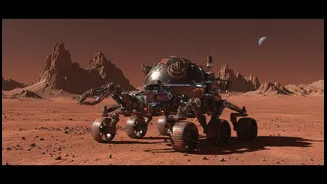
What if one robot could be a rover, a flyer, and a cave explorer all at once? This is the promise of shapeshifting robots, another concept being explored by NASA. One such concept, called Shapeshifter, involves a collection of smaller, independent robots called "cobots". These units can join together to form a large rolling sphere to cover ground efficiently. When faced with an obstacle or an interesting target, the sphere can split apart, allowing the individual cobots to fly as drones for aerial reconnaissance. They could then form a chain to explore a tight cave or even operate as a swimming probe if they encountered liquid. This modular, adaptable approach offers incredible flexibility, allowing a single mission to tackle diverse scientific objectives in areas that are currently inaccessible.
Strength in Numbers with Robotic Swarms
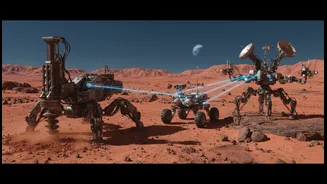
Instead of sending one large, expensive robot, another strategy is to deploy a swarm of smaller, cheaper ones. The "Marsbees" concept, funded by the NASA Innovative Advanced Concepts (NIAC) program, envisions a group of robotic flyers, each about the size of a bumblebee but with large, cicada-like wings. These wings are designed to generate enough lift in Mars's incredibly thin atmosphere, which has just 1% of Earth's air density. The swarm would operate from a central rover that would serve as a recharging station and communications hub. Together, they could create detailed 3D maps, explore large areas much faster than a single rover, and offer resilience—if one bee fails, the rest of the swarm can continue the mission.
From Concept to Martian Reality
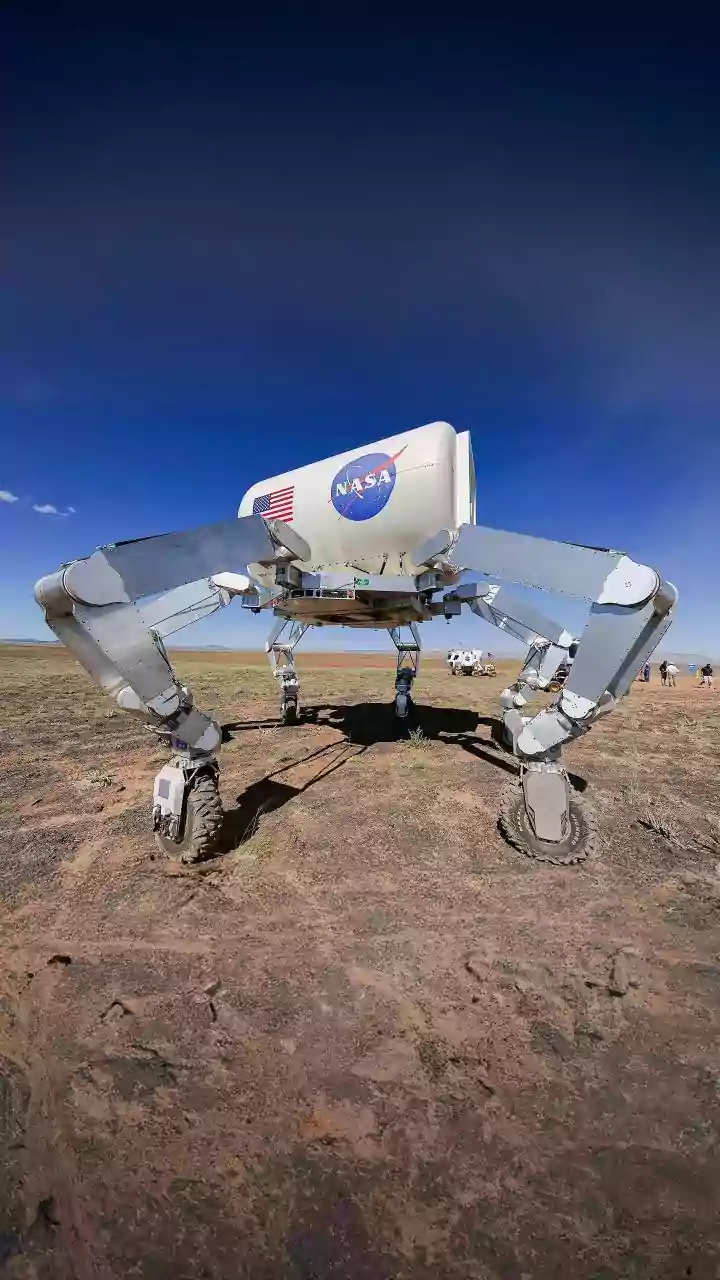
Many of these revolutionary designs are currently in early development, nurtured by programs like NIAC, which funds far-reaching, innovative ideas that could transform future missions. NASA is also actively engaging with commercial partners through its STRIDE initiative to develop next-generation mobility systems. Prototypes like the EELS snake-bot are already being tested in Mars-like environments on Earth, from the California desert to glaciers in Canada. While we may not see a swarm of bees or a shapeshifter on Mars tomorrow, these concepts represent a crucial shift in thinking. They are purpose-built solutions designed to overcome the physical barriers that have limited our exploration and to finally reach the scientifically rich locations that may hold the secrets of life on Mars.