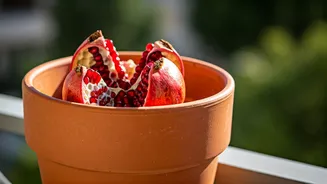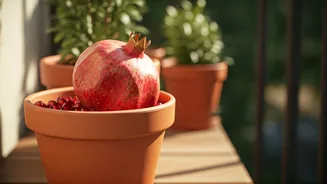





Why Pomegranates Are the Ultimate Flex
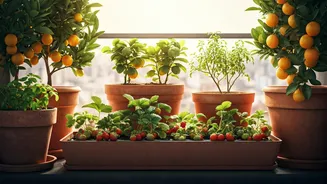
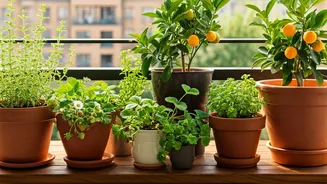
In the world of balcony gardening, some plants are just built differently. While a pot of herbs is useful and marigolds are cheerful, cultivating a pomegranate tree in a container is a true power move. It's not just about growing something; it's about mastering
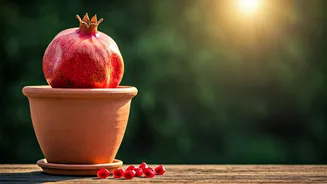
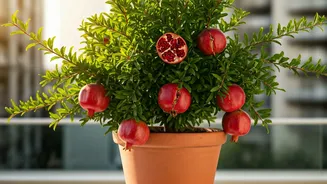
a plant that offers year-round beauty and an eventual, glorious harvest. Pomegranates are loved for their stunning, flame-orange flowers, glossy leaves, and of course, the jewel-like fruit packed with antioxidants. Growing one successfully on a balcony tells the world you're a gardener who means business. It’s a living sculpture that produces one of the world's most ancient and revered fruits.
Choose Your Champion: Dwarf Varieties Are Key
Before you rush to your nearest nursery, know that not all pomegranate trees are created equal. For container gardening, you must choose a dwarf or compact variety. Standard trees can grow up to 20 feet tall, which is hardly practical for a balcony. Look for varieties specifically labeled as dwarf, such as the popular 'Nana'. These are bred to stay small, often maturing at just 2-4 feet, making them perfect for pot culture. It's also wise to buy a sapling from a nursery rather than trying to grow from seed; this ensures you get a healthy, grafted plant that will produce fruit much sooner.
Setting Up for Success: Pot and Soil
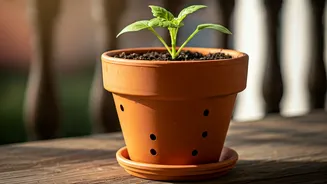
Your pomegranate's new home is crucial. Select a large pot, at least 15-20 inches wide and deep, to give the roots enough room to grow. Excellent drainage is non-negotiable, so ensure your container has several holes at the bottom. Pomegranates hate having 'wet feet,' which can lead to root rot. For the soil, use a well-draining potting mix. A good combination is garden soil, compost or vermicompost, and some coarse sand or perlite to improve drainage. Many gardeners in India also add cocopeat and neem cake to the mix for better moisture retention and pest prevention.
The Daily Ritual: Sun, Water, and Food
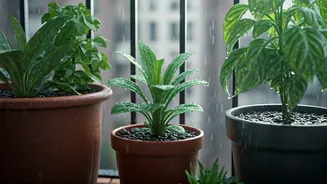
Pomegranates are sun-worshippers. To thrive and produce fruit, your plant needs at least 6-8 hours of direct sunlight every day. A south-facing balcony is often the ideal spot. Without enough sun, you might get a leafy green plant but few, if any, flowers or fruits. When it comes to watering, the key is consistency. The soil should be kept moist but never waterlogged. A good rule of thumb is to water deeply whenever the top inch of soil feels dry. In the peak of summer, your potted tree will be thirstier and may need more frequent watering. Fertilise your plant every 4-6 weeks during the growing season with a balanced, organic fertiliser to replenish the nutrients in the pot.
Patience and Pruning: The Long Game
Growing fruit is a marathon, not a sprint. A healthy sapling will likely start producing fruit within its second or third year. To keep your tree healthy and productive, a little maintenance is required. Pruning is best done in late winter. Snip off any dead, weak, or crossing branches to encourage good air circulation and direct the plant's energy towards producing fruit. You should also remove any suckers that appear at the base to maintain a tree-like shape. Don't be discouraged if your first few flowers drop without setting fruit; this is common for young trees. With patience and proper care, you'll soon be rewarded.
Harvesting Your Reward
The moment of truth arrives in autumn when the fruits mature. A ripe pomegranate will have a deep, rich colour and feel heavy for its size. Use pruning shears to cut the fruit from the branch, being careful not to damage the plant. The taste of a homegrown pomegranate, cultivated with your own hands on your own balcony, is a reward like no other. It’s more than just a fruit; it's a trophy. You can juice it, sprinkle the arils on salads, or eat them fresh. More importantly, you can post a picture of it online. After all, that's the flex.